
|
 |
 | | | | | | ||||||||||||||||||||||||||||||||||||||||||||||||||||||||||||||||||||||||||||||||||||||||||||||||||||||||||||||||||||||||||||||||||||||||||||||||||||||||||||||||||||||||
| | | You are in: Health | ||||||||||||||||||||||||||||||||||||||||||||||||||||||||||||||||||||||||||||||||||||||||||||||||||||||||||||||||||||||||||||||||||||||||||||||||||||||||||||||||||||||||||
|
| | Sunday, 15 September, 2002, 00:58 GMT 01:58 UK DNA find could aid cancer treatment 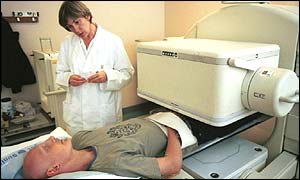 It is difficult to prevent cancer treatment harming healthy tissue The discovery of a molecule that repairs damaged DNA could pave the way for more effective and reliable cancer treatment. The molecule, called AlkB, can hamper chemotherapy treatments purposely targeted to damage tumour DNA, says the study published in the magazine Nature. Inhibiting the mechanism or using it to shield healthy tissue from chemotherapy damage could thus mark an important advance in cancer treatment, say the study's authors. The discovery of the mechanism "was both surprising and very exciting," lead researcher Barbara Sedgwick said. 'Surprise' AlkB uses a chemical process called oxidative demethylation to repair DNA, depending on the presence of iron and several other chemicals. But the mechanism can resist conventional cancer treatment, weakening its effects on tumours - which is why changing its response could prove important. Dr Sedgwick - who works at Cancer Research UK's London Institute - said: "The process for repairing DNA has been studied intensively for many years now, so to discover a completely new mechanism of action was both surprising and very exciting.
There were a number of ways manipulating the molecule's response could improve cancer treatments, she said. "Testing for the molecule could help us to predict whether chemotherapy is likely to be successful, while drugs to inhibit it could boost the effectiveness of conventional drugs," she said. "It might also be possible to use AlkB to protect cells in the bone marrow that can otherwise get damaged by chemotherapy, which may reduce the side-effects of treatment." Natural resistance Sir Paul Nurse, Cancer Research UK's chief executive, explained: "Our cells are constantly suffering genetic damage and without systems for patching up our DNA they quickly die as a result. "Chemotherapy tries to take advantage of the lethal effects of DNA damage to kill cancer cells, but sometimes our natural repair systems get in the way and cause resistance to treatment. "One of those systems involves AlkB, so knowing how the molecule works is an important development." | |
See also:  10 Sep 02 | Scotland 04 Sep 02 | Health 25 Jul 02 | Health 13 Sep 02 | Health 13 Sep 02 | England Internet links: The BBC is not responsible for the content of external internet sites Top Health stories now: Links to more Health stories are at the foot of the page. | ||||||||||||||||||||||||||||||||||||||||||||||||||||||||||||||||||||||||||||||||||||||||||||||||||||||||||||||||||||||||||||||||||||||||||||||||||||||||||||||||||||||||
| |
|  E-mail this story to a friend E-mail this story to a friend |
| |
| Links to more Health stories |
| | | ||
 | ||||
 | | Back to top
| ||
| ---------------------------------------------------------------------------------- To BBC Sport>> | To BBC Weather>> | To BBC World Service>> ---------------------------------------------------------------------------------- © MMIII | News Sources | Privacy |






