|
 |
 | | | | | | |||||||||||||||||||||||||||||||||||||||||||||||||||||||||||||||||||||||||||||||||||||
| | | You are in: UK: Scotland | |||||||||||||||||||||||||||||||||||||||||||||||||||||||||||||||||||||||||||||||||||||||
|
| | Tuesday, 10 September, 2002, 14:03 GMT 15:03 UK Blood donors combat cancer 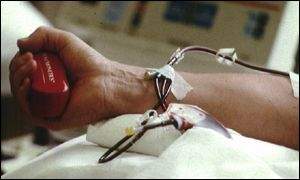 Immune cells from blood donors are being used Scientists are perfecting a new technique to help combat a rare form of cancer which threatens transplant patients. Experts from the University of Edinburgh have successfully used immune cells from blood donors in cases of the post-transplant lympho-proliferative disease. The process involves boosting the patient's own immune system to fight the disease without affecting the transplanted organ. The technique, known as Cytotoxic T-Lymphocyte (CTL) Therapy, has no adverse side-effects for patients.
Mohammed, a four-year-old boy from Birmingham, was saved last year through use of the technique after he developed cancer following a liver and bowel transplant. He was the first person in the world to undergo treatment for a condition known as Hirschsprung's Disease. Research findings, published in The Lancet, show that CTL can also be used to treat other virus infections and Aids patients with lymphomas. Dr Tanzina Haque, a clinical research scientist on the five-person Edinburgh team, said patients were at risk after receiving organ transplants. She said: "The Epstein-Barr virus (EBV) is a common virus best known for causing glandular fever and is carried by about 90% of the population without a problem. Transplant patients "When a patient receives an organ transplant, he or she is given immuno-suppressive drugs to stop the body rejecting the organ, but this also lowers their immunity to infections by removing the body's 'killer' cells, the cytotoxic T-lymphocytes. "If a transplant patient's immunity is compromised, EBV can infect cells called B-lymphocytes, causing them to grow in an uncontrolled way and become malignant. "The resulting cancer can be fatal in up to 70% of cases." Dr Haque said reducing doses of immuno-suppressive drugs could spark organ transplant rejection. Killer T cells Scientists developed a way of extracting a particular type of white blood cell - called killer T cells - which form a vital part of a healthy immune system. They devised a method of removing killer cells from a bank containing more than 100 blood donations and transferring them into transplant patients. The team is headed by Professor Dorothy Crawford, funded by Cancer Research UK and supported by the Scottish National Blood Transfusion Service. | | See also:  20 Dec 01 | Health 10 Sep 02 | Scotland 03 Dec 01 | Health 13 Aug 01 | Health Internet links: The BBC is not responsible for the content of external internet sites Top Scotland stories now: Links to more Scotland stories are at the foot of the page. | |||||||||||||||||||||||||||||||||||||||||||||||||||||||||||||||||||||||||||||||||||||
| |
|  E-mail this story to a friend E-mail this story to a friend |
| |
| Links to more Scotland stories |
| | | ||
 | ||||
 | | Back to top
| ||
| ---------------------------------------------------------------------------------- To BBC Sport>> | To BBC Weather>> | To BBC World Service>> ---------------------------------------------------------------------------------- © MMIII | News Sources | Privacy |