
|
 |
 | | | | | | ||||||||||||||||||||||||||||||||||||||||||||||||||||||||||||||||||||||||||||||||||||||||||||||||||||||||||||||||||||||||||||||||||||||||
| | | You are in: Health | ||||||||||||||||||||||||||||||||||||||||||||||||||||||||||||||||||||||||||||||||||||||||||||||||||||||||||||||||||||||||||||||||||||||||||
|
| | Thursday, 12 September, 2002, 00:34 GMT 01:34 UK Bio-pacemaker offers patients hope 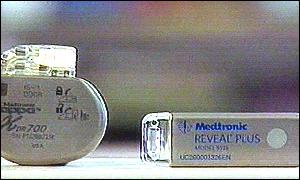 A traditional electronic pacemaker Scientists have created the first biological pacemaker using gene therapy in guinea pigs. They say the development could one day lead to an alternative to implanted electronic pacemakers for humans. Researchers from Johns Hopkins University, Baltimore, Maryland, US converted guinea pigs' heart muscle cells into "pacing" cells. In healthy hearts, two tiny sets of these cells make the organ beat regularly by stimulating other cells to contract.
But the US researchers say the "biopacemaker" could help people for whom such an operation carries too high a risk of infection. Such a "biopacemaker" is a potentially important option for patients at too high a risk for infection from implanted electronic pacemakers or too small for an implanted device, say the researchers Virus They were able to change the role of the guinea pigs' heart cells by genetically altering the balance of potassium within them. This made the cells spontaneously and rhythmically "fire". The majority of heart muscle cells do not have the right level of potassium to generate electricity on their own and must rely on the pacemaker cells. This is controlled by a special channel within the cell. The researchers used a virus to carry the gene with a genetically altered virus into the body. Using a virus means the genetic alteration would be replicated in all infected cells. A few days after the guinea pigs were injected, heart cells began acting as pacemaking cells. Adaptable Professor Eduardo Marb�n, of Johns Hopkins' Institute of Molecular Cardiology, who led the research, said: "We now can envision a day when it will be possible to recreate an individual's pacemaker cells or develop hybrid pacemakers - part electronic and part biologic. "Most applications of gene therapy try to cure a disease caused by a single defective or missing gene, but we used the cells' genes as a tool box to tweak its function. "This is akin to turning a clunky old car into a hot rod - if you have the parts and expertise, it can be done." He added: "A biologic pacemaker should also be able to adjust to the body's changing needs, whereas an electronic pacemaker, at least in its simplest form, does not. "Anything that normally makes our heart go pitter-pat doesn't change the steady rhythm of the electronic pacemaker. Instead, people get tired very quickly." The team admit much more work is needed before the biopacemaker would be an option for human heart patients, but they say there is "light at the end of the tunnel". Professor Marb�n added: "We believe the same principles will prevail in humans." Fiona Kirkwood, cardiac nurse advisor at the British Heart Foundation, said: "Application of gene therapy is a growing area in cardiovascular research. "This new research showing that the cells of guinea pigs can be turned into biological pacemakers is interesting, and in the future could offer an alternative to the well established method of implanting pacemakers. "However, as the researchers themselves admit it is very early days for research of this kind. Much more research is needed in this area before it could be considered for clinical application." The research is published in the journal Nature. | | See also:  12 Jul 02 | Wales 04 Sep 02 | Health 16 Jun 02 | Health Internet links: The BBC is not responsible for the content of external internet sites Top Health stories now: Links to more Health stories are at the foot of the page. | ||||||||||||||||||||||||||||||||||||||||||||||||||||||||||||||||||||||||||||||||||||||||||||||||||||||||||||||||||||||||||||||||||||||||
| |
|  E-mail this story to a friend E-mail this story to a friend |
| |
| Links to more Health stories |
| | | ||
 | ||||
 | | Back to top
| ||
| ---------------------------------------------------------------------------------- To BBC Sport>> | To BBC Weather>> | To BBC World Service>> ---------------------------------------------------------------------------------- © MMIII | News Sources | Privacy |





