|
 |
 | | | | | | |||||||||||||||||||||||||||||||||||||||||||||||||||||||||||||||||||||||||||||||||||||||||||||||||||||||||||||||||||||||||||||||||||||||||||||||||||||||||||||||||||||||||
| | | You are in: Health | |||||||||||||||||||||||||||||||||||||||||||||||||||||||||||||||||||||||||||||||||||||||||||||||||||||||||||||||||||||||||||||||||||||||||||||||||||||||||||||||||||||||||||
|
| | Friday, 23 August, 2002, 12:19 GMT 13:19 UK Screening 'reduces breast removals' 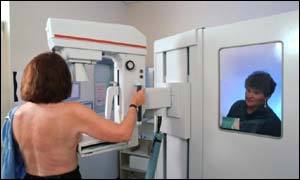 The NHS regularly screens women for breast cancer Women who are screened for breast cancer are less likely to have a mastectomy later, a study suggests. Researchers in Italy have found that fewer women have had a breast removed since a screening programme was introduced there in 1990. Previous studies have suggested that these programmes may actually increase the rate of mastectomies.
Eugenio Paci and colleagues at the Centre for the Study and Prevention of Cancer in Florence examined the cases of more than 59,000 women between the ages of 50 and 69 who had been screened as part of a city-wide programme. Surgery rates They then compared rates of surgery on women with breast cancer before and after the programme was introduced. They found that the rate of mastectomy had fallen by almost half during this time. Before the programme was up and running in 1990, 1.08 in every 1,000 women underwent a mastectomy. By 1996, that figure was 0.62 per thousand. The researchers also found that surgeons were carrying out more operations to restore and save women's breasts. In 1990, breast conserving surgery was carried out on 1.18 in every 1,000 women. But by 1996, that figure had increase to 1.87 per thousand. Writing in the British Medical Journal, the authors said: "The introduction of screening brings about a reduction in mastectomy rates, not an increase." Detects disease One of them, Dr Stephen Duffy of Cancer Research UK, said: "Some scientists believe screening programmes could be harmful to women by increasing the rates of aggressive treatments such as mastectomy.
"When breast cancer is caught early, women can be treated with less invasive surgery such as lumpectomy, where only the tumour and a section around it is removed from the breast." UK experts welcomed the findings. Richard Winder, deputy national coordinator of NHS cancer screening programmes, said a minority of British women with the disease had mastectomies. "The situation in the UK is that 71% of all women diagnosed with invasive breast cancers, detected through the programme, underwent conservation surgery while 28% had more radical surgery. These figures have been consistent for a number of years." Professor Trevor Powles, head of the breast unit at London's Royal Marsden Hospital, described the results as encouraging and suggested younger women should be screened for cancer. Women between the age of 50 and 64 are currently invited for breast screening on the NHS every three years. In 2004, that age limit will be raised to 70. Professor Powles said: "We really have to seriously look at the younger age groups." The NHS is currently looking at whether the programme should be extended to women who are aged 40. | |
See also:  09 Jan 02 | Wales 12 Jan 01 | Health 14 Jan 99 | Health Internet links: The BBC is not responsible for the content of external internet sites Top Health stories now: Links to more Health stories are at the foot of the page. | |||||||||||||||||||||||||||||||||||||||||||||||||||||||||||||||||||||||||||||||||||||||||||||||||||||||||||||||||||||||||||||||||||||||||||||||||||||||||||||||||||||||||
| |
|  E-mail this story to a friend E-mail this story to a friend |
| |
| Links to more Health stories |
| | | ||
 | ||||
 | | Back to top
| ||
| ---------------------------------------------------------------------------------- To BBC Sport>> | To BBC Weather>> | To BBC World Service>> ---------------------------------------------------------------------------------- © MMIII | News Sources | Privacy |