|
 |
 | | | | | | ||||||||||||||||||||||||||||||||||||||||||||||||||||||||||||||||||||||||||||||||||||||||||||||||||||||||||||||||||||||||||||||||||||||||||||||||||||||||||||||||||||||||||
| | | You are in: Europe | ||||||||||||||||||||||||||||||||||||||||||||||||||||||||||||||||||||||||||||||||||||||||||||||||||||||||||||||||||||||||||||||||||||||||||||||||||||||||||||||||||||||||||||
|
| | Saturday, 30 November, 2002, 06:53 GMT Stockholm's euro gamble 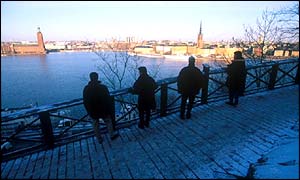 The Swedish public are deeply split on the issue
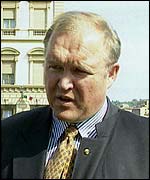
The main political opposition to the euro comes from the Left and Green parties, two groups who usually support the Social Democrats in parliament. Now that the Prime Minister Goran Persson has fired the starting pistol, the two sides have the best part of a year to persuade the voters of their cases. Mr Persson says he thinks the result will be a yes, but he knows the Swedish public are deeply split. "It's far from certain," he said after announcing the referendum. Tough call Recent opinion polls have shown a declining majority for the yes camp. One, published on Thursday, showed opinion evenly divided. The growing scepticism about the euro is probably linked to the country's relatively good economic performance compared with some of the countries that have adopted the currency. Mr Persson believes Sweden will be better off with the euro. It is a hard argument to sell just now.
But their problems are not a good advertisement for the currency. And in one respect, the euro is contributing to Germany's problem. Many economists believe that if there were an independent German central bank, it would be trying to revive the economy with lower interest rates. As it is, Germany is stuck with the higher rates that the European Central Bank thinks are right for the whole of the euro area. The one Nordic country already using the euro, Finland has also seen a sharp slowdown in its economic growth this year and last. Again, it has little or nothing to with the euro, but it is not helpful for those seeking a yes vote. And if Mr Persson can get the yes vote next year that he wants, he will then have to persuade the rest of the EU to let Sweden in. It is unlikely to be problem in practice, but there are some hoops Sweden will have to jump through first. Isolation After the referendum was announced, the European Commissioner responsible for the euro, Pedro Solbes, said Sweden still has some way to go. The Commission has assessed Sweden three times to decide whether it meets the criteria for membership that were set out in the Maastricht Treaty. On each occasion Sweden failed. Its government finances are strong. It also meets the criteria on inflation and interest rates. The most important failure is on the stability of its own currency.
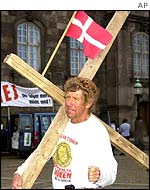
Exactly what that means in practice is rather unclear. But the European Commission interprets it as meaning that countries must be in the Exchange Rate Mechanism - a system which keeps currencies within limited fluctuation bands against one another and which Britain crashed out of humiliatingly in 1992. Sweden is not in it - at present there are only two currencies, the euro and the Danish Crown. But Mr Persson says he plans to take Sweden in soon after the referendum, if the result is a 'yes'. Sweden will also have to make some changes to the laws governing its central bank, the Riksbank. If Sweden does vote yes, then Denmark will seem much more isolated in Scandinavia. There are no plans for a second referendum soon - the Danes voted no in 2000. But the government in Copenhagen will probably feel it has more chance of a yes next time if Sweden is already on course to join. | | See also:  29 Nov 02 | Europe 22 May 02 | Business 10 Jun 02 | Business 10 Aug 01 | Business 14 Nov 02 | Politics 06 Oct 02 | Country profiles 17 Sep 02 | Europe Top Europe stories now: Links to more Europe stories are at the foot of the page. | ||||||||||||||||||||||||||||||||||||||||||||||||||||||||||||||||||||||||||||||||||||||||||||||||||||||||||||||||||||||||||||||||||||||||||||||||||||||||||||||||||||||||||
| |
|  E-mail this story to a friend E-mail this story to a friend |
| |
| Links to more Europe stories |
| | | ||
 | ||||
 | | Back to top
| ||
| ---------------------------------------------------------------------------------- To BBC Sport>> | To BBC Weather>> | To BBC World Service>> ---------------------------------------------------------------------------------- © MMIII | News Sources | Privacy |