|
 |
 | | | | | | |||||||||||||||||||||||||||||||||||||||||||||||||||||||||||||||||||||||||||||||||||||||||||||||||||||||||||||||||||||||||||||||||||||||||||||||||||||||||||||||||||||||||||||||||||||||||
| | | You are in: Europe | |||||||||||||||||||||||||||||||||||||||||||||||||||||||||||||||||||||||||||||||||||||||||||||||||||||||||||||||||||||||||||||||||||||||||||||||||||||||||||||||||||||||||||||||||||||||||||
|
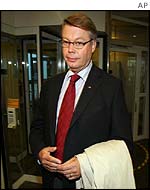
| | Tuesday, 17 September, 2002, 18:53 GMT 19:53 UK Sweden refuses to go right 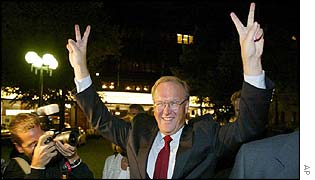 Persson is the doyen of the left in Europe
For decades the Swedes have enjoyed a reputation as the cool-headed, moderate, sensible burghers of northern Europe. This week's general election confirmed that in several ways - not least the fact that the turn-out was 79%.
The indifference of other countries' voters often resulted from their feeling that politics had become boring, with too little real choice between ruling and opposition parties. Too often, coalition partners were merely shuffled round a little. But in Sweden's elections there was a real choice on the fate of the country's celebrated welfare state. Boost to German left The governing Social Democrats, led by Prime Minister Goran Persson, refused adamantly to cut taxes, or the lavish funding of the health and education systems.
That outcome is perhaps more of a surprise in today's world than the more obvious fact that a left-of-centre government has not just held on to power, but increased its vote, while five other left-wing European governments have lost elections in the last year.
The general trend in Europe today - indeed, it is official EU policy - is to strive for lower taxes and less state intervention. The Swedes decisively rejected that. Mr Persson occupies a special place in European politics. Now embarking on his third term as prime minister, he can claim to be the doyen of left-wing leaders in Europe. His victory will give a psychological, and quite possibly electoral, boost to Gerhard Schroeder in next Sunday's German election.
He is a committed European, particularly on the question of bringing formerly communist countries into the EU. He is prone to reminisce about his childhood, when school maps showed a divided continent, and is determined to help those Europeans who suffered for years under Soviet-imposed rule taste the fruits of Western prosperity. His next major task will be to steer Sweden's canny people into the single currency. It is expected that a referendum will be held next autumn, and Mr Persson's chances of winning it have improved because of the election. Repatriation Membership is opposed by the Left and Green parties on whose support the Social Democrats rely, but it is backed by a majority in parliament.
Mr Persson's stance on immigration will also be under the spotlight. The greatest gains in the election were made by the centre-right Liberals, who campaigned for tougher laws, including the repatriation of immigrants who fail to find work within three months, and Swedish language tests as a prerequisite for granting Swedish citizenship. Sweden has until now pursued a liberal immigration policy. Public concerns Mr Persson was one of the few leaders who earlier this year spoke out against EU plans to threaten sanctions against third world countries which refused to take back failed asylum-seekers. It will be interesting to see whether he now moves to the right on this issue, as so many other centrist governments have, in response to right-wing gains attributed partly to public concerns over immigration. One suspects that here too, Mr Persson may buck the trend. He is very much his own man, and looks determined to carry on with left-of-centre policies regarded as outmoded in much of the rest of Europe. | | See also:  16 Sep 02 | Europe 16 Sep 02 | Media reports 16 Sep 02 | Europe 10 Aug 01 | Business 16 Aug 02 | Country profiles Internet links: The BBC is not responsible for the content of external internet sites Top Europe stories now: Links to more Europe stories are at the foot of the page. | |||||||||||||||||||||||||||||||||||||||||||||||||||||||||||||||||||||||||||||||||||||||||||||||||||||||||||||||||||||||||||||||||||||||||||||||||||||||||||||||||||||||||||||||||||||||||
| |
|  E-mail this story to a friend E-mail this story to a friend |
| |
| Links to more Europe stories |
| | | ||
 | ||||
 | | Back to top
| ||
| ---------------------------------------------------------------------------------- To BBC Sport>> | To BBC Weather>> | To BBC World Service>> ---------------------------------------------------------------------------------- © MMIII | News Sources | Privacy |