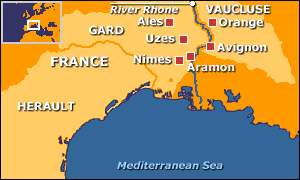
The government has dispatched an extra 600 rescue workers and will declare later this month a state of natural disaster in the region, which will allow people to claim special insurance coverage. Click here to see a map of flooded areas
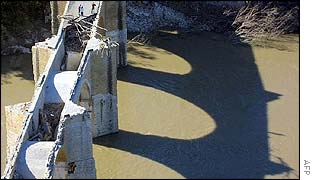
Most major highways and roads were cleared, though about half of the region's smaller roads were still shut because of damage to 18 bridges, including the 14th Century Saint Nicolas bridge on a small road between Nimes and Uzes.
At least 3,000 people forced out of their homes were staying in temporary shelters, Interior Minister Nicolas Sarkozy said at the weekly cabinet meeting on Thursday.
Some 10,000 homes were still without electricity and at least 10,000 telephone lines were due to be reconnected.
Looting has also been reported in a number of local towns.
'Overlooked'
The inhabitants of the town of Ales have complained bitterly about being overlooked by the authorities early on in the rescue operation.
For 48 hours, the lack of road, phone or mobile phone links left this town of 41,000 cut off from the rest of the world.
In the village of Aramon, also in the Gard region, locals have accused the authorities of failing to give them adequate warning of the impending floods already affecting the rest of the area.
One of the village's two dikes gave way on Monday night, killing at least five people.
"We were unable to warn the population. So not everyone left. And those who did not leave are certainly amongst the victims," the town's distraught mayor, Jean Mahieu, told Liberation newspaper.
"At 1600 on Monday we received a bulletin saying water levels were decreasing. This did not indicate a large wave four hours later," he said.
"Maybe the dyke was not enough. Maybe it had been badly maintained over the last 30 years. But we thought it wouldn't happen."
Click here to return




 E-mail this story to a friend