|
 |
 | | | | | | |||||||||||||||||||||||||||||||||||||||||||||||||||||||||||||||||||||||||||||||||||||||||||||||||||||||||||||||||||||||||||||||||||||||||||||||||||||||||
| | | You are in: Science/Nature | |||||||||||||||||||||||||||||||||||||||||||||||||||||||||||||||||||||||||||||||||||||||||||||||||||||||||||||||||||||||||||||||||||||||||||||||||||||||||||
|
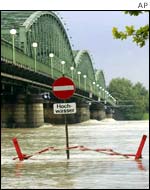
| | Tuesday, 13 August, 2002, 13:10 GMT 14:10 UK What's behind the weather? 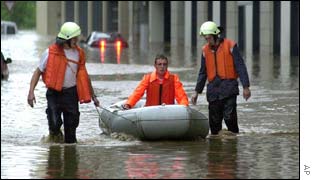 Floods in Dresden, Germany Central and eastern Europe are suffering some of their worst flooding in recent history. Thousands have been evacuated from Prague in the Czech Republic as its river threatens to engulf the city. The floods are an echo of similar - although less severe - weather two years ago, so is a pattern emerging? Despite the increasing sophistication of the computers they harness, weather forecasters still have trouble accurately predicting what will happen in five days' time, let alone 50 years'. The computer models designed by climate change experts can tell us how much rain will fall in an average season in future years, but cannot pinpoint extreme weather such as the rainfall experienced in Europe this week. Slow build-up Unlike flash flooding, which may be caused by a single, explosive storm which overwhelms natural and artificial drainage systems, river flooding on the scale seen in Europe this week requires something different.
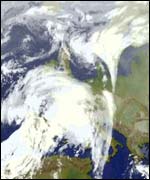
Anything up to a week of sustained rain is needed before a major river will burst its banks. Even at this time of year, it is not uncommon for rain-bearing, low-pressure systems to track across Europe, bringing storms and rain. What appears to have happened here is that the track of the depression has been unusual. The direction and rate of progress of weather systems is determined partly by the position of the jet stream, a fast-flowing "river" of air moving from west to east at high altitude.
At the moment it is in an unusual position, and helping to push weather systems out of their normal path. Instead of moving eastwards across the north Atlantic, picking up relatively little water because of the low temperatures at those latitudes, the system crossed into Europe at a lower point, carrying far more moisture as a result. When it delivered its payload on countries such as Germany, Russia, Switzerland, and Italy, this was a far heavier downpour than normal. The slow-moving nature of the front compounded the problem, leading to a week of torrential downpours - and the potential for catastrophe. The customary response to most extreme weather is to point the finger at climate change. This time, say experts, this explanation does not fit the bill.
Dr Tim Osborn, a climatologist from the University of East Anglia, told BBC News Online: "If this had happened in winter, then it might be reasonable to talk about global warming. "However, the models suggest that rainfall in summer is likely to remain the same, or perhaps even fall, if climate change continues." The European Union has now funded a new study to look at the likelihood of more river flooding in the future, but this will not report for some years. Chaotic approach Dr Osborn says there is no easy explanation for this summer's floods. "It could simply be down to the chaotic nature of the atmosphere, not to any change in the climate over time.
"If an event only happens once every 500 years, it could still happen." However, he acknowledged that if similar events happened a few more times over the next decade, climatologists might have to review their expectations of the effect of global warming on summer weather. Dr Geoff Jenkins, from the UK's Met Office, agrees that it is wrong to "jump to conclusions" that climate change is to blame. He told the BBC: "We know that global warming is starting to take hold and that this is going to bring some changes. "But we have to be careful about ascribing all these changes to global warming, because the Earth is a very variable system already. "We do get these events from year to year - they are unusual, but not unprecedented. "The weather at any particular point at any particular time is determined in our latitudes by the jet stream, and it just happens that at the moment the jet stream is in a very unusual position." | |
See also:  02 Aug 02 | England 13 Aug 02 | Europe 13 Aug 02 | Europe 13 Aug 02 | Europe Internet links: The BBC is not responsible for the content of external internet sites Top Science/Nature stories now: Links to more Science/Nature stories are at the foot of the page. | |||||||||||||||||||||||||||||||||||||||||||||||||||||||||||||||||||||||||||||||||||||||||||||||||||||||||||||||||||||||||||||||||||||||||||||||||||||||||
| |
|  E-mail this story to a friend E-mail this story to a friend |
| |
| Links to more Science/Nature stories |
| | | ||
 | ||||
 | | Back to top
| ||
| ---------------------------------------------------------------------------------- To BBC Sport>> | To BBC Weather>> | To BBC World Service>> ---------------------------------------------------------------------------------- © MMIII | News Sources | Privacy |