|
 |
 | | | | | | ||||||||||||||||||||||||||||||||||||||||||||||||||||||||||||||||||||||||||||||||||||||||||||||||||||||||||||||||||||||||||||||||||||||||||||||||||||||||||||||||||||||||||||||||||||||||||||||||
| | | You are in: Europe | ||||||||||||||||||||||||||||||||||||||||||||||||||||||||||||||||||||||||||||||||||||||||||||||||||||||||||||||||||||||||||||||||||||||||||||||||||||||||||||||||||||||||||||||||||||||||||||||||||
|
| | Wednesday, 10 July, 2002, 14:59 GMT 15:59 UK Russian scientists reach safety The scientists were relieved to be on dry land A group of Russian scientists rescued from Antarctica after their ship was stranded behind a vast ice sheet has arrived safely in South Africa.
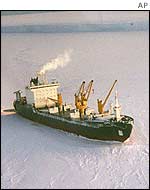
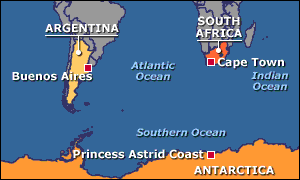
The scientists - who are all well - were picked up by two military Oryx helicopters after the Agulhas was only able to get within about 200 nautical miles of the vessel. "The challenge was getting down south far enough to allow the helicopters to fly without getting the ship stuck," Agulhas captain Kevin Tate told Reuters news agency. Click here for a map of the area "It's very easy to just go bullying your way into the ice to get within flying range, but with a sudden drop in temperature you could get beset." The Magdalena Oldendorff, a German vessel chartered by Russia, is still trapped and an Argentinian ice breaker has been sent to cut a route through the ice and get the ship and the rest of its crew back to South Africa. It has been frozen in a bay on the Princess Astrid Coast since 11 June. Hero's welcome The Agulhas returned to a hero's welcome as it docked in Cape Town's Table Bay.
Bands, banners and gifts awaited the ship, and relatives of those on board clambered on as soon as it docked. The Russian scientists praised the bravery and professionalism of their rescuers, but they said they had never been in immediate danger. "The situation was not so bad. We had fuel for two months and food for about one month. With limitations in our eating, we could have stayed a longer time," Boris Bartashevich, the Russian expedition's doctor said. He said that severe weather - with temperatures reaching -20C - were also not a major challenge for Russians. "In central Russia you have very similar conditions so it was not very awful for us. It was like home," Mr Bartashevich said. But the scientists - who will be flying home to Russia on Thursday - said they were relieved to be back on dry land. Officials said that the 17 men left aboard the Magdalena Oldendorff were in good spirits. The Argentinian ice breaker Almirante Irizar is expected to be in the area on Thursday, and the officials said they were confident it would be able to break the ice and free the vessel. | |
See also:  25 Jun 02 | Europe 20 Jun 02 | Europe 16 Jun 02 | Europe 14 Jun 02 | Europe 13 Jun 02 | Science/Nature 19 Mar 02 | Science/Nature Internet links: The BBC is not responsible for the content of external internet sites Top Europe stories now: Links to more Europe stories are at the foot of the page. | ||||||||||||||||||||||||||||||||||||||||||||||||||||||||||||||||||||||||||||||||||||||||||||||||||||||||||||||||||||||||||||||||||||||||||||||||||||||||||||||||||||||||||||||||||||||||||||||||
| |
|  E-mail this story to a friend E-mail this story to a friend |
| |
| Links to more Europe stories |
| | | ||
 | ||||
 | | Back to top
| ||
| ---------------------------------------------------------------------------------- To BBC Sport>> | To BBC Weather>> | To BBC World Service>> ---------------------------------------------------------------------------------- © MMIII | News Sources | Privacy |