|
 |
 | | | | | | |||||||||||||||||||||||||||||||||||||||||||||||||||||||||||||||||||||||||||||||||||||||||||||||||||||||||||||||||||||||||||||||||||||||||||||||||||||||||||||||
| | | You are in: Europe | |||||||||||||||||||||||||||||||||||||||||||||||||||||||||||||||||||||||||||||||||||||||||||||||||||||||||||||||||||||||||||||||||||||||||||||||||||||||||||||||||
|
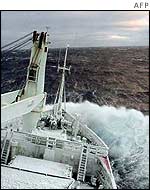
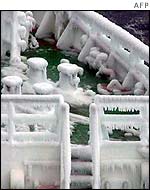
| | Thursday, 27 June, 2002, 17:58 GMT 18:58 UK Scientists leave Antarctic ice trap The rescue ship is strengthened but is not an icebreaker Rescuers are using a break in harsh winter conditions to airlift Russian scientists from a research ship trapped in ice off Antarctica and deliver half a tonne of supplies to those remaining on board. Two helicopters flew from the heated deck of South African research ship Agulhas that has penetrated the ice fields to within 350 kilometres (190 nautical miles) of the trapped vessel, Magdalena Oldendorff.
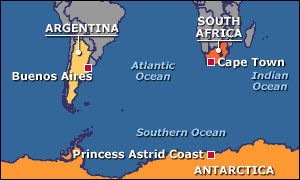
The window of slightly more moderate weather, with temperatures minus 15 degrees Celsius, is expected to close on Saturday. "The Agulhas is in about 10 to 15 centimetres of ice at the moment, but that will thicken quickly so the captain will sail north on Friday," said Tanya Hacker, spokeswoman for the Cape Town-based rescue mission. For each helicopter to make the two journeys, Friday's mission will have to begin before first light and end after twilight of the short (six-hour) Antarctic daytime. Longed-for supplies If things goes according to plan, 14 scientists will be left on board along with the 38-member crew. Rescuers hope to airlift the remaining scientists and 11 non-essential crew members during the next break in the weather. Click here for a map of the area The first relief flight carried yeast and flour, cigarettes, coffee and 90 kilograms of sugar to meet the most urgent needs.
The stranded scientists and crew began rationing their remaining food last week. "We wanted to give them everything that they had on their request list, as what was important was to boost morale," Ms Hacker told BBC News Online. "This is a sad day and a happy day for them, as these men are being split up after spending between 15 and 18 months together," she said. Icebreaker On Tuesday an Argentine ship Almirante Irizar set off to break a path through the ice to the trapped vessel, so the Magdalena can make its way out under its own steam. The Almirante is expected to arrive on 7 July. Essential crew members will remain on board the Magdalena until then. The Magdalena Oldendorff had been heading back to Cape Town before a massive ice drift blocked its way early in June and forced it to retreat and call for help. Click here to return | | See also:  20 Jun 02 | Europe 16 Jun 02 | Europe 14 Jun 02 | Europe 13 Jun 02 | Science/Nature 19 Mar 02 | Science/Nature Internet links: The BBC is not responsible for the content of external internet sites Top Europe stories now: Links to more Europe stories are at the foot of the page. | |||||||||||||||||||||||||||||||||||||||||||||||||||||||||||||||||||||||||||||||||||||||||||||||||||||||||||||||||||||||||||||||||||||||||||||||||||||||||||||||
| |
|  E-mail this story to a friend E-mail this story to a friend |
| |
| Links to more Europe stories |
| | | ||
 | ||||
 | | Back to top
| ||
| ---------------------------------------------------------------------------------- To BBC Sport>> | To BBC Weather>> | To BBC World Service>> ---------------------------------------------------------------------------------- © MMIII | News Sources | Privacy |