|
 |
 | | | | | | ||||||||||||||||||||||||||||||||||||||||||||||||||||||||||||||||||||||||||||||||||||||||||||||||||||||||||||||||||||||||||||||||||||||||||||||||||||
| | | You are in: Entertainment | ||||||||||||||||||||||||||||||||||||||||||||||||||||||||||||||||||||||||||||||||||||||||||||||||||||||||||||||||||||||||||||||||||||||||||||||||||||||
|
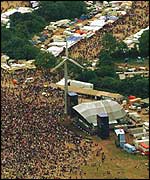
| | Monday, 1 July, 2002, 14:29 GMT 15:29 UK Glastonbury: Music, mystics and mayhem 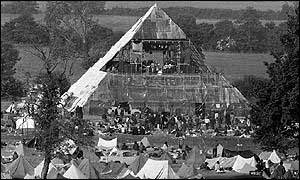 The first Pyramid Stage was built in 1971 From a low-key start in 1970, the Glastonbury Festival has grown in scale and stature to become a legendary destination for music fans and those in search of good times. It has had its ups and down in its 32-year lifespan - and BBC News Online looks at the key events in its history. 1970 Marc Bolan turned up in a velvet-covered car, but the good vibes were overshadowed by the death of Jimi Hendrix the day before. Despite predicting that "this is the quickest way of clearing my overdraft", Eavis lost �1,500. But the event was still seen as a success. Acts: Marc Bolan and T-Rex, Quintessence and Ian Anderson.
The first proper Glastonbury festival, and considered to be the "legendary one". Funded by "rich hippies", as Eavis put it. The event was timed to coincide with the summer solstice and featured the first Pyramid Stage, which was made out of scaffolding and plastic sheeting and positioned on a spring near a ley line. Acts: David Bowie, Fairport Convention, Joan Baez, Hawkwind.
1979 It became a three-day show, the main stage was provided by Genesis, funds went to UN Year of the Child and there were children's and theatre areas for the first time. Acts: Peter Gabriel, Steve Hillage, Tom Robinson.
Eavis says this festival was "our breakthrough", doubling the previous attendance and raising funds for the Campaign for Nuclear Disarmament for the first time. A permanent Pyramid Stage was built out of army surplus sheet metal, and was used as a cow shed for the rest of the year. Acts: New Order, Ginger Baker, Aswad. 1984 1983 had been the first time a licence was required after a law introduced by the local MP, who Eavis says wanted to stop the festival and was later made an MBE. The first Green Field was introduced in 1984, partly to accommodate new-age travellers. Acts: The Waterboys, The Smiths, Elvis Costello.
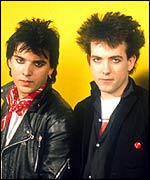
The council refused the festival a licence, but Eavis took them to court and won. He said they were trying to block it for political reasons because he had "rattled a few right-wing cages" with his CND involvement. The festival was also growing at a fast rate, which alarmed some involved. Eavis was also providing refuge for thousands of travellers who had been pushed out of Stonehenge. Acts: The Cure, Madness, Simply Red. 1987 The Stonehenge festival took place in exile at Glastonbury, causing friction because travellers resented paying and Eavis said they took advantage of his hospitality. Open drug-taking became an issue, and there was no festival the following year to take stock of the problems. Acts: Van Morrisson, Elvis Costello, New Order. 1990 Eavis said the travellers were looting the empty site, but the guards were accused of sparking the battles by attacking a group of travellers. Police later said security teams had prepared petrol bombs and weapons. Ecstasy use and tent crime were also rife. The following festival was cancelled. Acts: The Cure, The Happy Mondays, Ry Cooder.
Glastonbury had returned, bigger and better-organised, but things looked bleak for 1994's festival when the Pyramid Stage burnt down just ten days before the event. But a replacement was found, and the festival went ahead. The first ever festival fatality was recorded when a man died of a drugs overdose, and five people were injured when a gunman opened fire. �150,000 was donated to Greenpeace, �50,000 to Oxfam and �100,000 to local charities. Acts: Bjork, Manic Street Preachers, Orbital. 1995 The sun shone for the summer of Britpop, and there was a legendary performance from Pulp after they stepped in to replace The Stone Roses at the last minute. The dance tent also made its first appearance and �400,000 was raised for charity. Acts: Oasis, Pulp, Prodigy.
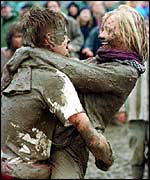
The first of two consecutive mud-fests, which led to some festival-goers suffering from trench-foot. By now, the site had its own daily newspaper, cash machines and covered 800 acres. The bad weather led Eavis to spent �35,000 on improving drainage and laying 200 tons of wood chips to improve the site's roads in time for the following year's event. Acts: Radiohead, Supergrass, Sting. 2002 But the licence was granted after Eavis enlisted promoters Mean Fiddler - who staged the Reading and Leeds festivals - to look after security. But Eavis insisted he was still in overall control of the festival. A �1m "super-fence" was erected and he gave a strong warning to ticketless fans to stay away or risk jeopardising the event's future. The warnings worked - organisers claimed only one gatecrasher tried to get in, and he left again because none of his friends could get in. With crime down by more than half, the future looked secure. Acts: Rod Stewart, Coldplay, The Charlatans. | |
See also:  21 Jun 02 | Entertainment Internet links: The BBC is not responsible for the content of external internet sites Top Entertainment stories now: Links to more Entertainment stories are at the foot of the page. | ||||||||||||||||||||||||||||||||||||||||||||||||||||||||||||||||||||||||||||||||||||||||||||||||||||||||||||||||||||||||||||||||||||||||||||||||||||
| |
|  E-mail this story to a friend E-mail this story to a friend |
| |
| Links to more Entertainment stories |
| | | ||
 | ||||
 | | Back to top
| ||
| ---------------------------------------------------------------------------------- To BBC Sport>> | To BBC Weather>> | To BBC World Service>> ---------------------------------------------------------------------------------- © MMIII | News Sources | Privacy |