|
 |
 | | | | | | ||||||||||||||||||||||||||||||||||||||||||||||||||||||||||||||||||||||||||||||||||||||||||||||||||||||||||||||||||||||||||||||||||||||||||||||||||||||||||||||||||||||||||
| | | You are in: Business | ||||||||||||||||||||||||||||||||||||||||||||||||||||||||||||||||||||||||||||||||||||||||||||||||||||||||||||||||||||||||||||||||||||||||||||||||||||||||||||||||||||||||||||
|
| | Thursday, 21 November, 2002, 22:07 GMT Rich and poor seek meeting of minds 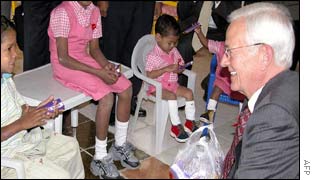 US Treasury Secretary Paul O'Neill is already in South Asia Governments from countries both rich and poor are gathering in India for talks about curbing terror funding, boosting trade and relieving poverty. The Group of 20 - 19 countries, as well as the European Union, the International Monetary Fund and the World Bank - meet once every year to discuss the big economic questions of the day. The wide-ranging agenda matches the disparate status of those represented at the meeting, from poverty-stricken Argentina to the wealthy US and from South Africa in the south to China in the north. But the focus will be on the weakening of the global economic recovery and its implications for developing countries' economies, and on the ongoing attempts to curtail access by groups accused of terror to funding. US plans to wage war on Iraq, and the likely economic consequences will also be high in the minds of those at the meeting, who collectively represent 85% of global output and 60% of the world's population. Among them will be US Treasury Secretary Paul O'Neill, whose five-day tour of South Asia has been timed to coincide with the meeting. New rules Blocking the funding of terror was the main item on last year's agenda too, with the attacks of 11 September fresh in every delegate's mind. That meeting helped trigger the production of standards to which more than 80% of the countries in the world have accepted, to tighten up banking and finance systems in the hope of disrupting the flow of money to terrorist activities. The intervening 12 months have produced varying reports of success and failure. New rules have been developed to oversee the unofficial money transfer systems of South Asia, the Pacific rim and the Middle East, which were almost certainly used by al-Qaeda to underwrite 11 September. A plethora of countries have introduced new rules choking off banking anonymity. But the small scale of terrorist funding when compared with mainstream financial crime has meant that many of the familiar techniques are of little use. And the risk of "collateral damage" - both to money transfer systems on which many a poor country with a widespread diaspora rely, and to Islamic charities - presents a growing concern. OECD warning But this year's G-20 meeting cannot afford to focus so exclusively on terror. The weakening of the global economy was reflected in a six-monthly analysis of global prospects released on Thursday by the Organisation for Economic Co-operation and Development. It warned that real recovery would have to wait till late next year, thanks to the slump on global stock markets and sliding confidence on the part of both businesses and consumers. | |
See also:  21 Nov 02 | Business 19 Nov 02 | Business 03 Sep 02 | Business 05 Jul 02 | Business 18 Mar 02 | Business 18 Nov 01 | Business Internet links: The BBC is not responsible for the content of external internet sites Top Business stories now: Links to more Business stories are at the foot of the page. | ||||||||||||||||||||||||||||||||||||||||||||||||||||||||||||||||||||||||||||||||||||||||||||||||||||||||||||||||||||||||||||||||||||||||||||||||||||||||||||||||||||||||||
| |
|  E-mail this story to a friend E-mail this story to a friend |
| |
| Links to more Business stories |
| | | ||
 | ||||
 | | Back to top
| ||
| ---------------------------------------------------------------------------------- To BBC Sport>> | To BBC Weather>> | To BBC World Service>> ---------------------------------------------------------------------------------- © MMIII | News Sources | Privacy |