
|
 |
 | | | | | | ||||||||||||||||||||||||||||||||||||||||||||||||||||||||||||||||||||||||||||||||||||||||||||||||||||||||||||||||||||||||||||||||||||||||||||
| | | You are in: Business | ||||||||||||||||||||||||||||||||||||||||||||||||||||||||||||||||||||||||||||||||||||||||||||||||||||||||||||||||||||||||||||||||||||||||||||||
|
| | Thursday, 21 November, 2002, 11:23 GMT Warning on world economic recovery 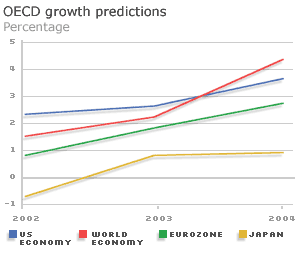 A recovery in world economic growth could be delayed unless interest rates are cut further to boost confidence among consumers, businesses and stock markets, a report has warned.
"Forward looking indicators show that a solid recovery may be rather slow to materialise," the OECD said. Economic growth across the world is predicted to remain weak well into next year, though by 2004 most regions should have recovered. By then, the world economy should be growing at a rate of 4%, up from a predicted growth rate of 1.5% this year and 2.2% in 2003. Lower interest rates The US central bank, The Federal Reserve, which has already cut interest rates to their lowest level in 41 years, should be prepared to act again if need be, the OECD suggested. In Japan, interest rates should remain close to zero. While in the eurozone - where "growth of output has remained very modest, with Germany and Italy particularly sluggish," - interest rates should come down soon. "In the euro area the main refinancing rate is assumed to be lowered by 0.5 percentage points over the coming months, and to start gradually moving up later in 2003," the OECD said. Weak spending The US is set to become one of the fastest growing economies among the world's rich countries, the OECD predicted. By 2004, US economic growth should reach 3.6% compared with 2.7% in the eurozone and 0.9% in Japan. The UK was expected to slightly lag growth in the eurozone with 2.5% growth in 2004. In 2003, growth is not expected to accelerate, essentially because consumer spending, the engine of growth in recent months, is set to ease, the OECD warned. "The present outlook incorporates a period of sluggish spending in most of the OECD until mid-2003", in part due to "the general slide in equity prices" which has eroded the spending power of people in many rich countries, said OECD chief economist Jean-Philippe Cotis. US consumers, who generally own more shares than anyone else, have been worst affected by the stock market weakness, but the effect has been felt across all wealthy countries. Latin American crisis For Latin America, 2002 has been a truly horrible year after an economic crisis spread from Argentina across the region, and many problems remain. "Adverse financial conditions, and perhaps a more general loss of confidence, have caused weakness in both consumer and investor demand," the OECD said. "The region as a whole has also suffered from a significant drop in foreign direct investment." Asian contribution In Asia, the picture was more mixed, with "some Asian economies... growing strongly, contributing to the recovery of the world economy", while serious challenges remained for others. Singapore, Taiwan and Hong Kong were highlighted as success stories as their economies have been "getting closer by some indicators to OECD economies and in some cases beyond". | | See also:  21 Nov 02 | Business 21 Nov 02 | Business 21 Nov 02 | Business 25 Apr 02 | Business 14 Aug 02 | Business Internet links: The BBC is not responsible for the content of external internet sites Top Business stories now: Links to more Business stories are at the foot of the page. | ||||||||||||||||||||||||||||||||||||||||||||||||||||||||||||||||||||||||||||||||||||||||||||||||||||||||||||||||||||||||||||||||||||||||||||
| |
|  E-mail this story to a friend E-mail this story to a friend |
| |
| Links to more Business stories |
| | | ||
 | ||||
 | | Back to top
| ||
| ---------------------------------------------------------------------------------- To BBC Sport>> | To BBC Weather>> | To BBC World Service>> ---------------------------------------------------------------------------------- © MMIII | News Sources | Privacy |





