|
 |
 | | | | | | |||||||||||||||||||||||||||||||||||||||||||||||||||||||||||||||||||||||||||||||||||||||||||||||||||||||||||||||||||||||||||||||||||||||||||||||||||||||||||||||||||||||||||||||||||||||||||||||||||
| | | You are in: Business | |||||||||||||||||||||||||||||||||||||||||||||||||||||||||||||||||||||||||||||||||||||||||||||||||||||||||||||||||||||||||||||||||||||||||||||||||||||||||||||||||||||||||||||||||||||||||||||||||||||
|
| | Wednesday, 20 November, 2002, 09:48 GMT Brown's economic challenge 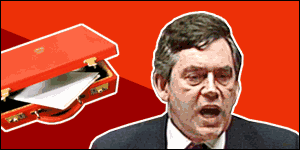
When the Chancellor, Gordon Brown, steps up to the despatch box to deliver his pre-budget report this year, he'll be missing that vital something -- the security of a booming economy. Unusually, he'll have to admit that growth this year will be lower than he expected, which means less money in the kitty from tax revenues and more borrowing. For example, tax receipts so far this financial year are just 1% higher than last year, compared with an expected growth rate of 4%.
Slower economic growth is to blame for the tax shortfall In April the Chancellor forecast the economy would expand this year by between 2% and 2.5%. It's more likely to increase by 1.5%. It's a similar story for next year -- Brown expected growth of 3% to 3.5%, but it will probably be closer to 2.5%. Disappearing investment If you split the economy into four parts -- investment, exports, consumer spending and government spending -- it's the first two components that have disappointed. Businesses are still reluctant to buy new machinery or invest in new technology, given the uncertain outlook, lack of finances and the excess capacity left over from the dotcom boom. Exports have also suffered because of the global downturn and the high pound, a serious blow to the economy since they contribute to around a third of GDP growth. That leaves the government and consumers to carry the can. Public spending is rising sharply thanks to the government's ambitions to revive public services and while consumption has been strong in the past, it is now showing signs of fatigue. Housing bubble Which is where the housing market and interest rates come in. Both have a direct impact on our willingness to spend, so what will happen to them? It is notoriously hard to second guess the housing market -- its strength has outwitted all commentators in the past. The Bank of England's central expectation is for house price inflation to slow gradually, but, as the deputy governor, Mervyn King admitted recently, it cannot rule out either a sharp correction or a continued rise. The only thing that can be said with any certainty is that house prices cannot continue to increase at their current annual 25% to 30% rate for ever. And the longer it does rise at these inflated rates, the bigger the risk of a fall. Interest rates Fortunately we have more control over interest rates. There is still a chance the Bank of England will cut the cost of borrowing in the next few months. Inflation is low giving it plenty of room to move rates should it conclude that growth is faltering. That should help support the economy in future. Spin The Chancellor will no doubt try to put as favourable a spin as possible on the economic outlook when he delivers his pre-budget report. He will probably gloss over the disappointment in growth this year and concentrate on the fact that conditions should improve in 2003. He could also stress that the British economy is in better shape than many of its competitors. The U.S. and Germany have both been in recession recently, but despite around a decade of pretty strong growth here, we've managed to avoid that fate -- so far. The Chancellor may yet fulfil his pledge to eliminate boom and bust. Deflationary spiral However, as ever with economics, there is another interpretation. Growth is undoubtedly going to be weaker than expected just six months ago and the future is far from secure. The global economy is one risk the Chancellor can't do much about. The U.S. is still suffering and remains in danger of sliding back into recession. If it does, and given that Europe is still fragile, Britain would suffer since it's an extremely open economy. Consumption is the other flashpoint. Spending is the main engine of growth in the economy, largely thanks to low unemployment and a strong housing market. However, the longer and further house prices rise, the greater the danger of a sharp correction. Add in the fact that debt levels are swelling and stockmarkets are still shaky, and it's easy to see why spending may fall. All of which Gordon Brown will probably be reluctant to dwell on. Instead, he's likely to return to his mantra of cautious optimism. | |
Top Business stories now:  Links to more Business stories are at the foot of the page. | |||||||||||||||||||||||||||||||||||||||||||||||||||||||||||||||||||||||||||||||||||||||||||||||||||||||||||||||||||||||||||||||||||||||||||||||||||||||||||||||||||||||||||||||||||||||||||||||||||
| |
|  E-mail this story to a friend E-mail this story to a friend |
| |
| Links to more Business stories |
| | | ||
 | ||||
 | | Back to top
| ||
| ---------------------------------------------------------------------------------- To BBC Sport>> | To BBC Weather>> | To BBC World Service>> ---------------------------------------------------------------------------------- © MMIII | News Sources | Privacy |