|
 |
 | | | | | | |||||||||||||||||||||||||||||||||||||||||||||||||||||||||||||||||||||||||||||||||||||||||||||||||||||||||||||||||||||||||||||||||||||||||||||||||||||||||
| | | You are in: Talking Point | |||||||||||||||||||||||||||||||||||||||||||||||||||||||||||||||||||||||||||||||||||||||||||||||||||||||||||||||||||||||||||||||||||||||||||||||||||||||||||
|
| | Thursday, 28 November, 2002, 11:36 GMT Six Forum: What does the pre-Budget report mean for you? 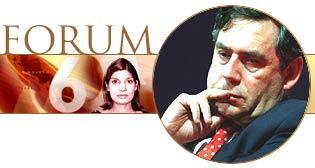
Chancellor Gordon Brown has signalled a big rise in government borrowing as he told MPs he was downgrading his hopes for UK economic growth. Delivering his pre-Budget report, he said borrowing would rise to �20bn in 2002/03 against a forecast of �11bn. And he said he expected growth of 1.6% this year, compared with his forecast in April of between 2% and 2.5%. It is the first time that Mr Brown has admitted that he got his sums wrong over growth. The chancellor also delivered a tough message to firefighters and other workers demanding pay rises. With inflation at 2% the government could not yield to "inflationary and unjustified pay settlements," he said. Has the Chancellor got it right? What do the changes announced in the pre-budget report mean for you? The BBC's economics editor Evan Davis answered your questions in a LIVE forum for the Six O'clock news, presented by Manisha Tank.
Well, it certainly isn't the most encouraging backdrop for the striking firefighters and public sector workers, including teachers, who were hoping for pay rises at this time. So what does all the fine detail mean? Joining me to address your questions, the BBC's economics editor, Evan Davis. Many people will want to know what all of the technicalities of a pre-budget report are really about. Angela Booth e-mailed in from Lanarkshire asking: What does it mean when the Government borrows billions of pounds? Is this paid for by extra taxes?
Now of course it doesn't mean extra tax now but down the road it does mean extra tax because at some stage you have to pay this money back which is the nasty bit, if you like, of extra government borrowing. And of course the Chancellor pays interest on that money as well. So he adds to his bills by borrowing more. But I think fortunately for Gordon Brown, he's not borrowing so much at the moment that he has to worry too much about that. But essentially savers in Britain - even some savers overseas - they lend the money to the Chancellor, he spends it and he pays it back later. Just like you or I going to bank and borrowing some money.
So I don't in a sense think he's got too much to worry about and that's precisely because over the last few years the Chancellor didn't borrow money, he paid down the debt - he was paying it back. So he got it from quite a high debt to a much lower debt and now he's letting it go up again. It's like the Grand Old Duke of York - they trim the debt down and now it's going back up a bit. Now what are the implications for euro entry - I don't think there is one. One of the rules about the euro is you can't borrow too much and you can't have too big a National Debt, so Gordon Brown is well within those rules. So his options are open still - no one's going to say to him you can't join because you're borrowing too much or your debts too big - he doesn't have to worry on that count. I think the decision about whether we join the euro will be whether Gordon Brown and Tony Blair want us to join rather than whether we meet the rules. I don't think all this borrowing has any effect there.
And the way the Government does it is it just prints a load of bits of paper - they're called gilts because they used to have a gold edge around them, so they were called gilt-edged securities - they print them and the sell them. Although it sounds like too good to be true - all the Chancellor does is prints some paper and sell it - we'd all love to be able to just print IOUs and sell them. Of course the Chancellor does have to pay it back. Fortunately for savers in Britain, the Government has a pretty record of paying its debts back. So I think you can expect that he will pay it back. So think of borrowing not as avoiding taxation - think of it as postponing taxation - it's postponing the pain. It's about buying now and paying later - that's what it's really about.
So what would happen is if Gordon Brown borrowed a ton of money and stimulated the economy, what the Bank of England would want to do would be to raise its interest rates to stop us spending as much and in a sense what would be happening is Gordon Brown would be doing more spending and the rest of us would be doing less spending and the economy would carry on. So that's the way it works. If Gordon Brown borrowed a ton of money, probably the Bank of England would want to stop us spending as much money and us borrowing as much money - there is a link. But fortunately at the moment, the economy is not overheating terribly, there isn't a huge inflation problem and Gordon Brown's borrowing is not yet catastrophic. So I don't think the Bank of England will feel it has to respond terribly strongly to what Gordon Brown is doing. If however he had to borrow a great deal more than he says he is borrowing, then I think the Bank of England would act. But what the Bank of England is always trying to do is to maintain a juggling act - if Gordon Brown is increasing his spending without raising taxes then the Bank of England wants to stop us spending a bit so the economy doesn't have too much overspending overall. But I don't think that will be their problem for the time being.
But Mike is absolutely right, that if Gordon Brown raised taxes to pay the firefighters, then it wouldn't be particularly inflationary because the firefighters would be richer, we would be a bit poorer and that would, if you like, all balance out. It wouldn't be that the economy would be heating up. There's just one other factor of course which is on Gordon Brown's mind which is if you paid the firefighters more then a lot of other people start saying they want more if everybody in the private sector said we want 16% or we want even more than that, then you do have inflationary consequences. I don't actually see that happening. But the essence of it is, if you wanted to raise taxes and pay them, you could - it's a political choice and the Government have clearly made the political choice they have.
But it's not altogether Gordon Brown's actions that have created this situation - of course a lot of it is private sector companies congregating down in the South East. And I'm not absolutely sure what he could do about it. One solution to the problem of the congested South East and higher prices, is let the high prices do the job for him. What happens is, if London and South East become hideously expensive - as I think it has done - a lot of sensible business people will say, why go down south, what a horrible place to go - it costs twice as much as being up North or in Scotland or in Wales - there are so many places you can go that are wonderful places to do business and you don't need to pay all those high prices. In fact at the CBI conference I was at earlier this week, the North West Development Agency launched a campaign called Capital Punishment which was basically saying - it was a mocking campaign saying - who wants to put a business in the South East, it's so expensive there you might as well put it somewhere else and save a lot of money.
Another theory - let's call this the Neil theory, which I would attach a 20% - 25% probability to - is that the economy hasn't been stable at all, we've had a huge boom over the last few years and it has been paid for by foreigners lending money to us and the sign that that's going on is that actually we've got this terrible trade deficit - we're importing much more than we're exporting. Now that look great, everything looks wonderful because everyone feels very rich while we're importing more than we're exporting - everyone thinks, look I can buy cars cheap, I can buy this or that and the Pound is very high and keeps inflation low. But ultimately, we can't go on importing more than we're exporting and when that day of reckoning comes and we have to balance the national accounts, it might be rather painful and we'll discover that we were never as rich as we thought. And that is, I think, one of the nightmare scenarios that Gordon Brown obviously has to have in the back of his head. I think it's more likelier still that the economy will pan out alright. But I think we have to be very ready to say that actually we've had a rather over-extended boom - we've had too much consumption and too much of a trade deficit that has made the economy look much better, made us feel richer than we really are.
One thing I always say is, never overstate the power of politicians - they can do their best, they can pull this lever and they pull that and they can make a bit of a difference to an economy. But one thing they can't do is work miracles. Gordon Brown is not going to be the man who determines whether our economy is successful or not, that's down to the likes of you and I.
| |
Top Talking Point stories now:  Links to more Talking Point stories are at the foot of the page. | |||||||||||||||||||||||||||||||||||||||||||||||||||||||||||||||||||||||||||||||||||||||||||||||||||||||||||||||||||||||||||||||||||||||||||||||||||||||||
| |
|  E-mail this story to a friend E-mail this story to a friend |
| |
| Links to more Talking Point stories |
| | | ||
 | ||||
 | | Back to top
| ||
| ---------------------------------------------------------------------------------- To BBC Sport>> | To BBC Weather>> | To BBC World Service>> ---------------------------------------------------------------------------------- © MMIII | News Sources | Privacy |