
|
 |
 | | | | | | |||||||||||||||||||||||||||||||||||||||||||||||||||||||||||||||||||||||||||||||||||||||||||||||||||||||||||||||||||||||||||||||||||||||||||||
| | | You are in: Business | |||||||||||||||||||||||||||||||||||||||||||||||||||||||||||||||||||||||||||||||||||||||||||||||||||||||||||||||||||||||||||||||||||||||||||||||
|
| | Tuesday, 5 November, 2002, 15:11 GMT Germany braces for budget criticism 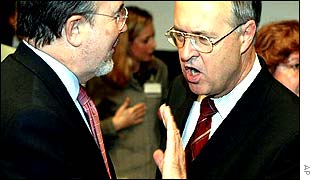 German finance minister Hans Eichel may cut spending Germany is facing the humiliation of a formal reprimand from the European Commission for its growing budget deficit. German finance minister Hans Eichel has admitted that Europe's biggest economy will this year exceed the 3% budget deficit allowed under the EU rules. And next week it will be formally warned by the European Commission to mend its ways or face economic sanctions.
The Commission says that Germany's deficit could be as high as 3.7%, and it has already warned Portugal, with a 4.7% deficit, that it faces fines that could ultimately amount to 5% of its GDP. France and Italy are also expected to come close to the 3% limit this year. Urgent action needed Germany has promised to take corrective action, including huge cuts in pension and healthcare provision, to stem its growing deficit. But the basic problem is the slow German economy, which is being eclipsed in Europe by its more robust neighbours like France and Spain. The Spanish central bank warned that countries with "excessive" deficits should carry out "structural reforms" to make themselves more efficient. Spain, along with the UK, has been the main advocate within the EU of further liberalisation of labour markets, ending cushy labour laws and job protection. Role of the ECB The news will also throw a spotlight on the role of the European Central Bank, which sets interest rates across the whole 12 member eurozone. The ECB has kept rates unchanged at 4.5% for most of the year, as the German economy has weakened. It will decide on Thursday whether to change them - and most observers expect little movement despite the prospect of a US rate cut.
Critics argue the ECB should be cutting rates to boost economic growth, rather than worrying about inflation in countries like Spain and Ireland. But others say the scenario only goes to prove that a "one size fits all" economic policy does not work. Many are also critical of the narrow criteria of the stability pact, with its fixed limit of a 3% budget deficit whatever the state of the economy. Some economists argue that it should be revised so countries in a recession would be allowed to borrow more - similar to the rule the UK government is applying to its own finances. However, many smaller countries in the eurozone say that they have gone through the pain of budget cuts to meet the ECB rules, and they strongly object to any exemptions for the big players. | | See also:  21 Oct 02 | Business 21 Oct 02 | Business 17 Oct 02 | Business 12 Feb 02 | Business 30 Jan 02 | Business 30 Jan 02 | Business 07 Feb 02 | Business 21 Jan 02 | Business 04 Dec 01 | Business 11 Feb 02 | Business Internet links: The BBC is not responsible for the content of external internet sites Top Business stories now: Links to more Business stories are at the foot of the page. | |||||||||||||||||||||||||||||||||||||||||||||||||||||||||||||||||||||||||||||||||||||||||||||||||||||||||||||||||||||||||||||||||||||||||||||
| |
|  E-mail this story to a friend E-mail this story to a friend |
| |
| Links to more Business stories |
| | | ||
 | ||||
 | | Back to top
| ||
| ---------------------------------------------------------------------------------- To BBC Sport>> | To BBC Weather>> | To BBC World Service>> ---------------------------------------------------------------------------------- © MMIII | News Sources | Privacy |




