
|
 |
 | | | | | | ||||||||||||||||||||||||||||||||||||||||||||||||||||||||||||||||||||||||||||||||||||||||||||||||||||||||||||||||||||||||||||||||||||||||||||
| | | You are in: Business | ||||||||||||||||||||||||||||||||||||||||||||||||||||||||||||||||||||||||||||||||||||||||||||||||||||||||||||||||||||||||||||||||||||||||||||||
|
| | Tuesday, 5 November, 2002, 10:31 GMT Strikes paralyse Korean industry 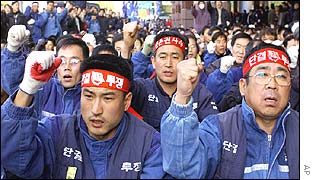 The strikes come amid fears that pay may be cut Some of South Korea's biggest employers have been paralysed by strikes, as 120,000 workers protest against working conditions ahead of next month's presidential election.
Members of the Korea Confederation of Trade Unions (KCTU) downed tools at 0400 GMT, amid fears that employers may cut wages. Worst-hit were big industrial firms, notably Hyundai Motor, Kia Motors and Ssangyong Motor, and KCTU officials said the action could spread in the next few days. Tuesday's walkouts represent an escalation of a small strike by civil servants on Monday, which was sparked by government proposals to shorten the working week. Analysts are predicting a wave of labour unrest in the weeks leading up to election on 19 December. Industrial revolution Hyundai, Korea's biggest car maker, said production of more than 10,000 vehicles had been lost, worth about 150bn won (�79m; $123m). The news will further depress Korea's industrial output, which has stagnated in recent months. Markets remained unfazed, however, ending the day down only slightly - and that only because investors had been cashing-in on a strong few days' trading. "Labour unions always want to take advantage of this timing to call public attention to their demand, whether it's accepted or not," said Kim Young-ho of Daewoo Securities. "The financial markets are immune to this kind of action." Less work, less pay Plans to cut the working week, announced by the government, may appear beneficial for workers, many of whom would no longer have to work Saturday mornings. But the KCTU said overall workers incomes may fall and the government also wanted to cut the number of public holidays. The parliamentary committee on labour is meeting this week to discuss the proposals to cut the working week by four hours to 40 hours. The measure requires further parliamentary approval before it becomes law, however. | | See also:  27 May 02 | Business 23 May 02 | Business 22 May 02 | Business 02 Apr 02 | Business 25 Mar 02 | Business 21 Mar 02 | Business 26 Feb 02 | Asia-Pacific 08 Mar 02 | Country profiles Internet links: The BBC is not responsible for the content of external internet sites Top Business stories now: Links to more Business stories are at the foot of the page. | ||||||||||||||||||||||||||||||||||||||||||||||||||||||||||||||||||||||||||||||||||||||||||||||||||||||||||||||||||||||||||||||||||||||||||||
| |
|  E-mail this story to a friend E-mail this story to a friend |
| |
| Links to more Business stories |
| | | ||
 | ||||
 | | Back to top
| ||
| ---------------------------------------------------------------------------------- To BBC Sport>> | To BBC Weather>> | To BBC World Service>> ---------------------------------------------------------------------------------- © MMIII | News Sources | Privacy |





