|
 |
 | | | | | | |||||||||||||||||||||||||||||||||||||||||||||||||||||||||||||||||||||||||||||||||||||||||||||||||||||||||||||||||||||||||||||||||||||||||||||||||||||||||||||||||||||||||||
| | | You are in: Business | |||||||||||||||||||||||||||||||||||||||||||||||||||||||||||||||||||||||||||||||||||||||||||||||||||||||||||||||||||||||||||||||||||||||||||||||||||||||||||||||||||||||||||||
|
| | Friday, 4 October, 2002, 08:16 GMT 09:16 UK UK plc says let UN deal with Iraq 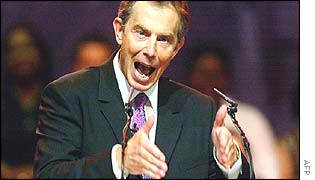 Tony Blair advocates the use of force against Iraq
Two major employer groups, the Confederation of British Industry (CBI) and the Federation of Small Business (FSB), believe the UN should deal with the issue and that a military conflict should be the last possible resort.
The employer groups said the dispute was causing uncertainty which was destabilising an already fragile economy. Possible military action in Iraq and a wider Middle East conflict have contributed to recent erratic stock market swings, pushed oil prices to near $30 a barrel, and dampened business confidence. Business fears The CBI, Britain's biggest business group, sees a US recovery and Middle East conflict as the two main factors influencing the UK economy. Mr Blair can do little to help the US economy, but has some sway over whether there is a war on Iraq.
"If the issue was solved in a peaceful way, that would be the best scenario," Doug Godden, the CBI's head of economic analysis told BBC News Online. Mr Godden said the issue should be dealt with by the UN. "The UK economy is fairly fragile but there's no [economic] policy reason to prevent a recovery," he said. "There's major uncertainty about a military conflict, and a sharp increase in the oil price, and its causing business to weigh up their investment decisions." Former Saudi Arabian oil minister Sheik Yemani has already warned that a chemical attack on a Middle East oil facility could push oil to $100 per barrel. Last minute advice Few British business leaders are willing to dip their oar into the politics of war. But Allan Leighton, chairman of firms including Consignia, construction group Wilson Connolly and Lastminute.com, said he did not believe in unilateral US action in Iraq. "The United Nations is the right route to go down," Mr Leighton told BBC News Online. He said war was not the only factor influencing the economy but the talk of war was causing "even further uncertainty". "You've got a lot of things in the mix, put them all together and it makes people very nervous." Small talk? Small business is also on edge over the talk of war. Stephen Alambritis, head of parliamentary affairs for the Federation of Small Business said that the uncertainty was impacting his members. "As large companies worry about stability, then that adversely affects small businesses," he said, adding there had been no evidence of cost cutting yet. "If the UN took control, and no superpower was lurking, and it was resolved peacefully then economic stability wouldn't be cancelled out," he said. Small businesses would be more dramatically affected than big business if there was a strong fall in consumer confidence and a rise in oil prices. "Petrol is an essential tool of trade for small business and if there's a conflict and prices go up, it will have an adverse affect," he said. The FSB represents 170,000 small businesses employing less than 20 people. Investment slowdown The Institute of Directors (IoD) said it could not comment on the politics of war on Iraq but said that, if it were to happen, a short and swift conflict would be desirable. "The biggest factor is that it adds to the uncertainty of the global economic outlook and added concerns of the falling stock markets and the US economy situation," said Graeme Leach, head of economic policy at the IoD. "There's also a direct impact on consumer confidence." The latest quarterly IoD survey of its members showed investment intentions had shown a "significant fall" in the last six months. Mr Leach said US corporations would be experiencing a similar impact. Union battle In a fierce debate on Monday at the Labour party conference, the leaders of some of Britain's biggest trade unions, including Unison and the CWU, stressed their opposition to a US-led war. But an amendment flatly opposing military action in Iraq by the US or anyone else was narrowly defeated by the block votes of the TGWU, GMB and Amicus. John Monks, secretary general of the Trades Union Congress, said it opposed "any military action on a unilateral basis, being contemplated by the United States - or any other nation". "That way lies disaster - the only way, the right way, is through the United Nations," he said. | |
See also:  03 Oct 02 | Politics 02 Oct 02 | Americas 09 Sep 02 | Politics 08 Sep 02 | Business Top Business stories now: Links to more Business stories are at the foot of the page. | |||||||||||||||||||||||||||||||||||||||||||||||||||||||||||||||||||||||||||||||||||||||||||||||||||||||||||||||||||||||||||||||||||||||||||||||||||||||||||||||||||||||||||
| |
|  E-mail this story to a friend E-mail this story to a friend |
| |
| Links to more Business stories |
| | | ||
 | ||||
 | | Back to top
| ||
| ---------------------------------------------------------------------------------- To BBC Sport>> | To BBC Weather>> | To BBC World Service>> ---------------------------------------------------------------------------------- © MMIII | News Sources | Privacy |