|
 |
 | | | | | | |||||||||||||||||||||||||||||||||||||||||||||||||||||||||||||||||||||||||||||||||||||||||||||||||||||||||||||||||||||||||||||||||||||||||||||||||||||||||||||||||||||||||||||||||||||||||||||||||||||||||||||||
| | | You are in: Business | |||||||||||||||||||||||||||||||||||||||||||||||||||||||||||||||||||||||||||||||||||||||||||||||||||||||||||||||||||||||||||||||||||||||||||||||||||||||||||||||||||||||||||||||||||||||||||||||||||||||||||||||||
|
| | Sunday, 8 September, 2002, 08:14 GMT 09:14 UK War with Iraq could spark recession 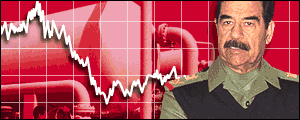
 Middle East governments react with heavy-handed oppression - and one state, perhaps, descends into anarchy.
Israel retaliates and the Palestinian conflict spills out into a regional confrontation. "That would be Middle East conflagration," says Ian Bremmer, president of the research firm, Eurasia Group, in New York. "That'll push oil prices up! "Conflagration could have a long-term effect on the oil markets and push us into economic recession." Analyse this We are, however, only speaking in scenarios - something analysts do a lot. Although most see war with Iraq as an almost-certainty, the various, possible consequences of such a conflict are still being mapped out.
One of the biggest risks for all of us watching the war on television would be the impact on our wallets. The chain reaction starts with a spike in the cost of oil, which in turn raises business costs, leads to possible unemployment, or simply makes it more expensive to heat our homes and run our cars. But for all the political tub-thumping, economists are remarkably sanguine about our economic prospects. "There is considerable uncertainty about the amount of damage a conflict would do," says Nigel Pain of London's National Institute of Economic and Social Research (NIESR). "But for a recession there would have to be a sustained spike in the oil price." The cost of war At the moment, the cost of Brent crude oil is hovering just below $30 a barrel. During the Gulf War of 1991, it shot up above $40.
In the event of war, with Iraqi oil off-tap, the oil price would probably jump, but the question is how high and for how long. "If it persists at high levels, perhaps for six to nine months, then that could lead to a recession," says Mr Pain. However, most analysts are expecting a brief military campaign and - in the optimal scenario from their point of view - a change of regime in Iraq.
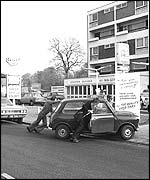
He believes that would up Iraq's current production capacity and, with the excess supply, even bring oil prices down. Knocked out Even so, many are haunted by the oil crisis of 1973-4, when an oil shortage and the subsequent price rise helped cause a world recession.
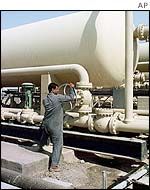
The cranky state of the country's current oil facilities means its output - 1.5 to 1.7 million barrels a day - is insignificant compared with world production of 76 million barrels. "Industry is also much less dependent on oil than it was in the 1970s and we are much more efficient at using energy," he adds. In addition, since then, the US has been building its reserves to avoid a similar crisis - and even in the past few months President George W Bush has taken steps to boost an emergency oil supply. That said, some of the newly industrialized economies in Asia, including China, would be more susceptible to any oil shortages or price hikes. The oil-producing cartel Opec, however, is soothing nerves by suggesting it could cover any shortfall to keep prices below $30. Damaged But even under the most optimistic scenario, with oil prices high for only a short time, it could crimp corporate profits - as businesses try to absorb rising costs - and dent economic growth.
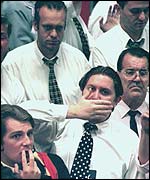
The big danger is that consumers - worried about their jobs or hit by higher fuel costs - would decide to keep a tight grip on their wallets And, in a perverse cycle of self-fulfilling prophecy, when they stopped spending, businesses would suffer even more. Nevertheless, ABN Amro economist Matthew Wickens is still betting on a "sub-par recovery" for the US, rather than a lurch into double-dip recession. But as the build-up for war gathers steam, the economic risks should loom large, alongside political considerations and the potential loss of human lives. | |
See also:  06 Sep 02 | Middle East 06 Sep 02 | Business 05 Sep 02 | Middle East 06 Sep 02 | Business 06 Sep 02 | Politics 05 Sep 02 | Europe 05 Sep 02 | Politics 05 Sep 02 | Americas 02 Sep 02 | September 11 one year on 02 Sep 02 | Business 05 Aug 02 | Business 31 Jul 02 | Business Internet links: The BBC is not responsible for the content of external internet sites Top Business stories now: Links to more Business stories are at the foot of the page. | |||||||||||||||||||||||||||||||||||||||||||||||||||||||||||||||||||||||||||||||||||||||||||||||||||||||||||||||||||||||||||||||||||||||||||||||||||||||||||||||||||||||||||||||||||||||||||||||||||||||||||||||
| |
|  E-mail this story to a friend E-mail this story to a friend |
| |
| Links to more Business stories |
| | | ||
 | ||||
 | | Back to top
| ||
| ---------------------------------------------------------------------------------- To BBC Sport>> | To BBC Weather>> | To BBC World Service>> ---------------------------------------------------------------------------------- © MMIII | News Sources | Privacy |