|
 |
 | | | | | | ||||||||||||||||||||||||||||||||||||||||||||||||||||||||||||||||||||||||||||||||||||||||||||||||||||||||||||||||||||||||||||||||||||||||||||||||||||||||
| | | You are in: Business | ||||||||||||||||||||||||||||||||||||||||||||||||||||||||||||||||||||||||||||||||||||||||||||||||||||||||||||||||||||||||||||||||||||||||||||||||||||||||||
|
| | Sunday, 29 September, 2002, 10:26 GMT 11:26 UK Pace of reform dominates Serbia poll 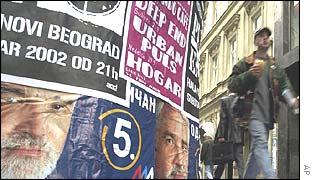 The economy is the number-one issue in this election
To say the least, Jagos Vojinovic has not benefited from Serbia's economic reform programme. Two years ago, after a long career as an engineer at the Zastava car factory - makers of the tinny national car, the Yugo - the 50-year-old lost his job. Now Mr Vojinovic and his wife Slavica - who also once worked at the factory - sell underwear, and the odd pack of cigarettes in the local market. They manage to scrape by on six euros (�4) a day - not enough for their family of four. The Serbian economy, whose failure to blossom after the toppling of Yugoslav tyrant Slobodan Milosevic two years ago, is at the heart of Serbia's current presidential election campaign. Voting in the republic, the larger half of the Yugoslav Federation, gets under way on Sunday. Car crash At Zastava itself the production lines run slowly. Once they made 200,000 vehicles a year.
Where 31,000 used to be employed, the government's economic restructuring programme has reduced that to 8,000. Factories like Zastava were once propped up by communist handouts, employing far too many people to be economically successful. Those days have long gone. "Serbia wants to grow up. We want to improve our industry, and economy," says Zoran Stosic, the manager of Zastava's mechanical treatment centre. "We want to be a part of Europe and of European markets." In the doldrums But Serbia is a long way from that.
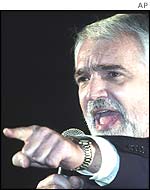
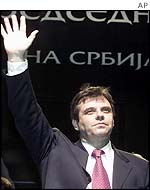
Unemployment runs at around 50%. Average monthly wages are 160 euros. The informal sector - economist-speak for the black market - represents at least one-third of all economic transactions. What to do about the economy is occupying the minds of voters here at the moment, as the first round of voting opens on Sunday. Although there are 11 candidates, only two are thought to have a real chance. And both would give Serbia a very different economic future. Two-speed economy The current Yugoslav president, Vojislav Kostunica, is expected to attract around 30% of the vote.
Mr Labus already works closely with the reformers in Serbia's government. He believes in a fast economic transition, and membership of the European Union as soon as possible. The nationalistic Mr Kostunica, by contrast, feels the country is selling out to the West. Many feel he would rein in the Serbian government, and slow the reform programme. Crisis talk Although the presidency wields little actual power, it is a significant post. If Mr Labus wins the election, it would give the Serbian Government the impetus to carry on with its reforms. But if the popular Mr Kostunica wins, many fear a constitutional crisis. Many politicians in the governing coalition, analysts say, could swap to the president's camp in the event that he wins, undermining the government, paralysing parliament, and interfering with the economy. Fast and slow Voters are split - and their personal circumstances largely dictate which way their political opinions are leaning.
He is still employed at the Zastava factory. His wages are better, so too his work conditions. "These changes have happened and in my opinion nothing can stop them. It doesn't matter who comes into power. People and the workers understand it has to be that way, to make change possible." Money matters But talk in the market to people like Jagos Vojinovic, and you realise not everyone is happy with the reformers. "In these elections I'm more inclined to support a candidate who opposes the government. Not the so-called reformers." Where once nationalism played the main part in elections in this country, now the economy and standards of living will be the deciding factor. And fundamentally, the difference between the leading candidates is one of pace of reform, rather than the idea of reform itself, says Nebojsa Radisic, a correspondent with Blic newspaper. "I don't think these elections will change Serbia's future. Serbia chose its future when Milosevic was toppled." | | See also:  27 Sep 02 | Europe 25 Sep 02 | Europe 27 Sep 02 | Media reports 09 Aug 02 | Europe 23 Aug 02 | Europe 18 Jul 02 | Europe 15 Mar 02 | Europe Internet links: The BBC is not responsible for the content of external internet sites Top Business stories now: Links to more Business stories are at the foot of the page. | ||||||||||||||||||||||||||||||||||||||||||||||||||||||||||||||||||||||||||||||||||||||||||||||||||||||||||||||||||||||||||||||||||||||||||||||||||||||||
| |
|  E-mail this story to a friend E-mail this story to a friend |
| |
| Links to more Business stories |
| | | ||
 | ||||
 | | Back to top
| ||
| ---------------------------------------------------------------------------------- To BBC Sport>> | To BBC Weather>> | To BBC World Service>> ---------------------------------------------------------------------------------- © MMIII | News Sources | Privacy |