|
 |
 | | | | | | ||||||||||||||||||||||||||||||||||||||||||||||||||||||||||||||||||||||||||||||||||||||||||||||||||||||||||||||||||||||||||||||||||||||||||||||||||||||||||||||||||||||||||||||||
| | | You are in: Business | ||||||||||||||||||||||||||||||||||||||||||||||||||||||||||||||||||||||||||||||||||||||||||||||||||||||||||||||||||||||||||||||||||||||||||||||||||||||||||||||||||||||||||||||||||
|
| | Wednesday, 4 September, 2002, 10:27 GMT 11:27 UK Budget woes haunt NYC 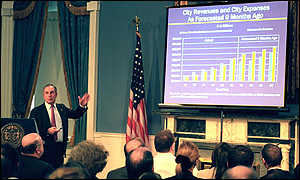 Mayor Bloomberg has filled the budget gap - for now
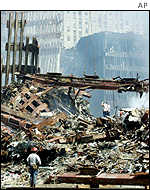
The toppling of the Twin Towers and massive drop in share prices have pushed New York City's finances to the brink, leaving it facing the worst fiscal crisis since the mid-1970s.
After a brief but glorious period in the late 1990s during which the city's fortunes boomed, crime evaporated and quality of life revived, the Big Apple now faces tough choices in order to close the money gap. The city's recently elected mayor, Michael Bloomberg, has managed to shore up the city's short-term finances with a few cuts in services and by borrowing billions of dollars - a one-time stopgap measure. And while the terror attacks were horrific, resulting in the deaths of more than 2,900 people and vast destruction, Big Apple budget-watchers are more apt to blame Wall Street's recent stock rout for the city's current fiscal ails. Lingering effects The steep drop in stock prices and the bursting of the internet bubble resulted in the loss of thousands of high-paying jobs, pushing up the city's unemployment rate to 8% from 5.7% in the last year and lowering tax receipts.
Observers say city budget officials failed to take into account the volatility in tax receipts and the extent to which the city is reliant on the Wall Street sector for revenues. In addition, tax cuts implemented during the surplus days of the heady 1990s have added much to New York's woes. City Hall cut taxes heavily, assuming or acting as if the rapid growth in revenues was going to continue unabated, says James Parrot, deputy director at the Fiscal Policy Institute, a non-partisan economic think tank dealing with New York issues. However, Mr Parrot argues that the lingering effects of the World Trade Center attacks on the city's bottom line cannot be discounted. "It's not 50% of the problem," Mr Parrot says. "But it's a good piece of it." Costly attacks Policy experts are nearly universal in their belief that the financial impact of the suicide attacks that fell the Twin Trade Towers cannot be measured.
"What's hard to do is separate the recession that was happening anyway before 11 September from the ultimate recession that we have," says Diana Fortuna, president of the Citizens Budget Commission, a business-backed agency that monitors the city's budget. "Clearly there was a recession happening before 11 September, and clearly 11 September made it worse," she says. So far, the only agency to attempt to quantify the effects of the attacks on the city's budget is the mayor's Office of Management and Budget (OMB). It says the attacks alone cost the city roughly $1.6bn in tax revenues for the fiscal year that ended 30 June. For the current budget year, city budget officials estimate the attacks will cost the city an additional $1.4bn in lost revenues. Reining in costs The Independent Budget Office (IBO), an independent city agency, says its projections show the city won't return to the 2001 level of tax receipts until 2004. Another way to look at it: the attacks cost the city 7% of its tax revenue last year, and another 6% of its revenues this year, says IBO director Ronnie Lowenstein.
"The problem continues because even when revenue growth resumes, it's resuming off a lower base - so you're playing catch-up," she says. Ms Lowenstein says the problem is as simple as the city's growth in spending is outstripping its growth in revenue. "Sooner of later, you have to bring them into balance." That is where Mr Bloomberg has his work cut out for him. There are only a limited number of things he can do, and any solution he comes up with has its pitfalls. Balancing act Raising taxes is traditionally a way to make-up for a shortfall in revenues. But these days, increasing the take on workers is a politically risky thing to do especially since New Yorkers are already highly taxed. Also, increasing them too much hurts the city's ability to vie for new businesses and residents, says IBO's Ms Lowenstein. Beyond raising tax receipts, the city is left with few choices: borrow more, cut spending and increase productivity to minimise the effects of cuts. At the same time, the city must maintain services since a deteriorating quality of life will do little to draw new residents or businesses. "Here we're facing a situation, which admittedly is very difficult," Ms Lowenstein says. "But we actually know how big a problem we're facing, and we have no alternative but to face it." | |
See also:  04 Sep 02 | Business 23 Aug 02 | Americas 15 Aug 02 | Americas 13 Aug 02 | Americas 12 Aug 02 | Africa 16 Jul 02 | Americas 04 Jul 02 | Americas 08 Jun 02 | Americas 29 May 02 | Business 15 May 02 | Americas Internet links: The BBC is not responsible for the content of external internet sites Top Business stories now: Links to more Business stories are at the foot of the page. | ||||||||||||||||||||||||||||||||||||||||||||||||||||||||||||||||||||||||||||||||||||||||||||||||||||||||||||||||||||||||||||||||||||||||||||||||||||||||||||||||||||||||||||||||
| |
|  E-mail this story to a friend E-mail this story to a friend |
| |
| Links to more Business stories |
| | | ||
 | ||||
 | | Back to top
| ||
| ---------------------------------------------------------------------------------- To BBC Sport>> | To BBC Weather>> | To BBC World Service>> ---------------------------------------------------------------------------------- © MMIII | News Sources | Privacy |