|
 |
 | | | | | | ||||||||||||||||||||||||||||||||||||||||||||||||||||||||||||||||||||||||||||||||||||||||||||||||||||||||||||||||||||||||||||||||||||||||||||||||||||||||||||||||||||||||||
| | | You are in: Americas | ||||||||||||||||||||||||||||||||||||||||||||||||||||||||||||||||||||||||||||||||||||||||||||||||||||||||||||||||||||||||||||||||||||||||||||||||||||||||||||||||||||||||||||
|
| | Tuesday, 13 August, 2002, 11:33 GMT 12:33 UK Ground Zero money for transport links 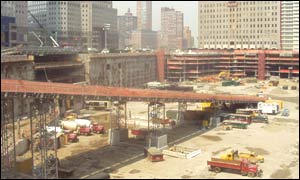 Debate over the Ground Zero plans is still a hot issue
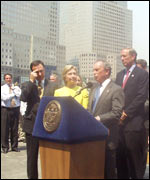
Monday's news conference at Ground Zero featuring New York's "big three" politicians, was a picture of harmony and unity. But that was because they were announcing something that they could all agree on and celebrate - the earmarking of $4.55bn from federal government to rebuild the shattered transport links of Downtown Manhattan. The well-trailed briefing, hosted by New York governor George Pataki, was carefully planned to give every agency and political voice involved, a turn at the microphone. It was a long, hot news conference. Political roles New York mayor Michael Bloomberg and state senator Hillary Rodham Clinton were guests of honour. He has eight appointees on the board of the Lower Manhattan Development Corporation (LDMC), but this body which oversees the whole redevelopment process is the brain-child of the governor. Astonishingly, the mayor has no official role at all.
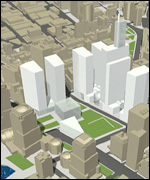
Mrs Clinton is technically the state's junior senator, but she has carved a role for herself as a Washington veteran who is battling to maximise federal support for repairing the city. Apart from helping to secure funds and petitioning the president to make more money available for environmental testing, she again has no decision-making power. So who is running the show? And what has been categorically decided upon beyond Monday's official announcement of funding to provide a "Grand Central Station for Lower Manhattan" in the words of the state's other senator, Charles Schumer? Well, the answer to the first question is mainly George Pataki, and the second part is, well, nothing, except that there needs to be some kind of impressive memorial to the 2,800 dead. Multiple interests Ever since the generally hostile response to the publication of six re-design options on 20 July, overseen by the LMDC, the goal-posts have been shifting on an almost daily basis. The long-term effect of this is to make it look extremely unlikely that a single visionary plan will be agreed by Christmas, which is the governor's declared aim. The first basic problem is that the governor does not have sole control.
To make matters more complicated, the PA is controlled by both New York and the neighbouring state of New Jersey, so either governor is at liberty to veto any project. Until the last few weeks, the PA has been insisting that exactly the same commercial space lost during the 11 September attacks - 11m square feet (1m square metres) should be provided for in the final redevelopment plan. The PA wants to get the same revenue from leases that it enjoyed before. Creative solutions It was that strict condition which led to public protests that not enough residential space was on offer, and tied the hands of designers. The six proposals were roundly condemned for lacking any vision or inspiration. So now the governors' offices, and the PA, are trying to go back to basics. One proposal is that the city swaps control and ownership of New York's two airports, La Guardia and John F. Kennedy, for the Ground Zero site.
The PA is open to suggestions, but no timetable for talks has been agreed yet. It has come back this week with counter-proposals which involve trading several million square feet of space under LMDC control, with space inside the site. It's difficult to see how this kind of tinkering will suddenly open the way to a visionary new plan. The other proposal to break the deadlock comes from Governor Pataki. Having said that he will not allow any building to take place on the sites of the twin towers themselves, he has offered to extend the 16-acre redevelopment area outwards, using special powers of "eminent domain". This would allow him to condemn property that borders the WTC site, in order to spread the redevelopment out, and diversify land use inside the zone. Back to the drawing board The problem with all the political jostling is that people who live Downtown see themselves as being powerless pawns on a constantly moving design board. Pat Moore has lived in Cedar Street, within the site area, for 25 years: "On one of the six earlier proposals we were a museum. The LMDC is releasing plans as though we no longer exist," she said. And even over the federal transport grant this week, some of the relatives of the victims are unhappy, arguing that detailed memorial plans are taking a back seat. Believing that the ground below the twin towers is as sacred as the space above, some even say that the new transport hub must be moved northwards. The LMDC is reportedly beginning a new planning initiative this week, bringing in up to five new design teams who will not be constrained by PA obligations. But it is hard to see how any drawing-board initiatives at this stage are going to inspire and unite a sceptical public, given the tangled web of who owns what, and where. New York is grappling with the quick fix mistakes of past planning deals, in coming to terms with the biggest question of its future. | | See also:  21 Jul 02 | Americas 16 Jul 02 | Americas 16 Jul 02 | Americas 31 May 02 | Americas Internet links: The BBC is not responsible for the content of external internet sites Top Americas stories now: Links to more Americas stories are at the foot of the page. | ||||||||||||||||||||||||||||||||||||||||||||||||||||||||||||||||||||||||||||||||||||||||||||||||||||||||||||||||||||||||||||||||||||||||||||||||||||||||||||||||||||||||||
| |
|  E-mail this story to a friend E-mail this story to a friend |
| |
| Links to more Americas stories |
| | | ||
 | ||||
 | | Back to top
| ||
| ---------------------------------------------------------------------------------- To BBC Sport>> | To BBC Weather>> | To BBC World Service>> ---------------------------------------------------------------------------------- © MMIII | News Sources | Privacy |