
|
 |
 | | | | | | ||||||||||||||||||||||||||||||||||||||||||||||||||||||||||||||||||||||||||||||||||||||||||||||||||||||||||||||||||||||||||||||||||||||||||||||||||||||||||||
| | | You are in: Business | ||||||||||||||||||||||||||||||||||||||||||||||||||||||||||||||||||||||||||||||||||||||||||||||||||||||||||||||||||||||||||||||||||||||||||||||||||||||||||||||
|
| | Wednesday, 21 August, 2002, 15:30 GMT 16:30 UK Fears grow for first-time buyers 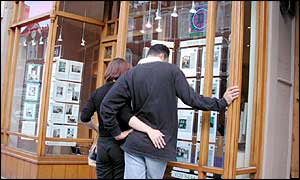 Young people will find it even harder to get on the property ladder Rising house prices and deposits mean the next generation of first-time buyers may have to wait until they are late thirty-somethings to afford a property, research has suggested. Internet bank Egg said first properties were less affordable now than at any time in the last 25 years, and that the outlook for buyers was getting worse. Not only will higher prices mean having to wait longer to get on the property ladder - marriage, parenthood and even pensions are also being put on hold. Egg's report found the average deposit for first time buyers had quadrupled since 1996 and was rising by almost 7% a year. Massive regional differences The area in which first-time buyers choose a home has a huge effect on affordability, with those in London particularly hard hit.
Prices in the capital are now nearly twice the national average and even 45% higher than the next most expensive region, the South East. The most affordable areas include Humberside, Wales and the North West. But Egg said "changing economic and social factors" were making houses even less affordable, and that young people were not saving enough to get on the property ladder. Only 32% of the 18-25 year olds questioned have saved enough for a deposit. Changing social landscape The saving squeeze has wider social implications, according to the survey, with marriage and parenthood put on hold to save for a deposit. The average first time buyer in 2001 was 34 years old but this is on course to rise to 36 years by 2011. Egg said buyers may have to wait until 40 unless they started to save more or from an earlier age.
The report suggested that young people were unrealistic about the amount they need to be saving to enter the property market, with more than half relying on help from their families and even living at home longer to save their pennies. The bank said this could "tear apart the social fabric of family life, as many Britons plan to delay marriage and parenthood to get a foot on the property ladder". Worryingly for the government, which is encouraging Britons to save for their retirement, one in seven young people surveyed was prepared to postpone starting a pension to save for a deposit. The bank forecast that the average deposit for a first property would rise from �18,000 in 2001, to �24,000 in 2006, and �35,000 in 2011. Or put another way - from 71% of the average salary in 2001 to 85% in 2011. Andy Deller, head of banking and insurance at Egg, said: "The only solution open to most young people is to start saving as early as possible and to be realistic about how much they can put away each month." | |
See also:  21 Aug 02 | Business 19 Aug 02 | Business 15 Aug 02 | Scotland 14 Aug 02 | Business 06 Aug 02 | The Money Programme Top Business stories now: Links to more Business stories are at the foot of the page. | ||||||||||||||||||||||||||||||||||||||||||||||||||||||||||||||||||||||||||||||||||||||||||||||||||||||||||||||||||||||||||||||||||||||||||||||||||||||||||||
| |
|  E-mail this story to a friend E-mail this story to a friend |
| |
| Links to more Business stories |
| | | ||
 | ||||
 | | Back to top
| ||
| ---------------------------------------------------------------------------------- To BBC Sport>> | To BBC Weather>> | To BBC World Service>> ---------------------------------------------------------------------------------- © MMIII | News Sources | Privacy |






