
|
 |
 | | | | | | |||||||||||||||||||||||||||||||||||||||||||||||||||||||||||||||||||||||||||||||||||||||||||||||||||||||||||||||||||||||||||||||||||||||||||||||||||||||||||||||||||||||||||||||||||||||||||||||||||||||||||||||||||||||||||||||||||||||||||||
| | | You are in: Business | |||||||||||||||||||||||||||||||||||||||||||||||||||||||||||||||||||||||||||||||||||||||||||||||||||||||||||||||||||||||||||||||||||||||||||||||||||||||||||||||||||||||||||||||||||||||||||||||||||||||||||||||||||||||||||||||||||||||||||||||
|
| | Sunday, 28 July, 2002, 11:05 GMT 12:05 UK 'Dr Doom' sees more market pain 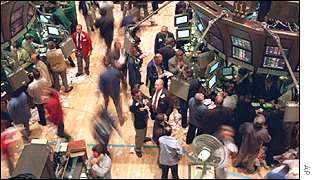 Stock market traders have faced volatile market swings
Stock market investing has never been something for those with a nervous disposition and the past week proved why. Up to Wednesday, the downward plunge in share prices had seemingly reached a frenzy. The key benchmark index of American shares - the Dow Jones average, had plunged by 1,000 points or 12% in just a week. But then things steadied a little, calming small investors in New York. "I'm in this game for the long term. I'm still a pretty young guy. And so I have no choice but to be optimistic," one of them told the BBC's World Business Report. "Overall, I think that most of the companies are pretty sound. I think that there are some who have a kind of cowboy mentality." said another. But who's to blame for the current market turmoil and how was the stock market bubble allowed to get so out of hand? Dr Doom Tony Dye - formerly boss of the Philips and Drew Fund management group, has always maintained that the share price euphoria of the late 1990s was simply hot air.
In the year 2000 he was driven out of his job because his fund - which avoided most telecoms and tech stocks - performed less well than funds run by rival managers. Mr Dye's pessimism about the technology boom earned him the soubriquet Dr Doom. He now runs his own company, Dye Asset Management, and believes the problems caused by the technology bubble have still been underestimated. "These episodes are very important, because they actually change people's behaviour. Financial markets go to levels which are unprecedented and unsustainable," he said. Another 20% drop? Companies and individuals tend to borrow more, because they believe that the good times are going to roll for ever and they will get rich. When this period comes to an end, we get what Mr Dye calls 'post-bubble trauma' - a period of below-par economic growth. "From my analysis, the bubble started some time back in 1994-95. It was at that point that the Dow went well beyond its long-term valuations and continued to do so throughout the rest of the '90s", he said. "If the market were today to be back to its long-term average value, it would still have to fall by 20-odd per cent." The market could achieve fair value through ten years of gradual erosion, or it could return to its long-term trend by means of a quicker, but more painful, readjustment. It may be that we get a period where the market, as it has done, falls very rapidly and achieves fair value tomorrow. Herd instinct President Bush has said that those who buy stocks now are likely to be rewarded.
"He's maintaining confidence, which is their role - because their role is to try and prevent a sharp stock market decline turning into a complete rout," Mr Dye said. The markets are currently at the levels of four years ago, but even then, people were warning that they were over-valued. Asked whether a panic could set in, Mr Dye said, "There's always that risk in financial markets because there tends to be trend-adaptive behaviour by the participants - which means that we actually act like animals in herds." Who's to blame? Some people are saying that speculative funds, often labelled hedge funds, have a vested interest in seeing the market go even lower. They are taking leverage bets on the market falling - in the same way that the bubble was driven by people winning with bets that the market would go up.
"It's part of the historic precedent; people look for scapegoats - who's driving the market down," Mr Dye said. "I think to blame hedge funds is completely idiotic. People should be blaming the people who drove the market so high in the first place." So who was to blame for creating this bubble? "Everybody was involved to a greater or lesser extent - who were the gatekeepers that should have perhaps been more concerned and have pointed out to people what was going on? "You've got to come back to the financial authorities - the Treasury Secretary and the Chairman of the Federal Reserve Board - as being the most responsible," he said. Referring to Alan Greenspan - the man lauded by most experts as the man who's guided the US economy to the 1990s boom years, Mr Dye maintains: "I think the financial authorities in America - and Greenspan was the foremost among them - made some very serious mistakes." "When the history books are written, Greenspan's reputation will be somewhat less than a maestro." | |
See also:  26 Jul 02 | Business 26 Jul 02 | Business 25 Jul 02 | Business 25 Jul 02 | Business 24 Jul 02 | Business 24 Jul 02 | Business 24 Jul 02 | Business 23 Jul 02 | Business Internet links: The BBC is not responsible for the content of external internet sites Top Business stories now: Links to more Business stories are at the foot of the page. | |||||||||||||||||||||||||||||||||||||||||||||||||||||||||||||||||||||||||||||||||||||||||||||||||||||||||||||||||||||||||||||||||||||||||||||||||||||||||||||||||||||||||||||||||||||||||||||||||||||||||||||||||||||||||||||||||||||||||||||
| |
|  E-mail this story to a friend E-mail this story to a friend |
| |
| Links to more Business stories |
| | | ||
 | ||||
 | | Back to top
| ||
| ---------------------------------------------------------------------------------- To BBC Sport>> | To BBC Weather>> | To BBC World Service>> ---------------------------------------------------------------------------------- © MMIII | News Sources | Privacy |







