
|
 |
 | | | | | | |||||||||||||||||||||||||||||||||||||||||||||||||||||||||||||||||||||||||||||||||||||||||||||||||||||||||||||||||||||||||||||||||||||||||||||||||||||||||
| | | You are in: Business | |||||||||||||||||||||||||||||||||||||||||||||||||||||||||||||||||||||||||||||||||||||||||||||||||||||||||||||||||||||||||||||||||||||||||||||||||||||||||||
|
| | Wednesday, 24 July, 2002, 13:25 GMT 14:25 UK Banking crisis looms over Argentina talks 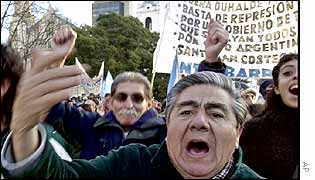 Argentines are angry at their plunge into poverty Argentina's fragile banking system has dominated the agenda at meetings between an International Monetary Fund (IMF) delegation, the Argentine government and financiers. The IMF has appointed a group of four top international bankers to act as middlemen in its talks with the South American country. "They are experienced and will certainly help Argentina find a solution to its financial problems," said the Argentine president's chief of staff, Alfredo Atanasof, ahead of their meeting with his boss. Argentina hopes to unlock $9.5bn ($6bn) of IMF funds which have been frozen since it the country defaulted on huge international loans in December. Deadlock? The expert panel is on a mission to understand the country's problems and make recommendations to the IMF. Conflicting messages from meetings with Argentine lawmakers and bankers highlighted the problem facing the mission. Lawmakers told the mission that Congress would reject any economic salvage plan that hinges upon freezing the savings of ordinary Argentines and turning them into bonds - paper pledges to pay the depositors in future - according to Jorge Capitanich of the ruling Peronist party. But Argentine bank presidents stressed the need to reverse judicial rulings that are permitting savers to withdraw money. They handed over a letter calling for "an end to withdrawals by court order". Argentines' access to their savings - being rapidly eaten up by inflation - is a highly sensitive issue. Temporary bank closures led to riots in January. Both the government of President Eduardo Duhalde and the IMF want to prevent a run on the banks. The government has already turned some deposits into bonds; it wants to extend this scheme on an optional basis. The IMF is thought to want a tougher, compulsory scheme. 'Wait and see' An attempt in April to get Congressional support for a compulsory scheme led to the resignation of the economics minister. The delegation has declined to make public comments about its visit to Argentina, which began on Monday. It is led by Andrew Crockett, managing director of the Swiss-based Bank of International Settlements, which sets standards for central bankers. The other three members are all ex-heads of central banks in Germany, Spain and Canada - Hans Tietmeyer, Luis Angel Rojo and John Crow. The delegation did not put forward any demands or proposals. "They listened, they asked questions and that was it," said the president of one local bank, Banco Hipotecario. | |
See also:  16 Jul 02 | Business 07 Jul 02 | Business 04 Jun 02 | Americas 05 Jul 02 | Business 25 Jun 02 | Business Internet links: The BBC is not responsible for the content of external internet sites Top Business stories now: Links to more Business stories are at the foot of the page. | |||||||||||||||||||||||||||||||||||||||||||||||||||||||||||||||||||||||||||||||||||||||||||||||||||||||||||||||||||||||||||||||||||||||||||||||||||||||||
| |
|  E-mail this story to a friend E-mail this story to a friend |
| |
| Links to more Business stories |
| | | ||
 | ||||
 | | Back to top
| ||
| ---------------------------------------------------------------------------------- To BBC Sport>> | To BBC Weather>> | To BBC World Service>> ---------------------------------------------------------------------------------- © MMIII | News Sources | Privacy |






