
|
 |
 | | | | | | |||||||||||||||||||||||||||||||||||||||||||||||||||||||||||||||||||||||||||||||||||||||||||||||||||||||||||||||||||||||||||||||||||||||||||||||||||||||||||||||||||||||||||||||||||||||||||||||||||
| | | You are in: Business | |||||||||||||||||||||||||||||||||||||||||||||||||||||||||||||||||||||||||||||||||||||||||||||||||||||||||||||||||||||||||||||||||||||||||||||||||||||||||||||||||||||||||||||||||||||||||||||||||||||
|
| | Thursday, 18 July, 2002, 04:40 GMT 05:40 UK Relief for battered US markets 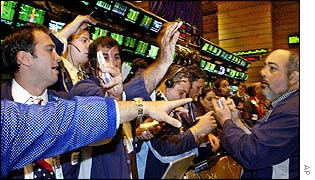 Demand is creeping back, but traders remain jumpy US stocks have settled higher, drawing a line under a week-long losing streak which has wiped about 10% off the value of leading companies. The blue-chip Dow Jones index closed 0.7% higher at 8,534.17 points, while the technology-oriented Nasdaq settled up 1.52% points at 1,396.16. The Dow had soared up to 240 points higher on Wednesday morning in New York, but struggled to hold onto its early gains as investor confidence, momentarily buoyed by solid results from tech giant Intel, began to ebb away.
In Europe, London's FTSE 100 closed more than 4% up on the day, while Frankfurt and Paris stocks also settled higher, and Japan's Nikkei index climbed by 2% on Thursday. But the mood is still jumpy: there are fears that earnings statements due from a string of blue-chip firms will disappoint investors. On Wednesday, investors were digesting results from a string of big companies including Citigroup, Boeing, Coca Cola and IBM. Share price wipe out On Tuesday, the Dow had shed 2%, closing lower for the seventh day running for the first time since 1985. The sharp sell-off came despite calming words from US central bank chief Alan Greenspan. Most viewed Mr Greenspan as offering cautious optimism about the state of the US economy, in his semi-annual report to Congress. 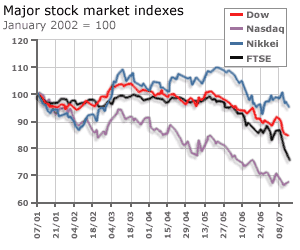 Investor nerves have been frayed by doubts about the ability of US companies to generate increased profits and steer clear of accounting irregularities. Recession Stock markets worldwide continue to take their lead from Wall Street, home of the world's biggest corporations and barometer of the health of the world's biggest economy. With stock market indexes still suffering wild swings, there is growing concern about the effect of falling markets on the global economy. Falling stock prices generally lead consumers to cut spending, and could push the economy back into recession. | |
See also:  16 Jul 02 | Business 16 Jul 02 | Business 16 Jul 02 | Business 16 Jul 02 | Business 15 Jul 02 | Business 15 Jul 02 | Business Internet links: The BBC is not responsible for the content of external internet sites Top Business stories now: Links to more Business stories are at the foot of the page. | |||||||||||||||||||||||||||||||||||||||||||||||||||||||||||||||||||||||||||||||||||||||||||||||||||||||||||||||||||||||||||||||||||||||||||||||||||||||||||||||||||||||||||||||||||||||||||||||||||
| |
|  E-mail this story to a friend E-mail this story to a friend |
| |
| Links to more Business stories |
| | | ||
 | ||||
 | | Back to top
| ||
| ---------------------------------------------------------------------------------- To BBC Sport>> | To BBC Weather>> | To BBC World Service>> ---------------------------------------------------------------------------------- © MMIII | News Sources | Privacy |









