|
 |
 | | | | | | |||||||||||||||||||||||||||||||||||||||||||||||||||||||||||||||||||||||||||||||||||||||||||||||||||||||||||||||||||||||||||||||||||||||||||||||||||||||||||||||||
| | | You are in: Business | |||||||||||||||||||||||||||||||||||||||||||||||||||||||||||||||||||||||||||||||||||||||||||||||||||||||||||||||||||||||||||||||||||||||||||||||||||||||||||||||||||
|
| | Friday, 12 July, 2002, 16:44 GMT 17:44 UK Transport's spending plans 
Alistair Darling is a man who finds himself in an unusual position. He's a Transport Secretary, and he has a great deal of money to spend on transport. How different it has been in the past. Successive governments of whatever colour have found it almost impossible to dig deep for the country's trains, buses and roads. So Mr Darling hasn't had to fight as hard as his colleagues for the Treasury's financial favour before this spending review. Instead he has been able to sit back and plan how he'd like to spend his billions. As a result it is unlikely the Chancellor's announcements will include any significant extra money for transport. The main reason is that two years ago Gordon Brown signed off the Ten Year Plan for Transport which envisaged spending �132bn over the next decade. Strategic plan 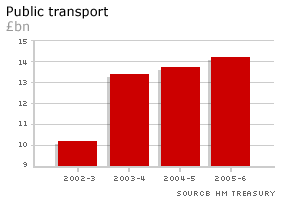 A year later Mr Brown put his signature next to the Strategic Plan for the railways. In the process he increased the amount the government will spend on track, trains and stations from �29.1bn to �33.5bn over ten years. That included an extra �1bn next year for modernising the London Underground under the Public Private Partnership. Overall the government's spending on transport is rising steadily over the next three years: Gordon Brown can of course throw these figures out of the window and start again, but senior sources at the Department for Transport say Mr Darling hasn't asked for significant funding increases, and isn't expecting any. One said "there may be a little bit of tinkering around the edges, but we've known what we've had to spend since the Ten Year Plan." Network rail There is the vexed question of Railtrack, and its planned replacement, Network Rail. The government has committed itself to up to �21bn in guarantees for the new company. This means that if Network Rail runs into the same sorts of problems as Railtrack the government will have to find enormous sums of money to help out. But these are just guarantees, not actual promises to spend, so they won't be included in the Chancellor's calculations� for now. Headline grabbing The government's preparing a progress report on the Ten Year Plan and will announce its results in the autumn. But Gordon Brown will want to offer what he hopes will be some headline-grabbing pledges in his speech. After all he's paying. He'll have to be careful though. Any suggestion he is re-announcing cash for transport that's already been made available, will be pounced on by the Conservatives. Lobby groups are hoping for cash to build big rail schemes. The upgrade of the West Coast Main Line is now expected to cost �10 billion - a huge increase on the original estimate of �2 billion . Money also needs to be found to improve the East Coast Main line. London is pushing hard for a commitment to the Crossrail project - a new line running east-west through London. That could cost at least �3bn. Public private deals Its not quite as simple as paying the money and starting work though. The government will use a series of public-private partnerships to get these projects underway. The Strategic Rail Authority will have to find private sector partners to help out. Much of the private investment envisaged in the 10 Year transport plan, hasn't yet materialised. Road lobby opponent Alistair Darling's early brush with transport policy saw him cancelling a proposed motorway in Edinburgh during his time with Lothian council. His department's commissioned a string of studies into proposed new roads - and whether they could be replaced by public transport alternatives. If all the roads were build they'd cost an extra �5bn. Whether or not the Mr Darling will be prepared to give the go-ahead, and Chancellor prepared to pay the bill will say a lot about the government's transport policy. Organisations like Transport 2000 would rather see more money pumped into local initiatives, like school buses, reopening stations, more cycle routes and public transport information systems. These, say the campaigners, would provide the "quick wins" the government so needs. Making the trains run on time Mr Brown's speech will focus on the delivery of public services more than anything else. Departments that get money will also get a set of targets to meet. On the railways in particular this could become important. The Department for Transport now publishes a series of indicators for train services, covering punctuality, the number of trains passing red stop signals, and the average age of rolling stock. If the Chancellor is looking for a way to ensure he gets value for his money, these figures are likely to be the way he measures it. Transport still isn't being given the ministerial priority of other services like health and education. But it is now third on the list. Unlike hospitals and schools, almost everyone uses a road, train or bus every day. The voters will quickly realise if there's been little improvement. | |
See also:  05 Feb 02 | Politics 10 Jul 02 | England 21 Jun 02 | England 27 Jun 02 | Business 30 May 02 | Politics 29 May 02 | Politics Internet links: The BBC is not responsible for the content of external internet sites Top Business stories now: Links to more Business stories are at the foot of the page. | |||||||||||||||||||||||||||||||||||||||||||||||||||||||||||||||||||||||||||||||||||||||||||||||||||||||||||||||||||||||||||||||||||||||||||||||||||||||||||||||||
| |
|  E-mail this story to a friend E-mail this story to a friend |
| |
| Links to more Business stories |
| | | ||
 | ||||
 | | Back to top
| ||
| ---------------------------------------------------------------------------------- To BBC Sport>> | To BBC Weather>> | To BBC World Service>> ---------------------------------------------------------------------------------- © MMIII | News Sources | Privacy |