|
 |
 | | | | | | ||||||||||||||||||||||||||||||||||||||||||||||||||||||||||||||||||||||||||||||||||||||||||||||||||||||||||||||||||||||||||||||||||||||||||||||||||||||||||
| | | You are in: Business | ||||||||||||||||||||||||||||||||||||||||||||||||||||||||||||||||||||||||||||||||||||||||||||||||||||||||||||||||||||||||||||||||||||||||||||||||||||||||||||
|
| | Monday, 15 July, 2002, 15:05 GMT 16:05 UK Brown's prudence pays off for economy Chancellor Gordon Brown has confirmed that planned big increases in spending can be made without missing the financial targets on government debt.
Mr Brown said the economic slowdown would not prevent the government from funding the largest-ever increase in public spending in the UK. "The state of our public finances is strong," Mr Brown said as he presented his plans to the House of Commons. "In a time of global instability, our task is to remain vigilant, with the strength to take the right decisions for Britain." 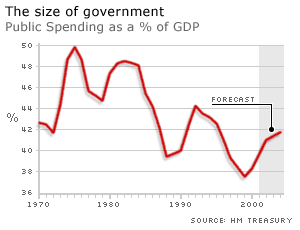 Mr Brown particularly emphasised the government's record on lowering unemployment, reducing inflation, and cutting the public debt. "We have reduced net debt to the lowest level of any of our major European competitors," Mr Brown said. But Andrew Dilnot, director of the Institute for Fiscal Studies, told the BBC that Mr Brown had "used up his good luck" and it was clear that any additional spending commitments would breach his fiscal rules. Boost for productivity Mr Brown was also keen to stress that his spending review would boost long-term productivity of the UK economy. More spending on science education and science research, and extra resources for schools are key planks for this policy. The Chancellor will expand the number of work permits for foreigners that fill key jobs from 50,000 to 175,000 so that industry can draw on more skilled workers. There will be changes to the planning system to make it easier to gain approval for major projects. And he will increase the spending on training, apprentice schemes and regional aid. So far UK productivity has lagged behind those of its main competitors, clouding prospects for higher long-term growth. Economist Diane Coyle said in the long term, measures involving planning and expanded work permits could have the biggest impact on the economy. Public sector checks But Mr Brown was also insistent that the huge amount of extra money had to be accompanied by value for money. He said that new inspectorates would be set up to ensure that each department met its performance targets. He also said that failing institutions should be dealt with at an early stage - and even local authorities could be taken over by central government if they were ineffective. But high-performing institutions would receive greater freedom and additional money. "If more is given in resources, more is expected in results," he said. Boost for sectors Shares in the City fell sharply, but that not attributed to the spending statement, but rather to a continuing sell-off on Wall Street. Economists said that the UK economy, and the government's fiscal position was still strong compared to other major industrial countries. It was expected, however, that specific company stocks would benefit from the announcement of new public money, including those specialising in house-building, health care services, and contractors who are bidding for PPP transport contracts. | |
Top Business stories now:  Links to more Business stories are at the foot of the page. | ||||||||||||||||||||||||||||||||||||||||||||||||||||||||||||||||||||||||||||||||||||||||||||||||||||||||||||||||||||||||||||||||||||||||||||||||||||||||||
| |
|  E-mail this story to a friend E-mail this story to a friend |
| |
| Links to more Business stories |
| | | ||
 | ||||
 | | Back to top
| ||
| ---------------------------------------------------------------------------------- To BBC Sport>> | To BBC Weather>> | To BBC World Service>> ---------------------------------------------------------------------------------- © MMIII | News Sources | Privacy |