|
 |
 | | | | | | ||||||||||||||||||||||||||||||||||||||||||||||||||||||||||||||||||||||||||||||||||||||||||||||||||||||||||||||||||||||||||||||||||||||||||||||||||||||||||
| | | You are in: Business | ||||||||||||||||||||||||||||||||||||||||||||||||||||||||||||||||||||||||||||||||||||||||||||||||||||||||||||||||||||||||||||||||||||||||||||||||||||||||||||
|
| | Thursday, 13 June, 2002, 09:34 GMT 10:34 UK New money for Argentina 'unlikely' Argentina's economy presents little to smile about either Argentina has admitted it is unlikely to worm any new money out of the International Monetary Fund (IMF) as a result of talks going on in Buenos Aires. The beleaguered country is desperate for fresh aid of perhaps $9bn (�6.2bn) to stabilise its economy. But currently the best that can be hoped for is probably that the payments due this year will be rescheduled, a senior ruling party figure said. Argentina is meant to pay the IMF $5.5bn this year, with a further $8.6bn due to international lenders next year. Late The current crisis was catalysed by a default late last year on the $141bn or so Argentina owes international banks and other countries. But even though there is no way that, with the economy in near-collapse, the payments can be made, so far this year fresh defaults have been avoided. A moratorium on payments would help Argentina retain credibility with the international financial community. "It's most likely that we will get purely and exclusively a rollover of this year's and next year's debts [with the IMF]," said Peronist Party legislator Jose Maria Diaz Bancalari. New laws As for new money, Buenos Aires' most recent overtures - made last week - fell on deaf ears. The IMF then felt none of its three preconditions had been satisfied. But laws have since been passed approving spending cuts and amending bankruptcy rules. A move to abolish a law which the IMF claimed could be used to penalise foreign bankers is awaiting the signature of President Eduardo Duhalde, who plans to veto a clause which retains the threat of jail sentences for executives whose negligence damages the national economy. No fault Meanwhile, the ruling party's old guard has continued to deflect blame for Argentina's troubles.
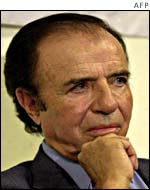
Critics claim that the seeds of the current situation were sown between 1988 and 1999, during the administration of former president Carlos Menem. It is claimed that rampant spending and alleged corruption helped push up public debt, forcing Mr Menem's successor, Fernando de la Rua, to peg the peso to the US dollar and slash public spending. But Mr Menem rejected such accusations. "During our term, the people of Argentina lived in peace, there was no seizure of bank funds, reserves increased," he told a seminar. "About $100bn has disappeared because of the action of the government after 10 December 1999." | |
See also:  12 Jun 02 | Americas 07 Jun 02 | Americas 06 Jun 02 | Business 04 Jun 02 | Americas 01 Jun 02 | Business 30 May 02 | Americas Internet links: The BBC is not responsible for the content of external internet sites Top Business stories now: Links to more Business stories are at the foot of the page. | ||||||||||||||||||||||||||||||||||||||||||||||||||||||||||||||||||||||||||||||||||||||||||||||||||||||||||||||||||||||||||||||||||||||||||||||||||||||||||
| |
|  E-mail this story to a friend E-mail this story to a friend |
| |
| Links to more Business stories |
| | | ||
 | ||||
 | | Back to top
| ||
| ---------------------------------------------------------------------------------- To BBC Sport>> | To BBC Weather>> | To BBC World Service>> ---------------------------------------------------------------------------------- © MMIII | News Sources | Privacy |