
|
 |
 | | | | | | |||||||||||||||||||||||||||||||||||||||||||||||||||||||||||||||||||||||||||||||||||||||||||||||||||||||||||||||||||||||||||||||||||||||||||||||||||||||||||||||||||||
| | | You are in: Asia-Pacific | |||||||||||||||||||||||||||||||||||||||||||||||||||||||||||||||||||||||||||||||||||||||||||||||||||||||||||||||||||||||||||||||||||||||||||||||||||||||||||||||||||||||
|
| | Tuesday, 3 December, 2002, 14:11 GMT Profile: Lee Hoi-chang 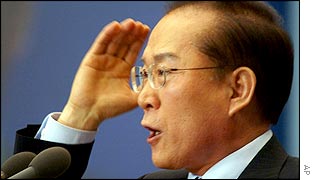 Mr Lee was narrowly beaten in the last election Lee Hoi-chang is presenting himself as a man of "law and principle" who will clean up South Korean politics if he is elected president on 19 December. He has also pledged a tough policy on North Korea, criticising outgoing President Kim Dae-jung's "sunshine policy" of trying to engage with the Communist state. Mr Lee, 67, is running for the presidency for the second time as leader of South Korea's Grand National Party (GNP).
Mr Lee has called for financial aid to North Korea to be cut off until its alleged nuclear weapon programme is dismantled. But he also says he would continue dialogue with North Korea, and would aim to hold a summit with North Korean leader Kim Jong-il if elected. Mr Lee, a former prime minister and Supreme Court judge, supports market-orientated and pro-business economic policies. He supports performance-based pay and wants to crack down on illegal strikes. He has also pledged to create more jobs for women, vowing that at least a third of high-level government posts should go to females. Legal career Mr Lee was born to an elite family in North Korea's Hwanghae province in 1935, but he grew up in the South after his father, a public prosecutor, got a new posting. A clever student, Mr Lee also studied law and became a judge at the age of 25, having graduated from the prestigious Seoul National University. He went on to become the country's youngest-ever Supreme Court judge at the age of 46, and was nicknamed "Bamboo", a Korean term for an upright person of principle. In 1988 he was appointed head of the country's state election watchdog, and in 1993 moved on to head an anti-corruption drive under then-President Kim Young-sam. He was appointed prime minister the same year but resigned after a few months, frustrated at the lack of real power in the mainly ceremonial job. In 1996 he became the chief election campaigner for the then-ruling New Korea Party (NKP). A year later the party merged with another party to become the current Grand National Party. Mr Lee makes the most of his "Bamboo" image, though he is not untouched by the whiff of scandal. He has been tainted by accusations that his two sons avoided compulsory military service by deliberately losing weight before medical examinations. Critics also say Mr Lee represents "old politics" and elitism. Mr Lee has tried to counteract that image by dying his hair brown and campaigning in pubs and fast food restaurants. | |
See also:  27 Nov 02 | Asia-Pacific 13 Sep 02 | Country profiles 04 Nov 02 | Asia-Pacific Internet links: The BBC is not responsible for the content of external internet sites Top Asia-Pacific stories now: Links to more Asia-Pacific stories are at the foot of the page. | |||||||||||||||||||||||||||||||||||||||||||||||||||||||||||||||||||||||||||||||||||||||||||||||||||||||||||||||||||||||||||||||||||||||||||||||||||||||||||||||||||||
| |
|  E-mail this story to a friend E-mail this story to a friend |
| |
| Links to more Asia-Pacific stories |
| | | ||
 | ||||
 | | Back to top
| ||
| ---------------------------------------------------------------------------------- To BBC Sport>> | To BBC Weather>> | To BBC World Service>> ---------------------------------------------------------------------------------- © MMIII | News Sources | Privacy |






