|
 |
 | | | | | | ||||||||||||||||||||||||||||||||||||||||||||||||||||||||||||||||||||||||||||||||||||||||||||||||||||||||||||||||||||||||||||||||||||||||||||||||||||||||||||||||||||||||
| | | You are in: Americas | ||||||||||||||||||||||||||||||||||||||||||||||||||||||||||||||||||||||||||||||||||||||||||||||||||||||||||||||||||||||||||||||||||||||||||||||||||||||||||||||||||||||||||
|
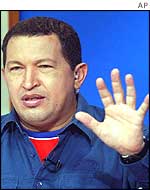
| | Tuesday, 4 February, 2003, 15:55 GMT Venezuela rejects poll plan  Chavez opponents say millions backed a referendum The Venezuelan Government has rejected an opposition call for a vote on a constitutional amendment to allow the term of President Hugo Chavez to be cut short. The move revives the spectre of prolonged political turbulence in Venezuela, after a 64-day strike had appeared to be faltering.
However, the government said it endorsed another plan - to hold a binding referendum on Mr Chavez's presidency after August. "We're proposing what we always have: referendum after 19 August as laid down in the constitution," Vice-President Jose Vicente Rangel said. Carter suggestions Mr Chavez had previously been reported as saying he would have "no problem" with the referendum. Both proposals had been put forward by former US President Jimmy Carter as ways out of the crisis. The first - the constitutional amendment - would have allowed the presidential term to be cut from six years to four years, in this case opening the way for fresh elections early next year. But the Supreme Court ruled last month that the National Assembly should appoint a new electoral body to verify the opposition petition and, if necessary, set a referendum date.
Opponents of Mr Chavez branded the ruling politically motivated as it would delay any eventual referendum by months. They accused the government of hampering negotiations to put an end to the bitter confrontation over Mr Chavez's rule. "This response takes us further away from the Carter proposal, especially about any electoral date," anti-Chavez union head and opposition negotiator Manuel Cova told the Reuters news agency. "The government just isn't interested." Not so generous Vice-President Rangel also dismissed Mr Carter's call for no reprisals against workers at the state oil company. Output from the world's fifth-largest oil exporter fell from 3.2 million barrels per day to a strike low of just 150,000 barrels. Mr Chavez has fired more than 5,000 oil company employees. Some had been given their jobs back after being involved in the short-lived coup against Mr Chavez last April. But correspondents say he looks unlikely to be so generous again. Reduced oil production remains the most damaging effect of the strike. Mr Chavez says production is back up to 1.8 million barrels a day, though oil strikers said output still hovers around one million barrels. | |
See also:  03 Feb 03 | Americas 03 Feb 03 | Business 30 Jan 03 | Business 28 Jan 03 | Business 27 Jan 03 | Americas 03 Feb 03 | Americas Internet links: The BBC is not responsible for the content of external internet sites Top Americas stories now: Links to more Americas stories are at the foot of the page. | ||||||||||||||||||||||||||||||||||||||||||||||||||||||||||||||||||||||||||||||||||||||||||||||||||||||||||||||||||||||||||||||||||||||||||||||||||||||||||||||||||||||||
 | |
|  E-mail this story to a friend E-mail this story to a friend |
| |
| Links to more Americas stories |
| | | ||
 | ||||
 | | Back to top
| ||
| ---------------------------------------------------------------------------------- To BBC Sport>> | To BBC Weather>> | To BBC World Service>> ---------------------------------------------------------------------------------- © MMIII | News Sources | Privacy |