|
 |
 | | | | | | |||||||||||||||||||||||||||||||||||||||||||||||||||||||||||||||||||||||||||||||||||||||||||||||||||||||||||||||||||||||||||||||||||||||||||||||||||||||||||||||||||||||||||||||||||||||||||||||||||||||||||||||||||
| | | You are in: Americas | |||||||||||||||||||||||||||||||||||||||||||||||||||||||||||||||||||||||||||||||||||||||||||||||||||||||||||||||||||||||||||||||||||||||||||||||||||||||||||||||||||||||||||||||||||||||||||||||||||||||||||||||||||||
|
| | Tuesday, 10 December, 2002, 13:58 GMT Carter warns against 'catastrophic' war 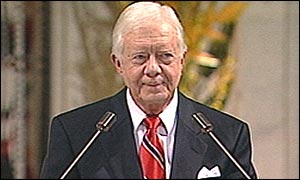 Carter helped broker the 1978 Israel-Egypt peace Former US president Jimmy Carter has warned of the potentially "catastrophic consequences" of a pre-emptive US war on Iraq.
Mr Carter did not mention either country by name, but said: "For powerful countries to adopt a principle of preventative war may well set an example that can have catastrophic consequences." The Bush administration has changed US defence doctrine since the 11 September attacks to one of taking pre-emptive action before threats materialise. Multilateralism In an interview with the BBC, the former US president refused to criticise George W Bush's handling of Iraq.
BBC diplomatic editor Brian Hanrahan points out that former presidents do not consider it appropriate to criticise the incumbent. Mr Carter also insisted that Iraq must "comply fully with the unanimous decision of the Security Council that it eliminate all weapons of mass destruction". Danger of disparity The former president addressed a number of other issues as well. "The greatest challenge the world faces ... is the growing chasm between the richest and poorest people on earth," he said.
He called for "the abolition of land mines and chemical weapons; an end to testing, proliferation and further deployment of nuclear warheads; constraints on global warming, prohibition of the death penalty, at least for children; and an international criminal court to deter and punish war crimes and genocide". Those positions put him in sharp contrast with the Bush administration. He told the BBC that he had criticised the previous Democratic administration of Bill Clinton for failing to support the same initiatives. Bush criticism The chairman of the Nobel Peace Prize committee caused an uproar in October when he said granting the award to Mr Carter should be interpreted as a criticism of Mr Bush's Iraq policy.
As president, Mr Carter helped broker the 1978 Israel-Egypt peace treaty, an accomplishment the Nobel citation described as "in itself a great enough achievement to qualify for the Nobel Peace Prize". Since losing to Ronald Reagan in 1980, Mr Carter has worked on conflict mediation, election observation, poverty reduction and environmental issues through the Carter Center, which he founded in 1982. He is the third US president, after Woodrow Wilson and Teddy Roosevelt, to win the Nobel prize. Mr Carter has said he will donate the $1million prize to his Carter Center. | |
See also:  11 Oct 02 | Europe 10 Dec 02 | Americas 11 Oct 02 | Americas 12 Oct 01 | Europe 10 Dec 02 | Entertainment 01 Dec 02 | Asia-Pacific 21 Sep 02 | Americas Internet links: The BBC is not responsible for the content of external internet sites Top Americas stories now: Links to more Americas stories are at the foot of the page. | |||||||||||||||||||||||||||||||||||||||||||||||||||||||||||||||||||||||||||||||||||||||||||||||||||||||||||||||||||||||||||||||||||||||||||||||||||||||||||||||||||||||||||||||||||||||||||||||||||||||||||||||||||
| |
|  E-mail this story to a friend E-mail this story to a friend |
| |
| Links to more Americas stories |
| | | ||
 | ||||
 | | Back to top
| ||
| ---------------------------------------------------------------------------------- To BBC Sport>> | To BBC Weather>> | To BBC World Service>> ---------------------------------------------------------------------------------- © MMIII | News Sources | Privacy |