|
 |
 | | | | | | |||||||||||||||||||||||||||||||||||||||||||||||||||||||||||||||||||||||||||||||||||||||||||||||||||||||||||||||||||||||||||||||||||||||||||||||||||||||||||||||||||||||||||||||||||||||||||||||||||||||||||||||||||||||||||||||||||||||||||||||
| | | You are in: Americas | |||||||||||||||||||||||||||||||||||||||||||||||||||||||||||||||||||||||||||||||||||||||||||||||||||||||||||||||||||||||||||||||||||||||||||||||||||||||||||||||||||||||||||||||||||||||||||||||||||||||||||||||||||||||||||||||||||||||||||||||||
|
| | Tuesday, 5 November, 2002, 03:42 GMT Final blitz in key US mid-terms 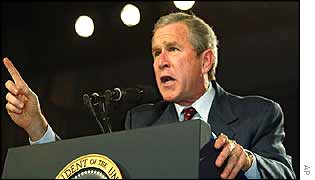 Mr Bush will have visited 15 states in five days The tense battle between Republicans and Democrats for control of the United States Congress has entered the final day of feverish campaigning. With the race too close to call President George W Bush has issued a last-minute appeal to get the Republican voters out when the polls open on Tuesday.
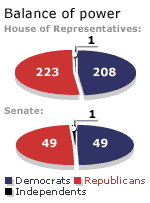
The crucial nationwide vote will decide who occupies the 435 seats in the House of Representatives, along with 34 seats in the 100-member Senate and 36 of the 50 state governor posts. The Democrats controlled the Senate by just one seat until the recent death of Senator Paul Wellstone, a situation which has hindered much of Mr Bush's policy agenda this year and could harm his re-election campaign in 2004.
"This is going to be settled by a relatively small number of votes, potentially, and a relatively small number of contests in both the House and the Senate. "And it's going to be a close election," Mr Bush said in Cedar Rapids, Iowa.
Historically the party holding the White House loses seats in Congress, but the BBC's Justin Webb in Washington says Mr Bush is working like no other to confound that trend. By the time Mr Bush arrives at his Texas ranch on Monday night he will have visited 17 cities in 15 states in just five days. Neck-and-neck A key battleground is Minnesota where former Vice-President Walter Mondale has been drafted in to contest the election following the death of Senator Wellstone last month. Our correspondent says the race there is neck-and-neck. Minnesota Governor Jesse Ventura named independent Dean Barkley to temporarily fill Mr Wellstone's seat until the results of Tuesday's election is known. His term is expected to end when the results are certified in two or three weeks time - although his role could prove pivotal if there are any lame-duck Senate sessions in the interim. Domestic concerns Mr Bush has been focusing on threats to national security and the need to disarm Iraq's Saddam Hussein, but observers say the key issue for the electorate is the economy.
Democrats have been aggressively campaigning on issues of business corruption, such as the Enron scandal, and worries over retirement costs and health and education. "I think people know this economy's not working well for them and... they're looking for change," said House Minority Leader Richard Gephardt. Both parties have bombarded potential voters with a barrage of advertisements, mass mailings and even recorded messages on mobile phones. Record spending The campaign has been the most expensive in history with the two sides collecting $416m in direct contributions to candidates, a report from the Federal Election Commission said. According to the report, that was a 43% rise from the last mid-term elections in 1998, with the Republicans raising $289m and the Democrats $127m. Nonetheless a low turnout is predicted, with many voters disenchanted following the controversial 2000 presidential campaign. The Washington-based Committee for the Study of the American Electorate (CSAE) has predicted that turnout will be barely one-third of eligible voters. | |
See also:  04 Nov 02 | Americas 03 Nov 02 | Americas 03 Nov 02 | Americas 02 Nov 02 | From Our Own Correspondent 02 Nov 02 | Americas 21 Oct 02 | Americas 29 Oct 02 | Americas 01 Nov 02 | Americas 17 Oct 02 | Americas Internet links: The BBC is not responsible for the content of external internet sites Top Americas stories now: Links to more Americas stories are at the foot of the page. | |||||||||||||||||||||||||||||||||||||||||||||||||||||||||||||||||||||||||||||||||||||||||||||||||||||||||||||||||||||||||||||||||||||||||||||||||||||||||||||||||||||||||||||||||||||||||||||||||||||||||||||||||||||||||||||||||||||||||||||||
| |
|  E-mail this story to a friend E-mail this story to a friend |
| |
| Links to more Americas stories |
| | | ||
 | ||||
 | | Back to top
| ||
| ---------------------------------------------------------------------------------- To BBC Sport>> | To BBC Weather>> | To BBC World Service>> ---------------------------------------------------------------------------------- © MMIII | News Sources | Privacy |