|
 |
 | | | | | | ||||||||||||||||||||||||||||||||||||||||||||||||||||||||||||||||||||||||||||||||||||||||||||||||||||||||||||||||||||||||||||||||||||||||||||||||||||||||||||||||||||||||||||||||||||||||||||||||||||
| | | You are in: Americas | ||||||||||||||||||||||||||||||||||||||||||||||||||||||||||||||||||||||||||||||||||||||||||||||||||||||||||||||||||||||||||||||||||||||||||||||||||||||||||||||||||||||||||||||||||||||||||||||||||||||
|
| | Wednesday, 6 November, 2002, 11:55 GMT Bush's domestic agenda reinforced 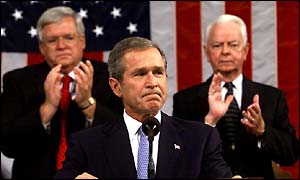 Bush will dominate the new Congress
Mr Bush ran for president on a tax-cutting platform, and managed to pass a $1.2 trillion personal tax cut before he lost control of the Senate due to the defection of Senator Jim Jeffords of Vermont. Now he will want to move swiftly to implement his long-planned tax cut for business, which Paul O'Neill, the treasury secretary who used to run Alcoa, has promised.
Mr Bush may also move to make permanent his personal tax cuts, which at the moment are planned to expire in 2010. Both tax cuts target the rich, with a majority of the personal tax reductions going to the richest 10% of households. But the Democrats' failure to capitalise on this issue at the elections has opened the way for Mr Bush to push forward his programme to reduce the role of the government in the economy. Corporate scandals The president also has plans to radically reshape environmental legislation to make it more friendly to business, especially in relation to oil exploration - another measure fiercely opposed by the Democrats. And he wants to reduce the burden of regulation in areas like health and safety.
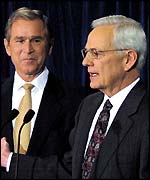
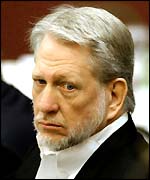
So Mr Bush has been taking the moral high ground, calling for tough jail sentences for those convicted of corporate fraud. At the same time, his proposals to make corporate fraud a criminal offence may actually weaken enforcement (since it is harder to get a criminal conviction than a civil conviction, because of the higher standard of proof required.) However, Mr Bush will be relieved by the resignation, just after the polls closed, of the boss of the organisation charged with regulating the corporate sector, the SEC. Harvey Pitt had become an embarrassment to the Bush administration, and Mr Pitt's twists and turns over the appointment of someone to head a new accounting standards board was apparently the last straw. Mr Pitt was also on the verge of a deal which would led the biggest corporate fraud - that of WorldCom, which concealed $9bn of losses - to go unpunished. Help for the elderly The president will now also begin his push for private sector solutions to the problems of health and education.
And he will push for his plan to provide more healthcare benefits for elderly people through private insurance. The state-run Medicare insurance system covers most medical expenses for the elderly, but does not cover prescription drugs. The drug companies fought hard to re-elect Republicans in order to block the Democratic plan to extend Medicare to cover medicines - which could have led to pressures on them to lower the cost of prescription drugs. Judges galore Perhaps most important in the long-term, Mr Bush will use his control of Congress to ensure that the Republicans will control the Federal judiciary for the next generation. Hundreds of Federal judges are appointed by the president and approved by the Senate each year, but the Democrats had blocked many of these appointments. This will have a crucial effect on issues like abortion, where the Supreme Court may eventually overturn the right of abortion. It will also affect issues like gun control and the regulation of campaign expenses, where the new McCain Act that was supposed to clean up the financing of elections faces serious court challenges. After all, it was the Supreme Court that ultimately ensured President Bush's own victory in the 2000 election. Social security reform In the long term, Mr Bush has even greater ambitions to roll back the American welfare state, whose centrepiece is the social security system which provides a decent pension for all 65 million elderly Americans. The problem is that the system will need more money by 2030 to finance the pensions of the bulging "baby boom" generation that begins to retire in 2010. Mr Bush wants to partly privatise the system, allowing individuals to partly opt out and put some of their retirement money in a stock market account instead. This will not be popular while the stock market continues to fall, but if Mr Bush is re-elected in 2004 it is likely to be revived. If anything, the Republicans in Congress will be even keener to push forward this right-wing agenda, especially in the House of Representatives. It will be left to Mr Bush and his key political advisor, Karl Rove, to ensure that the rhetoric of compassionate Conservatism overlays the concessions to corporations that are at the heart of his programme. | |
See also:  30 Jul 02 | Business 18 Oct 02 | Business 06 Nov 02 | Americas 17 Oct 02 | Americas Top Americas stories now: Links to more Americas stories are at the foot of the page. | ||||||||||||||||||||||||||||||||||||||||||||||||||||||||||||||||||||||||||||||||||||||||||||||||||||||||||||||||||||||||||||||||||||||||||||||||||||||||||||||||||||||||||||||||||||||||||||||||||||
| |
|  E-mail this story to a friend E-mail this story to a friend |
| |
| Links to more Americas stories |
| | | ||
 | ||||
 | | Back to top
| ||
| ---------------------------------------------------------------------------------- To BBC Sport>> | To BBC Weather>> | To BBC World Service>> ---------------------------------------------------------------------------------- © MMIII | News Sources | Privacy |