|
 |
 | | | | | | ||||||||||||||||||||||||||||||||||||||||||||||||||||||||||||||||||||||||||||||||||||||||||||||||||||||||||||||||||||||||||||||||||||||||||||||||||||||||||||||||||||||||||||||||||||||||||||||||||||
| | | You are in: Americas | ||||||||||||||||||||||||||||||||||||||||||||||||||||||||||||||||||||||||||||||||||||||||||||||||||||||||||||||||||||||||||||||||||||||||||||||||||||||||||||||||||||||||||||||||||||||||||||||||||||||
|
| | Thursday, 17 October, 2002, 11:44 GMT 12:44 UK Budget woes figure in mid-terms  A large surplus has turned into deficit
If there had been no war in Iraq looming, the 2002 mid-term elections would probably have been dominated by the growing state and Federal budget deficits. Having spent much of the 1990s fighting to get control of the budget process, Congress appeared to be set for a huge surplus over the next 10 years when President Bush was elected to office. Indeed, it was Mr Bush's pledge to give much of the surplus back to the electorate in the form of tax cuts that helped him to his narrow electoral victory. And Mr Bush duly delivered those tax cuts last year - just as long economic boom was ending and the slowdown was hitting estimates of future tax revenues.
But this looks unlikely - as does the Republican plan to abolish all their tax cuts after 10 years, thus magically restoring the budget to surplus. Slowing economy The recession takes much of the blame for the growing budget deficit. According to the CBO, the slowing economy accounted for about 45% of the change, the Bush tax cuts about 25%, and the increases in other spending programmes (mainly defence spending) the rest. The economic slowdown also raises the cost of borrowing, which makes the debt payments on Federal debt more expensive as well. And if the economy does not recover as fast as the Bush administration hopes, the budget deficit wil be even bigger. Social security issue The growing deficit is made all the worse because soon the US Government will be facing a huge crisis in funding its pension system (known as social security). The baby boomer generation starts retiring in 2015, and the next 20 years will see a big deficit in the separate accounts kept to notionally fund social security payments. 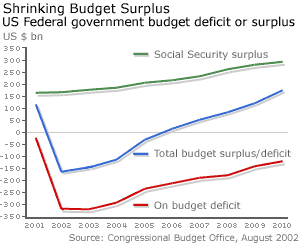 It is these "off-budget" payments that make all the difference to the calculations. Indeed, the CBO and most responsible observers believe that the federal government will have to put a lot more money into these programmes within a few years after that to ensure they are solvent. And President Clinton had argued that the big surpluses should be preserved in a "social security lock box" rather than spent on tax cuts now. Spending limits off But there is little sign of this, or of the bipartisan movement for a balanced budget that dominated the previous decade. Instead, Republicans want to spend more money on tax cuts for business and on defence, while Democrats want to spend more on health care and education. With the Congress finely balanced between the parties, neither agenda has made much headway this year. But in contrast to previous years, the budget crisis has had little publicity or political impact - despite the fact that again Congress failed to agree any of the 13 budget bills by the deadline of 1 October and has had to pass emergency legislation to fund the government. But the issue is not playing to any partisan advantage - because people blame both parties for the "mess in Washington". More problems for states The state governments - who have their own independent taxation and budgets - also got into trouble in the boom years. They are more likely to pay the electoral price. Many elected Republican governors also pledged to give away their budget surpluses in tax cuts. But the fiscal position of the states - who are mainly dependent on special taxes such as sales taxes - has deteriorated much faster than that of the Federal government.
Some states also unwisely used the revenues they had been promised by the tobacco companies to improve public health to balance their books on a temporary basis. In the main, the states have been forced to cut services, especially services used by the poor, including health, education and welfare. But this has angered the people who use those services, and threatens a backlash against many of these governors. Democrats are now poised to regain control of many of the so-called "rust belt" states, including Michigan, Pennsylvania, Ohio, and Illinois - although fiscally responsible Republicans look safe in normally Democratic Massachusetts and New York. The states make up one-third, and the Federal government, two-thirds, of overall public spending. So the failure to bridge the growing budget gap - of which $60bn is in the states - could have serious long-term economic consequences as well. Economists estimate it could lower US growth by about 0.6% of Gross Domestic Product. It could also help weaken the dollar as foreign investors worry about the solvency of the US Government, just as in the l980s. And it could leave the major states in Democratic hands for the first time in a generation - and lead to the emergence of a new Democratic challenger to George W Bush. | |
See also:  12 Jul 02 | Business Internet links: The BBC is not responsible for the content of external internet sites Top Americas stories now: Links to more Americas stories are at the foot of the page. | ||||||||||||||||||||||||||||||||||||||||||||||||||||||||||||||||||||||||||||||||||||||||||||||||||||||||||||||||||||||||||||||||||||||||||||||||||||||||||||||||||||||||||||||||||||||||||||||||||||
| |
|  E-mail this story to a friend E-mail this story to a friend |
| |
| Links to more Americas stories |
| | | ||
 | ||||
 | | Back to top
| ||
| ---------------------------------------------------------------------------------- To BBC Sport>> | To BBC Weather>> | To BBC World Service>> ---------------------------------------------------------------------------------- © MMIII | News Sources | Privacy |