|
 |
 | | | | | | ||||||||||||||||||||||||||||||||||||||||||||||||||||||||||||||||||||||||||||||||||||||||||||||||||||||||||||||||||||||||||||||||||||||||||||||||||||||||||||||||||||||||||||||||||||||||||||||||||||||
| | | You are in: Americas | ||||||||||||||||||||||||||||||||||||||||||||||||||||||||||||||||||||||||||||||||||||||||||||||||||||||||||||||||||||||||||||||||||||||||||||||||||||||||||||||||||||||||||||||||||||||||||||||||||||||||
|
| | Monday, 4 November, 2002, 14:43 GMT Veteran senator bows out at 99 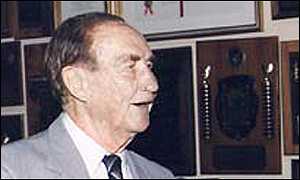 Age did not stop him staying on until he was 99
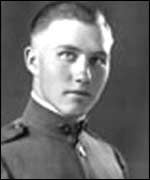
At the age of 99 and after a number of health scares, including his collapse on the Senate floor in October last year, he decided not to run again for his state. This will end the political career of a man who was first elected to public office in South Carolina in 1933, the year Hitler became Chancellor of Germany, who was part of the D-Day invasion force in June 1944 and has lived through the termsof 18 of America's 43 presidents.
Senator Thurmond has been a seemingly permanent fixture in South Carolina politics and in Congress. A staunchly conservative, traditional Southern politician he moved from being a state senator in the 1930s, to state governor after his service in World War II, an independent candidate for president in 1948 and then a senator for South Carolina from 1954 to 2002. Age and infirmity After a number of health scares in recent years, the political commentator John Barry wrote an article entitled Strom Thurmond: Will he finish his term or will his term finish him?"
His increasing infirmity meant that there was often a doubt about his ability to be in the Senate for key votes and even on occasions whether he was fully aware of proceedings to vote the way his party expected. His departure might remove a source of concern for the Republican leadership, but will also take away one of their most conservative and predictable senators. Democratic dissenter For a man seen as a conservative bulwark for the Republicans, Strom Thurmond started his life as a Southern Democrat. This put him clearly on the right of the political spectrum in the pro-segregation, anti-civil rights camp. A Democratic governor of South Carolina from 1947 to 1951, he objected to his party's choice of Harry Truman as presidential candidate in 1948. He opposed the integration of black and white soldiers within the US army and resisted the moves towards greater civil rights for black Americans.
His opposition to Truman was such that he defied the Democratic Party and with significant support in Southern states ran against him in the 1948 election as candidate of the States' Rights Democratic Party. The party was named after the cause of "states' rights" against the federal government which was at the heart of the Confederate (Southern) cause in the American civil war of the previous century. This deeply conservative movement gained him the support of four fiercely traditional southern states (Alabama, Louisiana, Mississippi and South Carolina) but not enough votes to seriously challenge Truman for the presidency. Mr Thurmond failed to win a seat in the Senate in 1950, but succeeded four years later. Crosses the floor Senator Thurmond became increasingly opposed to the direction his party and the country was taking on civil rights for black Americans. In 1957, he spoke for 24 hours and 18 minutes in an attempt to block discussion of the Civil Rights Act - a Senate record.
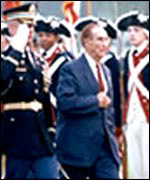
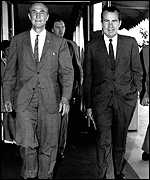
In 1964, he left the Democratic Party and joined the Republicans to support the conservative Barry Goldwater in his presidential campaign against Lyndon Johnson. In 1968, he was instrumental in drumming up support in the Southern states for Richard Nixon. In more recent years, he has kept up his conservative voting record in the Senate - opposing abortion, opposing laws on racial and sexual orientation "hate crimes", opposing gun control and supporting the so-called 'star wars' national missile defence programme. A keen supporter of the US military, Strom Thurmond rose to the rank of major general in the US army reserve and served on the Senate armed services committee from 1959 to 2002. He retires as the oldest and the longest-serving member of the Senate. He once attributed his longevity to a daily dose of prunes and an appreciation of beautiful women. | |
See also:  02 Oct 01 | Americas 21 Aug 99 | Americas Internet links: The BBC is not responsible for the content of external internet sites Top Americas stories now: Links to more Americas stories are at the foot of the page. | ||||||||||||||||||||||||||||||||||||||||||||||||||||||||||||||||||||||||||||||||||||||||||||||||||||||||||||||||||||||||||||||||||||||||||||||||||||||||||||||||||||||||||||||||||||||||||||||||||||||
| |
|  E-mail this story to a friend E-mail this story to a friend |
| |
| Links to more Americas stories |
| | | ||
 | ||||
 | | Back to top
| ||
| ---------------------------------------------------------------------------------- To BBC Sport>> | To BBC Weather>> | To BBC World Service>> ---------------------------------------------------------------------------------- © MMIII | News Sources | Privacy |