|
 |
 | | | | | | |||||||||||||||||||||||||||||||||||||||||||||||||||||||||||||||||||||||||||||||||||||||||||||||||||||||||||||||||||||||||||||||||||||||||||||||||||||||||||||||||||||||||||||||||||||||||||||||||||||||||||||||||||||||||||||||||||||||
| | | You are in: Americas | |||||||||||||||||||||||||||||||||||||||||||||||||||||||||||||||||||||||||||||||||||||||||||||||||||||||||||||||||||||||||||||||||||||||||||||||||||||||||||||||||||||||||||||||||||||||||||||||||||||||||||||||||||||||||||||||||||||||||
|
| | Monday, 28 October, 2002, 02:34 GMT Analysis: the challenges ahead 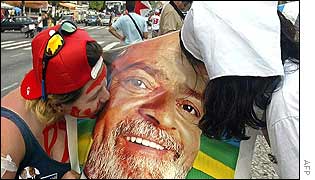 Love for Lula... but will it last?
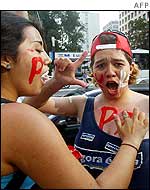
Over the past few weeks most people in Brazil - including his opponents - have got used to the idea that Luiz Inacio Lula da Silva, known as Lula, will be Brazil's next president.
Seen from that perspective, his victory and that of the Workers' Party (the PT) is a major political achievement. But as they recover from their post-election celebrations, Lula and his colleagues could be forgiven a moment of self-doubt as they contemplate the task ahead of them. Precarious finances According to some analysts, Brazil is teetering on the brink of a debt default.
In order to meet IMF requirements, the government has to run a large budget surplus (minus debt repayments) for at least the next year and probably for longer. The crisis has been caused partly by the prospect of a Lula victory. So the first thing he has to do is to reassure financial markets and businesses that he intends to stick to fiscal austerity. On the other hand, he faces pressure from a hard core of left-wing supporters for a series of changes: protection for ailing industries, a more inward-looking trade policy and mass expropriation of land to benefit the poor. High expectations In the short term at least, these conflicting pressures are irreconcilable.
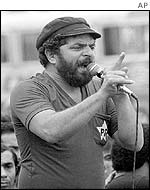
Most Lula voters are not interested in ideology. They appreciated the positive changes brought about by the outgoing administration - especially the end of high inflation - but they want more jobs, better health and education and less violence on the streets. Even here Lula has a problem. Such improvements take time, and after the high expectations he has generated, he may leave many people disappointed. So what are Lula's chances of running a successful four-year presidency? Legitimate left There are some reasons to be positive. For the first time in Brazilian history, there is an acceptance across the political spectrum that a left-wing victory is legitimate. This is no small achievement when one bears in mind that the last left-wing president was overthrown in a coup in 1964. Secondly, there is Lula himself. In the past, voters were put off by his rough-and-ready image. Having softened that image and moderated his tone, Lula has earned grudging respect even from those who would not normally vote for him. His humble roots may also finally work in his favour. As long as that popularity lasts, politicians from other parties will want to do business with him. 'Pragmatic course' The outgoing President, Fernando Henrique Cardoso, has adopted a statesmanlike attitude to the two-month transition period.
Far from trying to sabotage the PT, he has set up a transition team to work closely alongside Lula. Finally, all the signs are that Lula intends to pursue a pragmatic course. He will know how to negotiate with the wily foxes of Brazil's Congress. He will also have the chance to capitalise on the positive reforms of the previous administration, especially in public finances and education. Biting the bullet On the other hand, Brazil's new government will be short of experience. Lula himself has never held an executive position. The PT has run some successful local administrations, but taking over one of the world's ten largest economies is a huge challenge. There is also an awkward contradiction at the heart of what Lula and the PT want to do. They say they want to govern for the poor, and to that end they intend to use the state to reduce hunger and inequality. But most economists agree that the Brazilian state is already over-extended - in the wrong areas. Vast sums are spent on public sector pensions and public universities, while secondary schools languish and half of all workers have no rights whatsoever. Lula has not indicated that he is willing to reduce the privileges of public sector workers, probably because they are an important source of support for the PT. But unless he bites this unpleasant bullet, it will be hard to find the money to help the genuinely needy. | |
See also:  26 Oct 02 | Media reports 25 Oct 02 | Media reports 25 Oct 02 | Business 24 Oct 02 | Business 09 Oct 02 | Americas 07 Oct 02 | Americas Internet links: The BBC is not responsible for the content of external internet sites Top Americas stories now: Links to more Americas stories are at the foot of the page. | |||||||||||||||||||||||||||||||||||||||||||||||||||||||||||||||||||||||||||||||||||||||||||||||||||||||||||||||||||||||||||||||||||||||||||||||||||||||||||||||||||||||||||||||||||||||||||||||||||||||||||||||||||||||||||||||||||||||
| |
|  E-mail this story to a friend E-mail this story to a friend |
| |
| Links to more Americas stories |
| | | ||
 | ||||
 | | Back to top
| ||
| ---------------------------------------------------------------------------------- To BBC Sport>> | To BBC Weather>> | To BBC World Service>> ---------------------------------------------------------------------------------- © MMIII | News Sources | Privacy |