|
 |
 | | | | | | ||||||||||||||||||||||||||||||||||||||||||||||||||||||||||||||||||||||||||||||||||||||||||||||||||||||||||||||||||||||||||||||||||||||||||||||||||||||||||||||||||||||||||||||||||||||||||||||||||||||
| | | You are in: Americas | ||||||||||||||||||||||||||||||||||||||||||||||||||||||||||||||||||||||||||||||||||||||||||||||||||||||||||||||||||||||||||||||||||||||||||||||||||||||||||||||||||||||||||||||||||||||||||||||||||||||||
|
| | Thursday, 17 October, 2002, 15:54 GMT 16:54 UK How the dead win seats 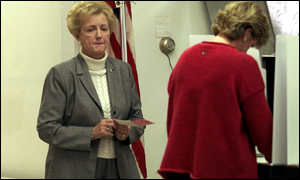 Jean Carnahan took her dead husband's seat
And she will remain on the ballot because she died after the deadline for a replacement to be named. This is not the first time in US electoral history that voters will be able to elect a deceased candidate. In November 2000, the late Mel Carnahan, Governor of Missouri, won a Senate seat despite having died two weeks before the election - he defeated the current US Attorney-General, John Ashcroft. In the event, his widow took his seat in the Senate and must now seek re-election instead of serving the full six-year term.
The court ruled that the Democratic Party could replace Senator Robert Torricelli as their candidate for the Senate. He had pulled out of the race abruptly following a scandal over the alleged receipt of gifts by the senator from a businessman. Mr Torricelli - who was elected in 1996 - has denied any illegality but was admonished over the summer by the Senate ethics committee. The court said that it would allow the replacement of the candidate "to allow the voters a choice". Death means three votes But on a number of occasions, and this is the case with Representative Mink in Hawaii, parties or even the courts have decided to let the deceased stand on the ballot. This may be done by a political party out of respect for the dead, because of a shortage of time to find a suitable replacement or even to gain short-term political advantage because of the possibility of a sympathy vote for a dead incumbent.
It is expected that the Democrats will retain the seat despite her death. But the strange circumstances in which the election takes place will mean that three different votes are likely to be held between now and early January:
To complicate matters further, the late Mrs Mink's husband, John Mink, has filed to stand in the 30 November election but not the 4 January election. This means that if elected, he would serve the remaining weeks of her current term in office but not stand to replace her for the new term. Democratic disagreements As a gesture of bipartisanship, the Republican candidate has said he will not stand against Mr Mink in the vote on 30 November, but will stand on 5 November. But not all members of the Democratic Party in Hawaii are happy.
They say he should allow a candidate who wishes to stand if there is a vote on 4 January to have a chance to see out the last weeks of Mrs Mink's term and so technically be the incumbent candidate if there is a second vote for the next term. This could complicate an already confusing situation about who is voting for whom and when. And where the New Jersey court allowed the replacement of Senator Torricelli on the ballot paper, the Hawaii Supreme Court refused to allow the Democrats to replace Patsy Mink's name on the 5 November ballot, which would have obviated the need for a vote on 4 January if she wins. The court also prevented an attempt to have the 30 November vote held on 5 November along with the election for the next term. To add to the turmoil, some Republicans have suggested that the Democrats covered up the seriousness of Mrs Mink's health problems until it was too late to take her off the ballot in order to gain advantage through having the incumbent standing again, according to the Associated Press Widow to stand again In Missouri, things are a little clearer. When her husband Mel died in a plane crash just before the 2000 elections, Jean Carnahan agreed to take his place when he was elected posthumously. She has served two years in the senate but now needs to stand for re-election under congressional rules about succeeding posthumous candidates.
A clear favourite with state Democrats, she won 83% of the primary vote. But she is having a tough time in the race against Republican James Talent. It may be that the tide of sympathy that followed her husband's death and initially greeted her decision to stand again is now ebbing away. Constitutional conundrum The Torricelli case, in which a court ruled that a candidate can be replaced, indicates that the deadline is not an absolute bar to changing candidates. Many people would think that this is a ruling that should be extended to the deaths of candidates. Part of the submission in the New Jersey case was that there had been a precedent for changing the candidate due to the death of one of those standing for office in an election in 1952. But the Hawaii court did not accept this in its ruling and there has yet to be a definitive Federal Supreme Court ruling on replacing a deceased or otherwise incapable candidate. | |
See also:  02 Oct 02 | Americas 03 Oct 02 | Americas 01 Oct 02 | Americas 08 Nov 00 | Americas 30 Oct 00 | Americas Internet links: The BBC is not responsible for the content of external internet sites Top Americas stories now: Links to more Americas stories are at the foot of the page. | ||||||||||||||||||||||||||||||||||||||||||||||||||||||||||||||||||||||||||||||||||||||||||||||||||||||||||||||||||||||||||||||||||||||||||||||||||||||||||||||||||||||||||||||||||||||||||||||||||||||
| |
|  E-mail this story to a friend E-mail this story to a friend |
| |
| Links to more Americas stories |
| | | ||
 | ||||
 | | Back to top
| ||
| ---------------------------------------------------------------------------------- To BBC Sport>> | To BBC Weather>> | To BBC World Service>> ---------------------------------------------------------------------------------- © MMIII | News Sources | Privacy |