|
 |
 | | | | | | |||||||||||||||||||||||||||||||||||||||||||||||||||||||||||||||||||||||||||||||||||||||||||||||||||||||||||||||||||||||||||||||||||||||||||||||||||||||||||||||||||||||||
| | | You are in: Americas | |||||||||||||||||||||||||||||||||||||||||||||||||||||||||||||||||||||||||||||||||||||||||||||||||||||||||||||||||||||||||||||||||||||||||||||||||||||||||||||||||||||||||||
|
| | Monday, 1 July, 2002, 16:25 GMT 17:25 UK Peacekeeping row deepens transatlantic rift The soldiers may stay but the damage may be done
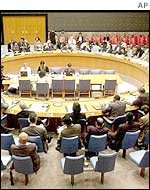
For the moment, the Americans are saying their troops will stay in Bosnia as part of S-For, this force will not be affected. All the same, Nato ambassadors were called into special session in Brussels to consider the implications. The current president of the European Union, Denmark, put out a statement deeply regretting the American move: a dramatic step, it said, that threatened UN peace operations in general. That interpretation was backed by the US ambassador to the UN, John Negraponte:. He said that unless the problem was satisfactorily resolved, it would come up again and again - meaning whenever a UN mandate has to be renewed. Stark disagreement Some observers now wonder whether the logical end of the campaign will be a United States decision to stop paying its share of the UN peacekeeping budget, just over a quarter of the total.
But this time the Americans are in open conflict in the security council not only with France but also with Britain, their closest partner. The British Foreign Secretary, Jack Straw, said Britain was involved in intensive discussion with the Bush administration to try to allay its fears about the International Criminal Court which had provoked the use of the veto. Mr Straw denied that Britain's relations with the United States were under threat. But on this issue the disagreement is stark.
It is becoming harder for his government to argue that such disputes are merely an inevitable part of what remains a close relationship. Only last week Mr Blair, in common with almost all of Europe, declined to back Mr Bush's demand for Yasser Arafat to be removed as Palestinian leader. Europeans puzzled The crisis over the court takes its place in a growing history of political friction between Washington and the European Union. Critics of Mr Bush see it as another example of unilateralism, similar to his administration's abandoning of the biological weapons convention and the Kyoto Treaty on global warming.
The Europeans do not believe the stated American objections to the Court are reasonable, given the safeguards against frivolous or politically motivated prosecutions. And they are less inclined to be sympathetic given Washington's determination to deny to the terrorist suspects it holds the normal protection of the American judicial system. The transatlantic gulf is getting wider. To its European and other critics, United States opposition to the Court seems to be based on a fundamental unwillingness to limit American sovereignty in any way. | | See also:  01 Jul 02 | Americas 01 Jul 02 | In Depth 20 Jun 02 | Business 01 Jul 02 | Americas 06 May 02 | Americas 26 Jun 02 | In Depth 11 Apr 02 | Europe 24 May 02 | Country profiles Internet links: The BBC is not responsible for the content of external internet sites Top Americas stories now: Links to more Americas stories are at the foot of the page. | |||||||||||||||||||||||||||||||||||||||||||||||||||||||||||||||||||||||||||||||||||||||||||||||||||||||||||||||||||||||||||||||||||||||||||||||||||||||||||||||||||||||||
| |
|  E-mail this story to a friend E-mail this story to a friend |
| |
| Links to more Americas stories |
| | | ||
 | ||||
 | | Back to top
| ||
| ---------------------------------------------------------------------------------- To BBC Sport>> | To BBC Weather>> | To BBC World Service>> ---------------------------------------------------------------------------------- © MMIII | News Sources | Privacy |