|
 |
 | | | | | | ||||||||||||||||||||||||||||||||||||||||||||||||||||||||||||||||||||||||||||||||||||||||||||||||||||||||||||||||||||||||||||||||||||||||||||||||||||||||||||||||||||||||||||||
| | | You are in: Americas | ||||||||||||||||||||||||||||||||||||||||||||||||||||||||||||||||||||||||||||||||||||||||||||||||||||||||||||||||||||||||||||||||||||||||||||||||||||||||||||||||||||||||||||||||
|
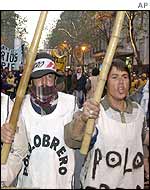
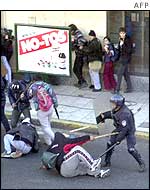
| | Friday, 28 June, 2002, 04:26 GMT 05:26 UK Argentines rally over protesters' deaths Grandmothers, professionals and workers spoke as one Thousands of anti-government demonstrators have taken to the streets of the Argentine capital, Buenos Aires, a day after two protesters were killed in clashes with police. Teachers and state workers also went on strike, in protest against government repression and Argentina's worsening economic crisis.
Government buildings and side streets were filled with heavily armed riot police and water cannons, but the crowd was well-marshalled and under control - a good sign, say correspondents, for the government trying to find a way out of the current economic mess. The BBC's Peter Greste in Buenos Aires said the protest by about 10,000 people - from manual workers to suited professionals to grandmothers in headscarves - was generally peaceful. Anger at austerity Demonstrators told him they were angry about the killings but also about the austerity measures demanded by the International Monetary Fund (IMF) that they blame for Argentina's continuing economic misery.
The crowds demanded food handouts and social programmes for Argentina's growing army of unemployed, and also campaigned for the removal of President Duhalde's government. Wednesday's violence was the worst since December, when 27 people were killed in looting and street battles which forced the then President Fernando de la Rua to resign. Protests have been a regular occurrence since late last year, when millions of people were plunged into poverty after the government posted the biggest sovereign debt default in history. The peso was devalued by more than two thirds and millions of bank accounts were frozen. The Argentine Economy Minister Roberto Lavagna is in Washington to plead with the IMF to grant a $9.5bn loan to ease the country's economic crisis. But our correspondent said that mission was derided by the protesters who continue to pile pressure on the government. | |
See also:  26 Jun 02 | Americas 24 Jun 02 | Americas 20 Jun 02 | Business 24 Apr 02 | Americas 06 Feb 02 | Business Internet links: The BBC is not responsible for the content of external internet sites Top Americas stories now: Links to more Americas stories are at the foot of the page. | ||||||||||||||||||||||||||||||||||||||||||||||||||||||||||||||||||||||||||||||||||||||||||||||||||||||||||||||||||||||||||||||||||||||||||||||||||||||||||||||||||||||||||||||
| |
|  E-mail this story to a friend E-mail this story to a friend |
| |
| Links to more Americas stories |
| | | ||
 | ||||
 | | Back to top
| ||
| ---------------------------------------------------------------------------------- To BBC Sport>> | To BBC Weather>> | To BBC World Service>> ---------------------------------------------------------------------------------- © MMIII | News Sources | Privacy |