|
 |
 | | | | | | |||||||||||||||||||||||||||||||||||||||||||||||||||||||||||||||||||||||||||||||||||||||||||||||||||||||||||||||||||||||||||||||||||||||||||||||||||||||||||||||||||||||||||||||||||||||||||||||||||||||||
| | | You are in: Africa | |||||||||||||||||||||||||||||||||||||||||||||||||||||||||||||||||||||||||||||||||||||||||||||||||||||||||||||||||||||||||||||||||||||||||||||||||||||||||||||||||||||||||||||||||||||||||||||||||||||||||||
|
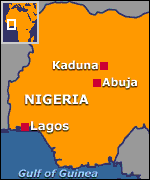
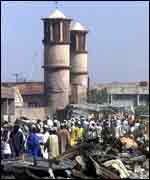
| | Thursday, 21 November, 2002, 20:12 GMT Kaduna: A divided city 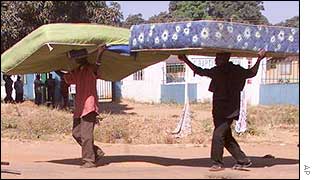 Many Kaduna residents have fled their homes The city of Kaduna is the political capital of mainly Muslim northern Nigeria and its four million inhabitants have for several years been divided along religious lines. Those divisions hardened considerably after the appalling communal violence in February and May 2000 during which more than 2,000 people died.
In residential areas such as Tudun Warda, near the city centre, Muslim youths patrol areas, operating roadblocks and checking the identities of people entering the area. Policing In response to the violence, the national authorities set up a special rapid reaction force, made of members of the army.
They are essentially peacekeepers, patrolling the city streets and can be found at potential trouble spots. They are also ready to move quickly to the scene of possible confrontations. However they tend to avoid direct confrontation and try to ensure Christians and Muslims keep to their own areas. Sharia Sharia Law has been gradually introduced across most northern Nigerian states in recent years. But nowhere did this create more trouble than in Kaduna, where the sizeable Christian community became increasingly alarmed that new measures would affect them. When the state authorities first announced plans to introduce it they made it clear that Islamic punishments for offences like drinking alcohol, theft and committing adultery would not apply to Christians. But the violence that erupted put paid to full Sharia being introduced. A delayed and modified form of Sharia law came into effect in 2001. This ensured that Sharia law was only introduced in Muslim areas, cementing the sectarian divisions. As Kaduna's economy has declined, so has disatisfaction among young jobless men - and this has led to a greater propensity for violence and looting. In the past two years several incidents, including isolated clashes and the targeting of religious buildings, have failed to erupt into wider scale violence. But the latest scenes following protests over the Miss World contest, show that tensions in the city are not far from the surface. And as Nigerian ambassador Mahmoud Yahya, who lives in Kaduna, told Reuters news agency recently: "If people have something to preoccupy them they would have no time for street violence." | |
See also:  12 Nov 02 | Africa 09 Nov 02 | Africa Internet links: The BBC is not responsible for the content of external internet sites Top Africa stories now: Links to more Africa stories are at the foot of the page. | |||||||||||||||||||||||||||||||||||||||||||||||||||||||||||||||||||||||||||||||||||||||||||||||||||||||||||||||||||||||||||||||||||||||||||||||||||||||||||||||||||||||||||||||||||||||||||||||||||||||||
| |
|  E-mail this story to a friend E-mail this story to a friend |
| |
| Links to more Africa stories |
| | | ||
 | ||||
 | | Back to top
| ||
| ---------------------------------------------------------------------------------- To BBC Sport>> | To BBC Weather>> | To BBC World Service>> ---------------------------------------------------------------------------------- © MMIII | News Sources | Privacy |