|
 |
 | | | | | | ||||||||||||||||||||||||||||||||||||||||||||||||||||||||||||||||||||||||||||||||||||||||||||||||||||||||||||||||||||||||||||||||||||||||||||||||||||||||||||||||||||||||||||||||||||||||||||||||||||||||||||||||||||||||||||||||||||||||||||
| | | You are in: Africa | ||||||||||||||||||||||||||||||||||||||||||||||||||||||||||||||||||||||||||||||||||||||||||||||||||||||||||||||||||||||||||||||||||||||||||||||||||||||||||||||||||||||||||||||||||||||||||||||||||||||||||||||||||||||||||||||||||||||||||||||
|
| | Wednesday, 4 September, 2002, 16:51 GMT 17:51 UK Summit's failed hopes 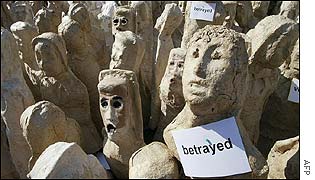 Many environmentalists feel cheated by the summit
The decisions it has taken - and failed to take - will shape many countries' policies for years ahead.
There were some undeniable gains, chiefly the agreement to halve the number of people without proper sanitation by 2015.
There were valuable agreements on chemicals and on fisheries. There were encouraging noises, and not much more, on renewable energy, endangered species of plants and animals, and the links between trade, environment and development. Little for the poor Those are the credits.
There were no decisions to increase overseas aid, or to improve the terms of trade, or to reduce the massive subsidies developed countries pay their own producers. There was nothing to help the 13 million people facing imminent starvation in southern Africa. The summit organisers say Johannesburg was not the place to discuss issues like these. But many people think they are wrong. If not here, then where, they ask. If not now, when?
He compared this conference with the 1992 earth summit in Rio de Janeiro: "We had had the fall of the Berlin Wall and the end of the Cold War. Today we have a new realism as a result of globalisation. "So the action plan agreed here in Johannesburg is less visionary... reflecting perhaps the feeling among many nations that they no longer want to promise the Earth and fail - that they would rather step forward than run too fast." 'Narrow escape' That is the pragmatic view. But another senior UN official sees it very differently - Jan Pronk, the Dutch politician who is the special envoy here of the UN Secretary-General, Kofi Annan. Mr Pronk told BBC News Online: "We had a narrow escape. The summit came close to collapse. There's a huge gap between what the delegates have managed to achieve and people's expectations of them. "What's been missing here is a sense of urgency." The rich and the secure do not need urgency. Change, if it is to come, can be incremental for them. In the 10 years since Rio the global environment, on many indicators though not all, has worsened. Ten years on, more than 30,000 children under the age of five still die every day from hunger or easily-preventable diseases. For those who believe the world is worth conserving with a few minor changes here and there, Johannesburg has been a success. But to those who have little, it offers little. Time is not on the side of the planet, or the poor. This summit, which offered so much, has delivered so much less than it promised. | |
See also:  04 Sep 02 | Africa 03 Sep 02 | Africa 03 Sep 02 | Africa 29 Aug 02 | Africa 02 Sep 02 | Africa 04 Sep 02 | Africa Internet links: The BBC is not responsible for the content of external internet sites Top Africa stories now: Links to more Africa stories are at the foot of the page. | ||||||||||||||||||||||||||||||||||||||||||||||||||||||||||||||||||||||||||||||||||||||||||||||||||||||||||||||||||||||||||||||||||||||||||||||||||||||||||||||||||||||||||||||||||||||||||||||||||||||||||||||||||||||||||||||||||||||||||||
| |
|  E-mail this story to a friend E-mail this story to a friend |
| |
| Links to more Africa stories |
| | | ||
 | ||||
 | | Back to top
| ||
| ---------------------------------------------------------------------------------- To BBC Sport>> | To BBC Weather>> | To BBC World Service>> ---------------------------------------------------------------------------------- © MMIII | News Sources | Privacy |