|
 |
 | | | | | | ||||||||||||||||||||||||||||||||||||||||||||||||||||||||||||||||||||||||||||||||||||||||||||||||||||||||||||||||||||||
| | | You are in: UK: Scotland | ||||||||||||||||||||||||||||||||||||||||||||||||||||||||||||||||||||||||||||||||||||||||||||||||||||||||||||||||||||||||
|
| | Tuesday, 19 November, 2002, 17:53 GMT Animal workers warned to avoid bats 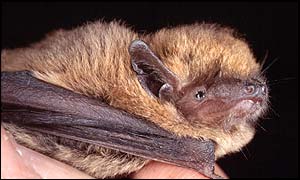 Bat handlers are urged to have vaccinations Scotland's conservation agency has ordered its workers to avoid all contact with bats following a suspected rabies case. Scottish Natural Heritage (SNH) said there are between 70 and 100 workers who have regular contact with the animals. They are usually enthusiasts who view their jobs as a hobby, often working part-time. A man who is thought to have been bitten by a bat is being treated for rabies symptoms in a Dundee hospital.
A bat expert said rabies in the species was "very rare". Julia Hanmer, of the Bat Conservation Trust, said: "Three thousand bats have been tested and of those there have only been two cases of bat rabies in the UK." SNH is to review its guidelines for staff handling bats in view of the suspected case. Professor Colin Galbraith, chief scientist at SNH, said the worker had been known to his organisation and had worked with bats for a "considerable length of time". Mr Galbraith said: "This is a very sad situation and our immediate thoughts are with the individual and his family. Derelict buildings "We will certainly be looking at what bat workers do in general when they are working in close contact with these animals." He said investigations were being carried out to discover when and where the worker may have been infected by the bat. Bat workers visit colonies in caves, derelict buildings, tunnels, hollow trees and households. Once they find a colony the workers count the number of bats by species and measure and weigh them. Bat roosts occur less frequently in households at this time of year as the mammal hibernates during the winter. However, during the summer months bat workers are summoned to households to inspect maternity roosts, usually in lofts.
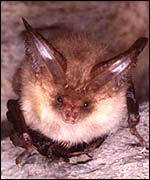
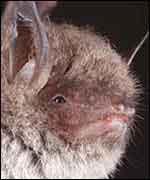
The worker will inspect the roosts and make recommendations to SNH on whether the bats should be evicted. This involves waiting for the bats to depart in late summer, usually September, before access points can be blocked up to ensure the mammals do not return. Aspiring bat workers with SNH are required to have some formal training and preferably some experience. Rabies vaccination There is currently no standard qualification for bat workers, however SNH said that there are plans for one. The agency provides all its bat workers with a list of recommendations on how to go about their work, which includes one urging the enthusiasts to have a vaccination for rabies There are 16 species of bat in the UK. The most common is the pipistrelle, of which there are two million and around 550,000 in Scotland. There is also the brown long-eared bat, the natterers' bat and the daubenton's bat. Several of the species are found in Angus where the bat worker is currently in a critical condition in a hospital in Dundee. An NHS Helpline - 0800 783 5066 - has been set up in Tayside to offer reassurance and advice. | |
See also:  19 Nov 02 | Scotland 19 Nov 02 | Scotland 02 Oct 02 | UK 25 Nov 02 | Science/Nature 28 Sep 02 | England 05 Apr 00 | Americas 07 Mar 00 | Health 21 May 99 | Health Internet links: The BBC is not responsible for the content of external internet sites Top Scotland stories now: Links to more Scotland stories are at the foot of the page. | ||||||||||||||||||||||||||||||||||||||||||||||||||||||||||||||||||||||||||||||||||||||||||||||||||||||||||||||||||||||
| |
|  E-mail this story to a friend E-mail this story to a friend |
| |
| Links to more Scotland stories |
| | | ||
 | ||||
 | | Back to top
| ||
| ---------------------------------------------------------------------------------- To BBC Sport>> | To BBC Weather>> | To BBC World Service>> ---------------------------------------------------------------------------------- © MMIII | News Sources | Privacy |