|
 |
 | | | | | | |||||||||||||||||||||||||||||||||||||||||||||||||||||||||||||||||||||||||||||||||||||||
| | | You are in: UK: Scotland | |||||||||||||||||||||||||||||||||||||||||||||||||||||||||||||||||||||||||||||||||||||||||
|
| | Sunday, 10 November, 2002, 11:15 GMT Gene hope in cancer fight 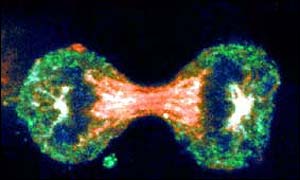 Scientists hope the gene can help kill cancer cells Scientists in Scotland believe they have taken an important step in the fight against cancer. Researchers at the Beatson Institute in Glasgow have narrowed down the location of a gene which may cause cancer cells to die. They hope the development will eventually lead to new treatments to combat a number of forms of the disease. Scientists are studying a tiny section of chromosome four, which is one of the bundles of DNA containing human genes.
Cancer Research UK welcomed the breakthrough as a "vital step" in fighting cancer. Dr Ken Parkinson, lead researcher at Beatson, said the team's work would be an important tool. He said: "Cancer cells are good survivors - not only do they rapidly grow and spread but they also refuse to die. 'Important tool' "If we can find the genetic faults responsible for their survival then we can begin to look at ways of making the cells vulnerable to dying once again. "A crucial part of this process will be the isolation of genes which in healthy tissue promote cell death, such as the gene we are tracking now." The team created miniature cells that had only one copy of chromosome four and fused them to cervical cancer cells, then introduced an extra copy of the chromosome into each cell.
Although some cancer cells died, others kept growing and these were found to have lost the same small area on the introduced chromosome four. Dr Parkinson said: "We know that this region harbours the gene because when it is disrupted or missing cervical cancer cells grow out of control. "We will now be concentrating our efforts on the final step of isolating and properly describing the gene, which will give us an important tool for future research into cancer therapies." Dr Richard Sullivan, Cancer Research UK's head of clinical programmes, said: "Cancer arises when our genes are damaged. "Locating which genes are involved is a vital step in understanding why cancer behaves the ways it does and in designing treatments to combat the disease." | | See also:  05 Nov 02 | Health 08 Nov 02 | Scotland 04 Aug 02 | Health 30 Oct 02 | Scotland 07 Oct 99 | Health 22 Aug 00 | Health Internet links: The BBC is not responsible for the content of external internet sites Top Scotland stories now: Links to more Scotland stories are at the foot of the page. | |||||||||||||||||||||||||||||||||||||||||||||||||||||||||||||||||||||||||||||||||||||||
| |
|  E-mail this story to a friend E-mail this story to a friend |
| |
| Links to more Scotland stories |
| | | ||
 | ||||
 | | Back to top
| ||
| ---------------------------------------------------------------------------------- To BBC Sport>> | To BBC Weather>> | To BBC World Service>> ---------------------------------------------------------------------------------- © MMIII | News Sources | Privacy |