|
 |
 | | | | | | |||||||||||||||||||||||||||||||||||||||||||||||||||||||||||||||||||||||||||||||||||||||||||||||||||||||||||||||||||||||||||||||||
| | | You are in: UK: Scotland | |||||||||||||||||||||||||||||||||||||||||||||||||||||||||||||||||||||||||||||||||||||||||||||||||||||||||||||||||||||||||||||||||||
|
| | Wednesday, 26 June, 2002, 07:41 GMT 08:41 UK E-learning becomes Scottish reality
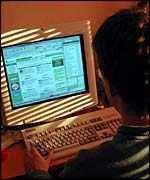
Computers have come a long way since the first BBC and Nimbus microprocessors started appearing in classrooms in the 1980s. Information technology is rapidly changing the face of education. It is no longer just for computing classes, but a tool for teaching in every subject area. But how should schools harness computer power in the future? At Kelso High School in the Borders, they have just rolled out phase one of a new website to support pupils across the local authority area. Borders Online Study Support (Boss) already offers pupils links to useful materials, FAQs on homework problems and the chance to "ask the teacher" with e-mail links to a specialist in every subject.
Further developments to the Boss website are also planned - including private chat rooms where pupils and teachers can discuss topics of study, and videoconferencing with schools elsewhere in the Borders and eventually, elsewhere in Europe. For pupils in rural areas, new technology is bridging an important gap in their education. At Kelso High School, for example, half of all pupils live in outlying areas, and go to and from school by bus. As a result, they cannot stay after school for homework clubs or extra study sessions. Being able to log on at home means they do not miss out on extra support from their teachers. Easy access to the internet has opened up access to unlimited sources of information and knowledge.
And with this information revolution has also come e-learning. Numerous initiatives have been launched to encourage online learning - any place, any time. So with the advance of online courses should teachers fear for their future? Definitely not, according to Professor Roy Leitch, Assistant Principal at Edinburgh's Heriot-Watt University. He has been leading the development of the SCHOLAR forum, which offers supported e-learning in a range of Higher and Advanced Higher courses. SCHOLAR provides a series of modules and assessments which guide pupils through the course material for their chosen subject. It works intelligently, responding to pupils' progress, and guiding them back to the areas they need to concentrate on. But it is not a replacement for a teacher. SCHOLAR is intended to be used in conjunction with a teacher - allowing pupils to work at their own pace and giving the teacher more time to concentrate on individual pupils rather than preparing course materials.
SCHOLAR also has the advantage of being online. Course materials can be updated instantly in response to changes to the curriculum, while textbooks quickly go out of date. More than 20 local councils have now subscribed to the SCHOLAR programme, and this year it is anticipated 40,000 pupils will use it as part of their studies. There are many other projects aimed at combining information technology and education, but there is a feeling that the approach is fragmented with no co-ordinated national plan. The Scottish Executive has set up a working group to develop an e-learning strategy. The use of technology in education is at an early stage. Education experts are still trying to establish how best to combine the use of computers, textbooks and teachers. And with new computer applications constantly emerging, it is difficult to predict how or even what kind of technology we might use in years to come. | |
See also:  25 Jun 02 | Scotland 07 Jun 02 | Scotland 09 Jan 02 | UK Education 02 Mar 01 | UK Education 09 Nov 00 | UK Education 06 Feb 02 | UK Education Internet links: The BBC is not responsible for the content of external internet sites Top Scotland stories now: Links to more Scotland stories are at the foot of the page. | |||||||||||||||||||||||||||||||||||||||||||||||||||||||||||||||||||||||||||||||||||||||||||||||||||||||||||||||||||||||||||||||||
| |
|  E-mail this story to a friend E-mail this story to a friend |
| |
| Links to more Scotland stories |
| | | ||
 | ||||
 | | Back to top
| ||
| ---------------------------------------------------------------------------------- To BBC Sport>> | To BBC Weather>> | To BBC World Service>> ---------------------------------------------------------------------------------- © MMIII | News Sources | Privacy |