|
 |
 | | | | | | ||||||||||||||||||||||||||||||||||||||||||||||||||||||||||||||||||||||||||||||||||||||||||||||||
| | | You are in: UK: Scotland | ||||||||||||||||||||||||||||||||||||||||||||||||||||||||||||||||||||||||||||||||||||||||||||||||||
|
| | Tuesday, 25 June, 2002, 05:23 GMT 06:23 UK Scotland's exams under scrutiny
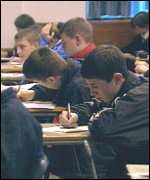
Earlier this year Scottish Education Minister Cathy Jamieson called for a National Debate on the future of education. This week on BBC Radio Scotland's Good Morning Scotland programme and on BBC News Online, I will be looking at key aspects of the education system north of the border. The first question addressed, on Tuesday, is that of exams and whether or not the pressure for success is a driving force in the system. Even before they sit their first external exams - traditionally the Standard Grade in S4 - pupils these days have already been tested frequently to check their progress through the 5-14 curriculum.
The first test is to satisfy Scottish Executive needs, while the second is an independent test that the local council regards as a more reliable benchmark of pupil ability. The pressure to achieve is constantly in the background for pupils, teachers and schools. But the Scottish Parent Teacher Council is concerned that exams are driving forward the education system. They fear that instead of gaining a solid education in their subjects, pupils can end up being coached to pass tests. They are concerned, too, that too much emphasis on passing exams can leave some less able pupils feeling like failures.
Combined with greater flexibility in the curriculum, it has led to more schools mixing and matching exams to the needs of their pupils. At the EIS union conference in Dundee earlier this month, it became clear that the practice has already become widespread. At Firrhill High School in Edinburgh they have dropped Standard Grade in 12 subjects and replaced it with the new Intermediate Two exam. The headteacher, Pat Cairns, believes the content of some of the Standard Grades is now too dated. Not surprising, when you realise that they replaced the 'O' Grade 20 years ago.
What started as an experiment involving 60 pupils three years ago has now led to all pupils starting their Standard Grade Maths course a year early, in S2. By the time they have reached S4, pupils have not only finished the Standard Grade, but also completed one component of Higher Maths. The results are good, with pupils performing as well and in many cases better than those who took the traditional learning timetable. Perhaps more importantly, though, it eliminates the effect of the 'two-term-dash' where pupils are under pressure to complete their entire Higher studies in two-thirds of the academic year, ahead of study leave and, of course, the exams. Challenging our attitudes Flexibility is the buzz-word in today's constantly changing world and for many within the education sector, it is regarded as key to the future of learning and teaching. For some, that means radical thinking and a departure from the traditional education methods. Roy Jobson, Director of Education at Edinburgh City Council believes that as the system becomes more focused on the learner, the time will come when pupils will sit their exams whenever they are ready, much like a driving test. Exams will always have a place within the education system, but for many the question is exactly where that place should be. Changing the emphasis we place on results means challenging our attitudes towards the purpose of education and asking whether good grades are always the most important outcome for our pupils. | | See also:  25 Jun 02 | Scotland 01 Dec 01 | Scotland 09 May 02 | Scotland 28 Apr 02 | Scotland 20 Mar 02 | Scotland 11 Mar 02 | Scotland 26 Dec 01 | UK Education 14 Jan 02 | Scotland 01 Oct 01 | Scotland Internet links: The BBC is not responsible for the content of external internet sites Top Scotland stories now: Links to more Scotland stories are at the foot of the page. | ||||||||||||||||||||||||||||||||||||||||||||||||||||||||||||||||||||||||||||||||||||||||||||||||
| |
|  E-mail this story to a friend E-mail this story to a friend |
| |
| Links to more Scotland stories |
| | | ||
 | ||||
 | | Back to top
| ||
| ---------------------------------------------------------------------------------- To BBC Sport>> | To BBC Weather>> | To BBC World Service>> ---------------------------------------------------------------------------------- © MMIII | News Sources | Privacy |