|
 |
 | | | | | | ||||||||||||||||||||||||||||||||||||||||||||||||||||||||||||||||||||||||||||||||||||||||||||||||||||||||||||||||||||||||
| | | You are in: UK: Politics | ||||||||||||||||||||||||||||||||||||||||||||||||||||||||||||||||||||||||||||||||||||||||||||||||||||||||||||||||||||||||||
|
| | Wednesday, 4 December, 2002, 13:26 GMT Justice reforms under fire from MPs 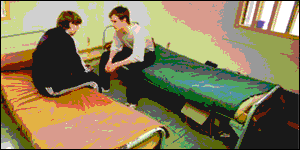 Magistrates will have greater sentencing powers Allowing juries to hear defendants' previous convictions could produce miscarriages of justice and tempt police to pursue "the usual suspects", an influential committee of MPs has warned. The idea is among plans to overhaul the criminal justice system in England and Wales which face fierce opposition on Wednesday when they are debated by MPs.
Ahead of the debate, the Commons home affairs committee has backed some of the changes but warned some of the changes would "shift the balance too far towards the state". It also suggests extra provisions are added to the bill to give rape suspects the anonymity currently enjoyed by their alleged victims. Opposition to some of the plans is expected from Conservatives and Liberal Democrats, as well as some Labour backbenchers. Among the controversial proposals are plans to allow judges to sit without a jury on serious fraud cases or when there are fears of jury intimidation. That was an idea, however, backed by the home affairs committee, which stressed such cases should not undermine the general use of juries. Under the plans, magistrates will also be allowed to sentence offenders to 12 months in prison, instead of the current six.
The committee warned that move would only aggravate prison overcrowding unless preceded by plans for some offenders to serve a short prison term followed by community work. The Conservatives want more safeguards on allowing retrials when new evidence emerges and plans to reveal previous convictions in court. Home Secretary David Blunkett says the bill will "send the strongest possible message that the system is being managed in the interests of the victims of crime". He is also expected to outline plans for a new system to set minimum sentences, with a comprehensive guidelines set by a new sentencing council. That move comes after the House of Lords ruled the home secretary's power to set sentences breached the European Convention on Human Rights. 'Usual suspects' The MPs' committee believes the balance has been tilted too far in some areas. It backs the relaxation of the double jeopardy rule where compelling new evidence emerges in the most serious cases. But it raises particular fears at plans to reveal previous convictions automatically during trials.
"We are also concerned that this will increase the temptation for the police to pursue the 'usual suspects'." Committee chairman Chris Mullin called the proposal "a bridge too far". Plans to make defence lawyers reveal in advance the witnesses they plan to call in trials also prompted worries among the MPs. Detention time The committee says: "In contrast to most defendants, the police and prosecution have vast resources at their disposal with which to apply pressure to defence witnesses, if minded to do so." As a safeguard, the MPs suggest prosecuting authorities should have to tell defence lawyers if they want to interview defence witnesses before a trial - and offer to do it in front of the defence team. The bill also contains proposed changes to the Police and Criminal Evidence Act (PACE). The committee says the Home Office has failed to make a convincing case for extending to 36 hours the time a suspect can be held before being charged. Conditional bail before charges should also be limited to four weeks, say the MPs. Rape suspects' anonymity The committee also presses ministers to use the bill to ban witnesses payments by the media in criminal cases. Lib Dems home affairs spokesman Simon Hughes is going further in his opposition, tabling an amendment which would block the whole bill. The Lib Dems say they welcome attempts to give more help to the victims of crime but that should not be done at the expense of defendants' rights. | |
See also:  21 Nov 02 | Politics 21 Nov 02 | Politics 14 Nov 02 | Politics 14 Nov 02 | Politics 13 Nov 02 | Politics 06 Mar 01 | UK 17 Jul 02 | Politics Internet links: The BBC is not responsible for the content of external internet sites | ||||||||||||||||||||||||||||||||||||||||||||||||||||||||||||||||||||||||||||||||||||||||||||||||||||||||||||||||||||||||
| |
|  E-mail this story to a friend E-mail this story to a friend |
| |
|
| | | ||
 | ||||
 | | Back to top
| ||
| ---------------------------------------------------------------------------------- To BBC Sport>> | To BBC Weather>> | To BBC World Service>> ---------------------------------------------------------------------------------- © MMIII | News Sources | Privacy |