|
 |
 | | | | | | |||||||||||||||||||||||||||||||||||||||||||||||||||||||||||||||||||||||||||||||||||||||||||||||||||||||
| | | You are in: UK: Politics | |||||||||||||||||||||||||||||||||||||||||||||||||||||||||||||||||||||||||||||||||||||||||||||||||||||||||
|
| | Tuesday, 27 August, 2002, 10:17 GMT 11:17 UK Afghan opium problem 'serious' 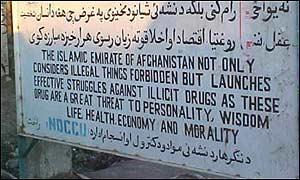 The Taleban took a stand against opium in 2000 Greater efforts must be made to stamp out opium production in Afghanistan, a UK Government minister has said. Bob Ainsworth, minister responsible for anti-drugs co-ordination, said that despite efforts to wipe out heroin production in the country, "substantial" amounts of opium were still being cultivated. The government pledged to cut heroin production in Afghanistan following the fall of the Taleban in an attempt to stop the drug flooding into the UK. Mr Ainsworth's comments on BBC Radio 4's Today programme come a week after United Nations drug officials said the new Afghan Government had largely failed to eradicate the opium poppy crop.
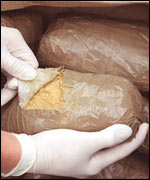
Thirty thousand kilograms (66,000 lb) of heroin are already smuggled in to Britain every year. Last year police and customs seized just 3,000 kg (6,600 lb). A Today investigation last month found Afghanistan's new government was failing to tackle the cultivation of opium poppies On Tuesday, Mr Ainsworth insisted it was a "priority for the British and Afghan Governments to have the maximum impact on production", which he described as a "very serious" problem. But he said "huge instability" in Afghanistan had made the task very difficult. "We have been increasingly effective at disrupting and destroying the crops with the assistance of the provisional interim government," Mr Ainsworth said. Quick cash "But it is a very large, very difficult country with very diverse geography.
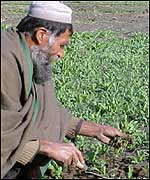
UN spokesman Hector Maletta said last week that an Afghan Government campaign, launched in April to eradicate the country's opium poppy crops, had had a very limited impact. The UN estimates that crops worth more than $1bn were now being produced in farms in the country. It says production levels are now close to those of the late 1990s, when Afghanistan was the largest producer of opium, supplying 70% of the world's supply. Opium poppies provide a quick cash crop for farmers struggling to survive. The Taleban banned poppy cultivation in 2000. The UN and US drug agencies say this meant an almost total halt to opium growing in the 2001 season.
The interim government of President Hamiz Karzai banned production in January but, according to the UN report, most of this year's opium crop had been already planted by then. The Foreign Office says 90% of heroin in the UK originates in Afghanistan. 'Unmoved' Caroline Jones, a drugs counsellor from the Checkpoint charity, told Today a growing number of women in Britain were being introduced to heroin at "a really young age". And an established Merseyside dealer, who refused to reveal his identity, told the programme he feels "no risk" selling �500,000 worth of heroin a year. He said he was unmoved by the misery the drug caused his customers. "That is down to their own stupidity. I do not care what goes on with them," he said. "It is nothing to do with me. The only thing I care about is the money." | |
See also:  19 Aug 02 | South Asia 25 Jul 02 | South Asia 25 Jul 02 | South Asia 23 Jul 02 | South Asia 04 Oct 01 | South Asia Internet links: The BBC is not responsible for the content of external internet sites | |||||||||||||||||||||||||||||||||||||||||||||||||||||||||||||||||||||||||||||||||||||||||||||||||||||||
| |
|  E-mail this story to a friend E-mail this story to a friend |
| |
|
| | | ||
 | ||||
 | | Back to top
| ||
| ---------------------------------------------------------------------------------- To BBC Sport>> | To BBC Weather>> | To BBC World Service>> ---------------------------------------------------------------------------------- © MMIII | News Sources | Privacy |