
|
 |
 | | | | | | ||||||||||||||||||||||||||||||||||||||||||||||||||||||||||||||||||||||||||||||||||||||
| | | You are in: UK: Education | ||||||||||||||||||||||||||||||||||||||||||||||||||||||||||||||||||||||||||||||||||||||||
|
| | Wednesday, 27 November, 2002, 11:52 GMT Four year olds excluded from school  1,400 primary pupils were given their marching orders Children as young as four are being permanently excluded from school - as government statistics show an overall increase in exclusions. The annual statistics, for the academic year 2000-2001, show an increase of 10% in permanent exclusions from state schools in England. And the proportion of primary school exclusions within the total is at its highest level since the Labour government came into office.
The increase follows two years of substantial decreases, following a peak in 1997-1998 - as the government pursued a policy of reducing exclusions. These targets for exclusions have now been scrapped - and it is expected that next year's figures will show an even bigger upwards surge. The total of over 9,000 exclusions includes 13 four year olds and 52 five year olds, almost all boys, who have been removed from their schools. Once excluded from school, the statistics for last year suggest that many pupils failed to get a full education - a problem that the government is seeking to tackle. 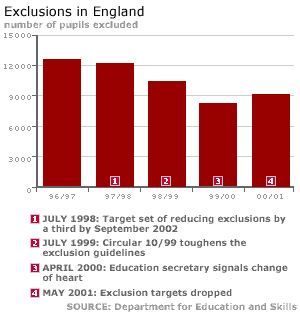 Less than a third of excluded primary school pupils received a full-time education. A tenth of excluded pupils dropped out of the education system, and almost half of excluded children up to the age of 14 received less than 12 hours education per week. The national breakdown of exclusions shows that boys remain much more likely to be excluded than girls, representing 83% of all exclusions. This proportion has remain almost unchanged since the mid-1990s. Black pupils are still much more likely to be excluded than their white counterparts, although this year's figure of being three times more likely is a decrease from four times the previous year. This imbalance between levels of black and white exclusions has steadily reduced in the past five years. Referral units And 80% of exclusions are in secondary school, with 14 year olds the age group with the greatest number of exclusions. But 16% of exclusions were in primary schools, a figure that has steadily risen from 12% in 1996-1997. Although the rate of exclusions as a percentage of the primary school population has remained unchanged for the past four years, staying at 0.03%. The highest rates of exclusions were in London and the north-west, with the lowest in the east of England. The largest number of pupils excluded are sent to pupil referral units. These have been opened across the country, with 67 opened during 2002. The next largest number are taught at home or sign up for courses at further education colleges. | | See also:  23 May 02 | Education 18 Nov 02 | England 23 May 02 | Education 24 May 02 | Education Internet links: The BBC is not responsible for the content of external internet sites Top Education stories now: Links to more Education stories are at the foot of the page. | ||||||||||||||||||||||||||||||||||||||||||||||||||||||||||||||||||||||||||||||||||||||
 | |
|  E-mail this story to a friend E-mail this story to a friend |
| |
| Links to more Education stories |
| | | ||
 | ||||
 | | Back to top
| ||
| ---------------------------------------------------------------------------------- To BBC Sport>> | To BBC Weather>> | To BBC World Service>> ---------------------------------------------------------------------------------- © MMIII | News Sources | Privacy |



