|
 |
 | | | | | | |||||||||||||||||||||||||||||||||||||||||||||||||||||||||||||||||||||||||||||||||||||||||||||||||||||||||||||||||||||||||||||||||||||||||||||
| | | You are in: UK: Education | |||||||||||||||||||||||||||||||||||||||||||||||||||||||||||||||||||||||||||||||||||||||||||||||||||||||||||||||||||||||||||||||||||||||||||||||
|
| | Thursday, 23 May, 2002, 22:03 GMT 23:03 UK School exclusions go up again  Heads complained about exclusion targets There has been an increase in the number of children expelled from schools in England for the first time in years - with the biggest increase in primary schools.
There were an estimated 9,210 permanent exclusions from English state schools in the last full school year, 2000-01, up 11% from the 1999-2000 total of about 8,300. The biggest increase in exclusions was in primary schools, where they rose by 19%, from 1,266 to 1,460. Among 11 to 16 year olds in comprehensives, there was a 10% rise, from 6,713 to 7,410. In terms of ethnic background, exclusion rates ranged from three in 10,000 for Indian pupils to 38 in 10,000 for Black Caribbean pupils - a distinct improvement on the previous year's figure of 46. The figure for white pupils was 13 in 10,000. Targets dropped Last year the government relaxed restrictions which made it difficult for schools to expel unruly pupils.
It ended the system of setting targets for schools to cut the number of exclusions, saying the exclusions were at "sustainable levels". Heads had complained they were finding it very difficult to remove violent and disruptive pupils. When schools did exclude children, they were often made to take them back after independent appeals panels ruled against them, they said. The new figures also show an increase last year in the number of appeals by parents against exclusion, from 948 to 1,095. In both years about 90% of these actually went to a hearing - 10 percentage points more than had been the case in other recent years. The proportion of those which were successful fell however, from 36.7% to 31.9%. The Education Secretary, Estelle Morris, has appeared keen to give heads more freedom to exclude unruly pupils and said she was not concerned about the rise in expulsions. "Exclusion is a last resort and is only used with good reason," she said. 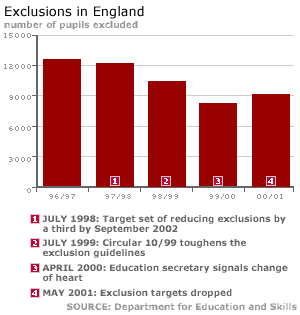 "Our priority is to support head teachers who take tough decisions when dealing with bad or criminal behaviour - but also to make sure excluded pupils are given full-time education and do not roam the streets," Ms Morris said. So �600m had been invested since 1999 in more than 300 special units and from September every excluded pupil would have access to full-time study. At present this does not always happen. Some parents whose children have been excluded simply cannot find any school to take them. The Advisory Centre for Education, which helps parents faced with having their child excluded from school, said that often difficult behaviour in children was a sign of special educational need which was going undiagnosed. 'Mistake' The general secretary of the Secondary Heads Association, John Dunford, said he was not surprised by the increase in this year's exclusions and was pleased the government had recognised its mistake. "Last year's exclusion figures were artificially low because of the restrictions placed on heads by Circular 10/99, which caused major problems for heads in dealing with serious incidents of bad behaviour," he said. The now-notorious circular issued by the Department for Education in 1999 toughened up the rules on exclusions. It has since been revised. "Ministers are now supporting heads much more strongly in their efforts to combat serious indiscipline," Dr Dunford said. "The welcome growth of in-school behaviour units will help to ensure that future exclusion figures are kept to a minimum, compatible with the maintenance of good order in schools." 'Realities' David Hart, his counterpart at the National Association of Head Teachers - representing most primary school heads - said the exclusion figures "reflect the reality of rising levels of pupil violence, disruption and abuse". "Nobody should rejoice at today's figures," he said. "But it is far better for heads to be strongly supported in defence of decent standards of behaviour, than to be subjected to ridiculously artificial and damaging targets that previously served for government policy on exclusions." The government had wanted to cut exclusions by a third by September this year. That target was met in the year 2000, by which time the then education secretary was already signalling a change of heart in response to complaints from head teachers. It was another year, May 2001, before the targets were finally dropped. We now know that by then the figures were already rising again. | |
See also:  23 May 02 | Education 23 May 02 | Education 23 May 02 | Education 04 May 01 | Education 16 Jan 02 | Education 16 Jan 02 | Education Internet links: The BBC is not responsible for the content of external internet sites Top Education stories now: Links to more Education stories are at the foot of the page. | |||||||||||||||||||||||||||||||||||||||||||||||||||||||||||||||||||||||||||||||||||||||||||||||||||||||||||||||||||||||||||||||||||||||||||||
| |
|  E-mail this story to a friend E-mail this story to a friend |
| |
| Links to more Education stories |
| | | ||
 | ||||
 | | Back to top
| ||
| ---------------------------------------------------------------------------------- To BBC Sport>> | To BBC Weather>> | To BBC World Service>> ---------------------------------------------------------------------------------- © MMIII | News Sources | Privacy |